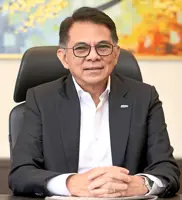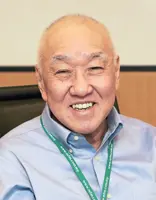
MAX Stone will never live it down: Once, he nearly blew up D.E. Shaw & Co, one of the first great quant shops on Wall Street.
Stone, barely 30 at the time, had drastically underestimated the financial risks he was taking. When markets turned – disaster.
D.E. Shaw lost roughly 30%. Stone thought his head would roll.
“If I had been fired, no part of me would have thought that was unfair,” Stone says in a recent interview. “I did nearly destroy a company.”
So it might come as a surprise that Stone, now 57, is still at D.E. Shaw – and at the very top, no less. Twenty-eight years on, he’s part of an unusual collective, a sort-of hive-mind chief executive officer (CEO).
Together, its seven members are charting the future of the firm, a pioneer in harnessing computers to wring money out of the markets.
Job one: ensuring no one screws up the way Stone did as D.E. Shaw navigates a perilous new landscape.
Ever since computer scientist David E. Shaw founded the hedge fund operator in 1988, above a communist bookstore in Manhattan, D.E. Shaw has cultivated a certain mystique.
Outsiders have long regarded it as the secretive “King of Quant” – an eccentric group of maths whizzes and liberal arts types who merged quantum physics with Wall Street.

And as it morphed from a quant shop into a major multi- strat, a culture the firm’s leaders describe as less cut-throat than that of rivals has kept retention high and helped D.E. Shaw stay out of the brutal talent war that has engulfed the giants of the industry.
But today, challenges are edging in. Competition is picking up. Everyone is scrapping for the best and the brightest, for more money and the smartest trades.
On one side are rising trading powerhouses like Jane Street Capital, which wield proprietary algorithms of their own. On the other are giant multi-managers like Citadel and Millennium Management, on a permanent hunt for fresh talent.
And then there’s artificial intelligence (AI), the X factor that could either usher in an age of near-miracles or, if doomsayers are right, the complete opposite.
Leaders of D.E. Shaw, with US$125bil in assets and a cultish following among its investors, lay out in a rare interview how they’re responding.
“The stakes are higher, the pace has accelerated,” says Eddie Fishman, another member of the executive committee, “and that’s the water we’re swimming in”.
Best investment ideas
In the face of all this, the council of seven is tweaking the D.E. Shaw formula. For the first time, the firm is going to reserve some of its best investment ideas for itself.
Starting in January, it will use its big brainstorms to fuel a new fund open to employees. Clients won’t have direct access, although half of the fund’s initial capital will come from the flagship Composite hedge fund.
At the same time, it will be asking more from its customers. The firm will extend its investor lock-up period to up to four years and pass on some costs for new technologies like AI.
It also raised about US$6bil in Cogence, its first fund led by flesh-and-blood traders, and pitched it to wealthy individuals – another first for D.E. Shaw.
This is troubling to some clients who already wish the firm would let them invest more. They fear more of the ideas that might have otherwise made money for clients will be reserved for staff.
Quant powerhouse Renaissance Technologies, a decade older, did something similar years ago. So did Two Sigma Investments, co-founded by two D.E. Shaw alums.
The message from D.E. Shaw: If we don’t follow suit, the competition will pick off the best talent. Staff and partner money invested across D.E. Shaw strategies has ballooned to more than US$15bil.
“It’s clear that prop shops are increasingly competing for similar types of alpha,” says Edwin Jager, another member of the executive committee.
That D.E. Shaw is even talking about this adds an exclamation point to the message. Normally, secrecy is paramount.
In the early days, some employees didn’t even tell their families they worked there. Ask competitors who the stars are now, and many will respond with a bewildered shrug. Management operates on a strict need-to-know basis, although the rules have been relaxed of late.
To get an interview, job candidates and D.E. Shaw agree not to share confidential information. If they’re hired, they must sign another agreement.
D.E. Shaw, a training ground for the young Jeff Bezos, once told 400 departing employees that if they wanted severance, they’d have to sign releases stating they hadn’t filed complaints about the firm with government authorities.
Notably, the Securities and Exchange Commission has said this ran afoul of rules; D.E. Shaw ended up settling for US$10mil, without admitting or denying wrongdoing.
It’s always been a quirky place. In addition to the usual brainiacs who power modern finance – computer geniuses, mathematics PhDs, whizzes in quantum field theory – the firm makes a point of hiring some not-so-usual ones too.
Into the mix go English majors, philosophy grads, Broadway actors, the occasional writers’ workshop MFA (Master of Fine Arts) or modernist painter (poet Katy Lederer spent six years there while balancing her life as a writer).
Shaw has been known to send hand-signed letters to youngsters who’ve shown unusual promise – maths Olympiad champs, chess prodigies – to let them know that D.E. Shaw will be there if they ever want to talk.
In recent years, rival hedge funds have copied the tactic.
Working formula
The formula has made clients rich and competitors envious.
The flagship Composite Fund, a mash-up of computer- and human-guided trading, has returned 13% annually since its inception in 2001. It was up 15.3% this year through September, and the smaller Oculus fund was up 30%.
Still, few businesses would put a committee in charge. It can slow decision-making, reduce accountability, dilute strategy and stunt innovation.
For most companies, even co-CEOs are a bad idea. Which makes D.E. Shaw, with more than 3,000 employees around the world, all the more unusual.
It’s been that way since the start. Shaw, a former computer scientist at Columbia University, was mulling an offer to jump from his perch at Morgan Stanley to Goldman Sachs Group Inc to help develop a trading system.
He went sailing with veteran hedge fund backer Donald Sussman as he sought advice. On the water, Sussman’s counsel was: “David, if you are sure this really works, you should own it.”
D.E. Shaw was born with six employees, US$28mil and Sussman as a backer. It didn’t have the buzz of a typical trading floor, Sussman recalls.
“This was closer to the reading room at the Library of Congress. Nobody in there was picking securities – they were building rigorous systems to extract alpha.”
Shaw handed off day-to-day management more than a quarter-century ago to focus on biomedical research (his Anton supercomputers probe life’s secrets at a molecular level).
Rather than let one imperial CEO stand astride his company, he went in the exact opposite direction.
Now in its third iteration, the current committee draws on executives with a range of academic backgrounds: biology, comparative literature, computer science, psychology and theoretical physics.
Practically speaking, Stone, as head of risk, is first among equals.
Committee members insist they work together in near-perfect harmony. But differences of opinion can creep in.
When that happens – and members repeat that it rarely does – Shaw can be consulted.
Shaw, 75, declined to be interviewed for this story.
At least one hedge fund consultant in 2024 downgraded its assessment of management from the best in the industry to above average.
One issue: the age-old conflict between youthful talent and hard-won experience. Over the years, four members of the original six-person committee have retired.
New members have joined, and the cabinet has expanded to seven.
The newest members – Adam Deaton, a maths and computer expert who runs systematic futures and options; Anoop Prasad, a theoretical physicist in charge of systematic equities; and Jager, 47, who heads fundamental equities and credit – joined the committee during the past three years.
Fishman, 53 and a comparative literature major, says the new blood has helped add “immediacy” to a range of initiatives, from AI to venture capital, credit investments and the new fund that tapped the wealthy, known as Cogence.
Each committee member has a specific area of oversight but also serves as a “sanity check” for other members, he says.
Long-term success
Lately, the panel has been discussing how to use AI to replicate the multi-strategy “pod shop” approach, where capital gets parcelled out to various teams that pursue their own investment strategies.
It has built technology to replicate the pod-shop research workflow, with bots ingesting calls, and to bring in more alternative data to go after the kind of quick, short-term discretionary trades that multi-manager firms target.
How much the firm should push towards becoming a prop shop is an active project the committee has undertaken.
It has also been talking about the escalating cost of AI. This year, D.E. Shaw has told its Composite Fund clients it would add a 0.12% technology surcharge, on top of a 0.23% fee last year for various other expenses.
The firm was already expensive: while it has avoided the pass-through expenses that other hedge fund giants levy, it charges a 3% management fee and takes a 35% cut of profits in its Composite Fund.
Most D.E. Shaw clients decline to discuss the firm publicly, in keeping with the firm’s penchant for secrecy, and none have said they are exiting.
Privately, some say they aren’t thrilled about all of the changes.
Some say management could communicate better, and at least one has complained that D.E. Shaw grew even more furtive after the financial crisis, when the firm gated investor withdrawals.
D.E. Shaw points to its track record. Executives say they’ve cultivated a culture that prioritises long-term success over short-term wins.
Look at Stone. He and several other executives who are at the top today sometimes lost big on the way up.
Once, an executive was promoted even though, all told, he’d lost money during his time at D.E. Shaw.
The firm is willing to hold positions for years; managers aren’t pressured to trade unless they think trading makes sense, executives say.
D.E. Shaw was pushing beyond straight quantitative investing as far back as the 1990s, and in the early 2000s it expanded into distressed debt, energy and macro strategies based on broad economic trends.
It’s pushed into less-liquid bets, like spending years putting steel into the Atlantic seabed in a renewable energy push.
Rather than the independent pods that characterise some rivals, D.E. Shaw executives gather in groups to stress-test each other’s ideas.
Some proposals don’t survive the process, but the ones that do have everyone on the hook.
Single bets could often run into billions of dollars. They can be concentrated, even activist positions, and held for years.
Jager says many investors focus on the next quarter; D.E. Shaw tries to think about the next two or three years.
Out-of-the-box ideas tend to get more credit internally than follow-the-herd thinking – even if those ideas don’t always pan out.
“It’s not okay to be sloppy, but it’s okay to be wrong,” says Ted MacDonald, D.E. Shaw’s chief risk officer.
Executives keep reminding themselves of the brutal 1998 scar.
Jager says D.E. Shaw obsesses about risk. Markets are interconnected. Trades are crowded. Players are leveraged. Trouble in one place can quickly spread.
The firm has shunned the highly leveraged bond basis trade popular at rivals.
It has come up for discussion periodically, but hasn’t cleared the firm’s “crash hurdle” filter.
“We continuously obsess about the risk of liquidation in markets because the interconnectedness of the levered hedge fund world right now is so significant,” Jager says. “This is the one thing that can bankrupt a firm.”
So executives like to remind themselves and each other that things can, and sometimes do, go spectacularly wrong.
Fishman used to keep a toy pig that flapped its wings on his desk, a nudge that, however unlikely, the unexpected can happen.
Stone keeps a white peacock on his desk, a wedding gift to him from colleagues and a play on black-swan events. He kept his job back then, and kept on rising, because Shaw decided that Stone didn’t err on his own.
The mistake, Shaw and his brainiacs concluded, was a collective failure. — Bloomberg
Already a subscriber? Log in
Get 20% OFF The Star Digital Access
Cancel anytime. Ad-free. Unlimited access with perks.