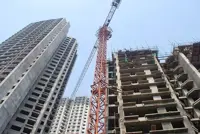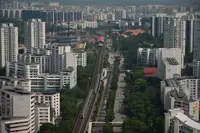
PETALING JAYA: The Klang Valley residential market is expected to remain broadly stable for the remainder of 2026, supported by favourable financing conditions and sustained demand for well-located properties.
However, experts believe growth will become increasingly selective rather than broad-based, with demand concentrated in locations and projects that offer stronger value and fundamentals.
JLL Malaysia managing director Jamie Tan anticipates the residential market to “remain relatively stable but subdued” for the rest of 2026.
“I don’t expect a significant correction in average prices, but neither do I expect a strong recovery in transaction volumes in the near term.
“Although the economy remains resilient, employment conditions are relatively healthy and interest rates are supportive. These fundamentals are currently being eroded by affordability constraints and weaker investor and purchaser confidence,” he told StarBiz.
Tan noted that the ongoing conflict in the Middle East has introduced another layer of uncertainty.
“It has implications for energy prices, inflation, construction costs and the broader economic outlook.
“We have already seen buyers and investors becoming more cautious and adopting a more wait-and-see approach in the face of such geopolitical uncertainty.”
Tan said some smaller and mid-sized developers have also paused new project launches.
“There is also some uncertainty surrounding the timing of the next general election. Although it is not constitutionally due until 2028, there has been increasing public and political speculation about the possibility of it happening earlier.
“I think this uncertainty can also have an impact on investment and purchasing decisions, particularly for larger-ticket purchases such as property.”
Due to these factors, Tan does not expect the residential market to improve significantly in 2026 until there is greater clarity on the Middle East conflict and the domestic political environment.
“In terms of prices, I expect them to remain relatively resilient, but with little real growth. The latest house price growth of around 1.7% is already below the prevailing inflation rate, so in real terms there has been no actual increase in house values.
“I would therefore expect nominal prices to remain broadly stable or record low single-digit growth for the remainder of the year, with significant variations depending on location and property type,” Tan added.
Rahim & Co International Sdn Bhd real estate agency senior director Siva Shanker expects growth in 2026 to be flattish and anticipates “small growth” in 2027.
“The years of double-digit growth are behind us, and that’s perfectly fine. We expect more modest, single-digit growth going forward, which we believe is more sustainable over the long term.”
According to Knight Frank’s Real Estate Highlights report for the first half of financial year 2026 (1H26), the residential market recorded 52,936 transacted units with a collective value of RM22.6bil in the first quarter of 2026 (1Q26).
Year-on-year (y-o-y), Knight Frank said the volume and value of residential property transactions declined by 10.7% and 7.8%, respectively.
“Despite weaker market activity, the average price of residential properties remained relatively stable,” it said.
Meanwhile, the residential property market in the Klang Valley – comprising Kuala Lumpur (KL), Putrajaya and Selangor – showed signs of moderation in 1Q26, recording 13,906 transacted units valued at RM9.3bil, an 11.2% decline from the previous period.
“A majority of these transactions are in the RM100,000 to RM300,000 price bracket. In contrast, the high-rise residential segment remained active, registering 5,986 transactions with a collective value of RM4.7bil. The transacted volume and value were higher by 5.1% and 18.9% y-o-y, respectively,” Knight Frank stated.
As of 1H26, it said the high-rise residential property stock, primarily condominiums and serviced apartments in the prime areas of the Klang Valley, stood at 126,991 units.
“The completion of 3,558 units during the review period represents a 2.9% increase in cumulative supply.
“The impending completion of some 9,170 units by 2H26 will increase the existing stock by 7.2%. These projects are mainly located in KL City, Bukit Kiara and Ara Damansara/Tropicana Damansara,” Knight Frank noted.
An analyst said the key challenge for the residential market remains the mismatch between supply and demand.
“Elevated levels of unsold completed units, particularly in the high-rise and serviced apartment segments, could continue to weigh on the market.
“This is likely to prompt developers to adopt a more cautious approach towards new launches, with greater emphasis on location, pricing, product differentiation and affordability.”
He emphasised that landed properties in established locations with good connectivity are expected to remain relatively well supported, while the high-rise segment is likely to face greater competition amid existing supply.
“Nevertheless, well-positioned projects should continue to attract buyers, particularly where pricing is aligned with market demand.”
Against this backdrop, he believes developers are likely to be more selective with their launches, potentially phasing projects more carefully and focusing on products that cater to deeper pools of demand.
“Incentives and rebates may also remain an important tool to support sales, rather than outright price reductions.”
Tan, meanwhile, believes transaction volumes are likely to remain challenging.
“Although buyers are still in the market, they are taking longer to make decisions and are much more selective.
“Properties that are well located, correctly priced and meet genuine owner-occupier needs should continue to perform reasonably well, while properties priced beyond the affordability of their target market will take longer to sell.”
Overall, Tan expects the remainder of 2026 to be a period of consolidation, rather than a significant recovery or major correction.
“The market has the underlying fundamentals to recover, but I think we need greater visibility on the geopolitical and domestic political environment before we see a meaningful improvement in buyer and investor confidence,” he reiterated.
Going forward, Knight Frank said infrastructure investment is expected to remain a key catalyst for residential demand and value creation across the region.
“The newly operational LRT3 Shah Alam Line and future MRT3 Circle Line are expected to enhance accessibility and reinforce the attractiveness of transit-oriented developments, particularly within emerging suburban corridors and established urban centres,” it said.