JAKARTA: Indonesia continues to grapple with power outages as rolling blackouts over the weekend have disrupted household and commercial activities in parts of West Java, East Java, Yogyakarta and other areas connected to the Java-Madura-Bali grid.
The disruptions have been particularly challenging for micro, small and medium enterprises, many of which depend on uninterrupted electricity to operate.
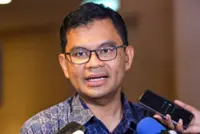
“I suspect these conditions may continue for perhaps another two weeks,” Fabby Tumiwa, chief executive officer of the Institute for Essential Services Reform (IESR), said in an interview with Kompas TV on Saturday, urging state-owned utility Perusahaan Listrik Negara (PLN) to provide clearer information regarding scheduled outages, so that consumers could better prepare.
According to Fabby, outages lasting three to five hours have forced many businesses to suspend operations or rely on costly diesel generators.
In East Java, Agus Priambodo, deputy chairman of the Malang Market Traders Association, told Detik that electricity outages on Saturday cut off power supply to markets, with some traders resorting to emergency lamps and flashlights to continue serving customers.
PLN president director Darmawan Prasodjo last Friday attributed the disruptions to technical problems at two large power plants owned and operated by independent power producers, which were forced offline and temporarily disconnected from the Java electricity system.
“In these conditions, we are also facing technical challenges at two major power plants in Java owned by our partners,” Darmawan said during a press conference in Jakarta.
He said PLN had deployed teams alongside the operators to accelerate repairs and restore generation capacity as quickly as possible.
“We sincerely apologise for the disruptions that have resulted in rolling blackouts across Java. We are working around the clock so that all disturbances can be resolved immediately,” he added.
He noted that coordination with the Directorate General of Electricity and the Directorate General of Minerals and Coal under the Energy and Mineral Resources Ministry had been intensified, particularly regarding the allocation and distribution of coal in line with ministry directives.
PLN, he said, was expediting contract signings with coal suppliers appointed by the government, especially for medium-rank coal designated for power generation.
He added that PLN was working closely and continuously with the Directorate General of Mineral and Coal to speed up contracting processes so supply flows could be secured.
He said shipments of medium-rank coal had begun flowing to coal-fired power plants across Java, both PLN-owned facilities and those operated by independent power producers.
PLN operational units in several regions, including Yogyakarta and Malang, announced on Saturday temporary load-management measures and maintenance work, resulting in scheduled power interruptions lasting between 2.5 and three hours in some areas.
While PLN emphasised technical issues as the primary cause, the IESR argued that the outages should not have occurred, given the installed generating capacity within the Java-Bali system and its reserve margin.
He suggested that coal inventories at several coal-fired power plants may have fallen below safe operating levels, forcing generators to reduce output.
The IESR added that a significant number of coal-fired power plants in the Java-Bali network currently had coal reserves to cover only five to seven days of operation.
As a result, some plants may be operating below their full capacity while waiting for additional coal supplies to arrive.
The reduction in power output, combined with technical disruptions at multiple facilities, may have created a supply deficit large enough to necessitate rolling blackouts across the interconnected grid, he added.
House of Representatives Commission XII member Ateng Sutisna urged the energy ministry and PLN to explain the outages and outline long-term steps to enhance electricity reliability, while calling for a broader energy security strategy, including diversification of energy sources and reduced reliance on a single fuel type. — The Jakarta Post/ANN