




PETALING JAYA: Fuel subsidies have contributed to Malaysia’s economic and social development as it moderates inflation, eases living costs, supports businesses, protects vulnerable households and sustains domestic economic activity.
Economist Prof Emeritus Dr Barjoyai Bardai said the fuel subsidies have served as an important social protection mechanism that strengthened Malaysia’s productivity and resilience.
“An immediate benefit of fuel subsidies is lower transportation costs for households.
"In keeping petrol and diesel prices affordable, the subsidies help millions of Malaysians today better manage their monthly expenses and ease cost-of-living pressures,” he said.

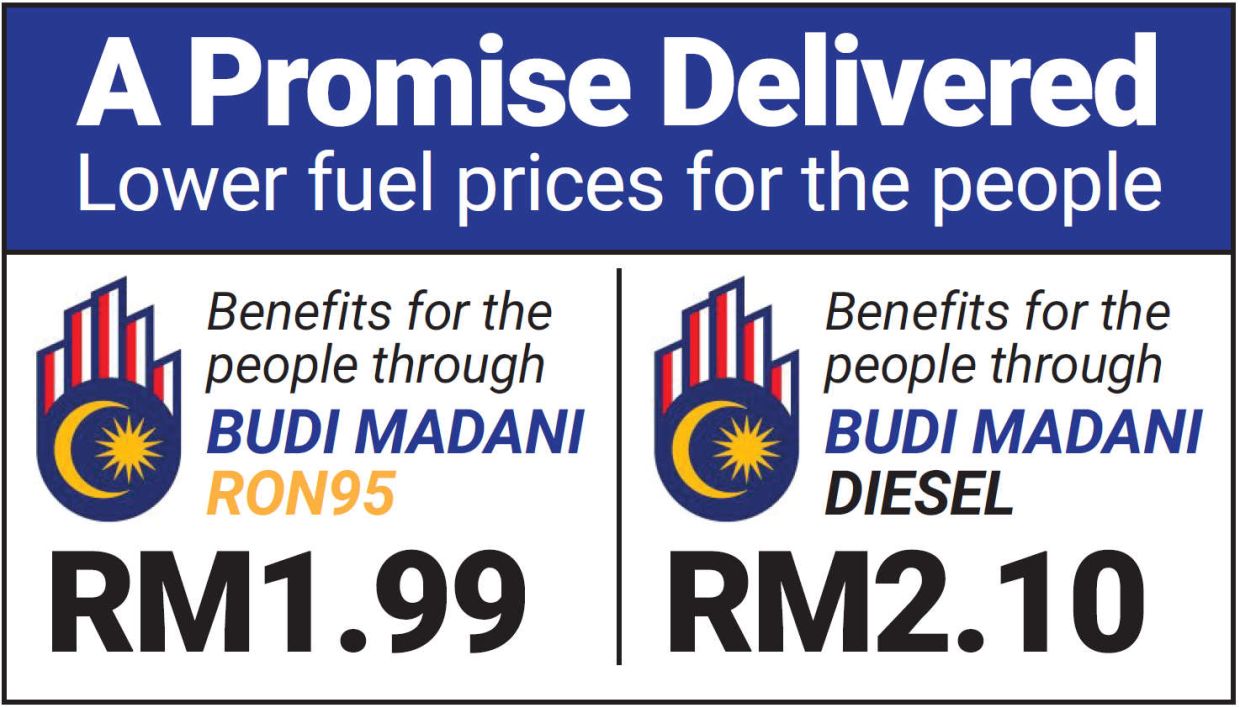
Malaysians purchase subsidised RON95 petrol at RM1.99 per litre and diesel at RM2.10 per litre, protected from global market fluctuations under the Budi Madani programme.
Prof Barjoyai said lower fuel prices also helped to curb the cost of goods and services, as transport is a key component of nearly every supply chain.
"The impact," he noted, "is especially significant for lower-and middle-income households, which spend a larger share of their income on transport."
He pointed out that fuel prices have a strong influence on inflation.
“By subsidising petrol and diesel, the Government helps cushion the impact of rising global crude oil prices and this prevents sharp increases in transportation charges, food prices and logistics costs from being passed on immediately to consumers.
“As a result, inflation remains more stable, protecting Malaysian consumers’ purchasing power,” he highlighted.
Prof Barjoyai further said that small businesses often operated on narrow profit margins.
“Affordable fuel enables small medium enterprises, delivery companies, traders, farmers, fishermen and service providers to keep operating costs under control.
"Without the fuel subsidy, many businesses would either reduce employment or pass the higher costs to consumers through higher prices,” he said.

Prof Barjoyai said money saved on lower fuel costs could be redirected towards essential household expenses, including food, education, healthcare, housing and children’s needs, and that helped to improve families’ overall financial well-being.
“With reduced fuel expenses, the subsidy effectively raises households’ disposable income without requiring higher wages,” he said.
He added that the Government’s shift towards targeted fuel subsidies was aimed at directing aid to households most in need, improving economic efficiency, promoting more responsible fuel consumption and freeing up funds for essential public services.

Malaysia Trucking Federation (MTF) president Datuk Ng Koong Sinn said the targeted fuel subsidy initiative had enabled truck companies to manage rising operation costs.
“The targeted approach has enabled the industry to continue to operate efficiently without disruption to the movement of goods, while supporting the Government’s efforts to improve fiscal sustainability and reduce subsidy leakages,” he said.
Selangor and Kuala Lumpur Lorry Operators Association secretary-general Alvin Choong added that the fuel subsidies had provided economic support to industry members while helping transport companies manage operating costs and maintain stable prices for consumers.

Motorcyclist Hamdan Abd Latip, 54, said the targeted fuel subsidy was a good idea and the process was hassle-free, which enabled motorists to refuel conveniently.
Mother-of-four Hasni Mohamed, 50, also said she was grateful for the fuel subsidy as she has to ferry all her children to and from school, while K. Thandapani, 46, said the fuel subsidy method used at petrol kiosks had provided greater convenience for the public, adding that it reflected the government’s commitment to implementing people-centric policies.

Several petrol station operators in the Klang Valley described the subsidy initiative as a meaningful form of cost-of-living relief that helped ease the financial burden on households.


