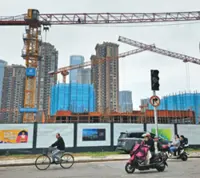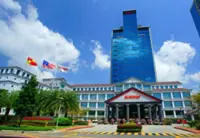
PETALING JAYA: The Johor office market is on track to enter a phase of gradual recovery, supported by strengthening economic ties with Singapore, ongoing infrastructure improvements and rising investment activity.
While political developments, including the Johor state election next month, may have a marginal impact on market sentiment, experts believe the office market will ultimately be shaped by the effective implementation of the Johor-Singapore Special Economic Zone (JS-SEZ), the successful completion and adoption of the Johor Baru–Singapore rapid transit system (RTS Link), and the state’s continued ability to attract businesses that generate sustainable demand for office space.
“In that context, the state election is best viewed as a potential sentiment driver rather than a fundamental determinant of the market’s long-term direction,” said a property analyst.
For the first five months of 2026, Savills Malaysia Sdn Bhd group managing director Datuk Paul Khong said the Johor office market remained cautious as sentiment became more measured ahead of the state election and with Malaysia’s next general election (GE) looming in the background.
“This political overhang has prompted a wait-and-see approach among occupiers and investors as we head into the second half of 2026 (2H26),” he told StarBiz.
Khong noted that Johor continues to outperform in the industrial and data centre segments rather than the office sector, with strong investments inflows supporting rising premium land prices.
Citing statistics from the Malaysian Investment Development Authority, he said approved investments totalled RM16.9bil in the first quarter of 2026 (1Q26), placing Johor second nationwide.
“This was lower than RM30bil in 1Q25 when Johor achieved pole position during the launch of the JS-SEZ.
“However, the office sector has yet to fully capture these benefits and remains in recovery mode rather than entering a full expansion cycle,” he said.
Citing data from the National Property Information Centre (Napic), Khong said the Johor Baru office market has remained relatively soft, with occupancy easing 4% to about 52.6% in 1Q26 – making it challenging to absorb existing supply.
“As occupiers enjoy a tenants’ market, the underlying demand is flat with Napic recording net absorption of -1,100 sq ft in 1Q26, as compared with -37,000 sq ft in 1Q25.
“Rental rates remained stable, with an average gross rent of RM3.20 per sq ft in 2025, reflecting a marginal year-on-year increase of about 0.1%.”
Khong said demand remains highly selective and concentrated within Grade A office segment due to the modern specifications, larger floor plates and strategic locations.
“Older stock continues to face serious leasing pressures. The market is not short of space but rather of institutional-grade offices, which are sought after by multinationals and Singapore-linked occupiers.
“The expansion of flexible workspace operators meanwhile reflects growing demand for agility. Overall, the market remains an absorption story rather than growth.”
Olive Tree Property Consultants founder and chief executive officer Samuel Tan said modern Grade A offices aligned with environmental, social and governance and energy-efficiency standards retain strong tenant interest, higher rental levels and healthier occupancy rates.
“For the first five months of 2026, occupancy stuck in the mid-50s, masking a real flight-to-quality where Special Financial Zone (SFZ)-fronting and transit-adjacent Grade A stock is absorbing reasonably well, while legacy strata-titled and central business district-fringe stock continues to drag the average down.”
Going forward, Tan said demand is likely to firm up gradually rather than picking up sharply, adding that “it will be narrative-led, not yet leasing volume-led.”
He noted that the RTS Link is targeted for completion by end-2026, with systems testing planned to begin in September and full operations by January 2027.
“As that becomes visibly real (test runs, train sightings, as well as integrated immigration, customs and quarantine completion), we expect occupier and investor sentiment toward Bukit Chagar and Johor Baru Sentral-fronting office stock to strengthen, even before the line actually opens, since pre-completion sentiment plays often outrun actual leasing.”
Among the tailwinds for the market include JS-SEZ-linked foreign direct investment commitments continuing to convert into actual office headcount needs, such as professional services, compliance and regional back-office functions, following manufacturing and logistics investments, noted Tan.
Outside the RTS Link zone, he said established suburbs like Medini, Puteri Harbour and Forest City will see improved sentiments.
“When Puteri Harbour and Medini are connected by the elevated autonomous rapid Transit system, or E-ART, to the RTS Link, we expect more demand for office spaces due to the improved connectivity and conveniences, apart from the lower rental rates.”
Moreover, Tan believes that demand in Forest City will be spurred by more occupiers moving in due to its status as a SFZ.
“There are needs for professional firms, single family offices and other targeted groups that want to be present there. In part, it is to service their clients and also due to the tax incentives given by the government.”
Khong expects the Johor Baru office segment to be relatively stable in 2H26, as the market moves towards a gradual absorption phase due to the existing sentiment and the upcoming state election, as well as GE activities.
“Developments which are well positioned to the RTS Link will capture demand from growing cross-border activities and investments from the economic integration of the JS-SEZ.
“Additionally, the relocation of operational and support functions from Singapore reinforces Johor Baru’s position as a strategic location for shared services, regional support offices, technology functions and business operations.”
Still, Khong cautioned that the outlook is not without headwinds.
“These include the existing oversupply in the sector, the continued adoption of hybrid working arrangements, the escalation of construction and daily operational costs, and global economic uncertainties.
“As such, demand recovery is unlikely to be uniform across the market.”