
CHINA’S rapidly ageing population is fuelling a new consumer trend for “senior toys”.
With over 300 million citizens aged 60 or older, families are increasingly turning to specialised games, puzzles and therapeutic toys to combat cognitive decline and elderly isolation.
However, industry insiders warn that the emerging market is still failing to meet the complex needs of older adults.
Guo Xiafei used to think her grandmother was fine living on her own. But during her rare home visits to Chengdu, Sichuan province, Guo noticed her grandmother’s loneliness, filled with long hours of television, naps and silence.
“My grandpa can find joy in music. He plays the erhu and the bamboo flute, but my grandma’s life is much more monotonous. I realised I’ve grown up, and it’s time to look back,” the 27-year-old says.
That realisation led her to search for something that could bridge the distance. That’s how she found senior toys.
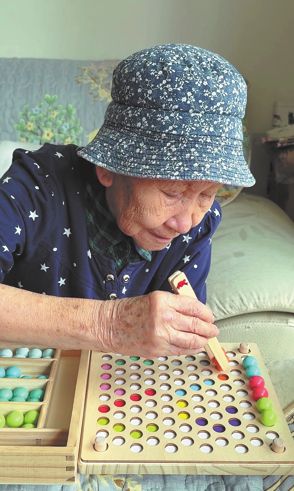
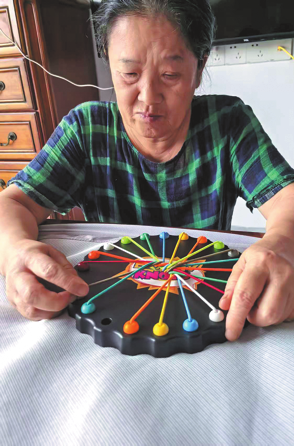
To Guo’s delight, after playing with a bead-sorting and tweezing toy, her grandmother broke into a childlike smile, hugged and thanked her.
The 82-year-old, who has severe hearing loss, usually required the family to shout into her ear. Yet, sitting side by side with her granddaughter and taking turns playing a whack-a-mole game, her face was full of laughter.
“She told me the toys are so wonderful. That warm family vibe is the real point of the toy,” Guo says.
For decades, China’s massive toy industry focused exclusively on children.
Now, eCommerce platforms are flooded with hundreds of products marketed as elderly toys – ranging from no-pick-up table tennis sets and colour-sorting games, to memory books and grip balls.
On the product pages, stores say the toys are designed to kill time and keep minds sharp. Guo discovered them by accident while scrolling online.
“I saw a table tennis set with no need to pick up the ball. Since my grandmother needs help while walking outside and spends most of her time indoors, I thought: why not bring the fun inside?
“I wanted to let them experience a bit of what we young people are into. That’s where it all started,” she says.
However, she quickly learned a lesson that no product description can teach.
“If I give them a toy and walk away, they won’t play. They are like children. They need someone beside them and simple interaction.
“When I was little, they played with me. Now I play with them,” Guo says.
Like Guo, a growing number of families are turning to toys not just for entertainment, but as tools for connection and cognitive care.
Besides medical treatment, Chu Yue provides toys for her 66-year-old mother, who has developed symptoms of memory decline.
The 41-year-old from Daqing, Heilongjiang province, says: “My mother had even gotten lost inside her own neighbourhood. She was worried that she might have developed dementia.”
Chu went online and typed a simple search: “Toys to prevent dementia for the elderly.” What appeared was a flood of cheap, simple products on shopping platforms.
She picked a string puzzle – a small board with holes and tangled cords – priced at less than 20 yuan (US$2.93). The goal is to untie the knots and free the strings by moving them through the right holes.
“At first, my mother thought it would be too hard, so I showed her,” Chu says. “Then she tried it herself and realised that as long as she is patient, she can always solve it.”
Within days, her mother was demanding more challenges.
“She told me to tie it tighter, twist it a few more rounds, and make it harder for her.”
The toy’s appeal lies in its simplicity. Her mother soon started playing for hours. Then she asked Chu to buy the same toy for her elder sister.
“My aunt loved it too. And then she started playing with her own family, setting puzzles for each other. It brought the whole household together.
“Activities like watching TV are just input with no interaction. But with this toy, her brain is working,” Chu says.
Yet, while such toys help some, others face more complex needs that off-the-shelf products fail to meet.
After a cerebral infarction affected her grandfather’s speech and mobility, Tan Mengqian, 32, got creative. Her grandfather, a retired professor from Tai’an, Shandong province, could no longer walk steadily or communicate clearly.
“I needed to find things he could do with his hands while sitting down,” Tan says.
She started with large-print books and picture books, which he enjoyed. But she wanted more than just a pastime.
She then turned to the Internet, searching for “toys for the elderly with dementia”.
What she found were sensory touch toys for children. “He would touch and play with them to help develop his tactile perception,” she says.
But engagement was limited. “He couldn’t get overly absorbed in it. He might play for half an hour, then not play seriously anymore.”
The core problem is a lack of suitable products for those with more advanced needs, she says.
“The elderly toys I find on online shopping platforms are not right for his situation. We need something that uses the hands but doesn’t require fine, detailed movements.”
For Tan, the ultimate solution wasn’t found in a shopping cart.
“They don’t fundamentally solve our problem. The core need still has to be met through companionship,” she says.
The current market for senior toys often misses the mark, Ma Dafei, general manager of a Zhejiang toy company, tells Tide News, a Zhejiang-based online media outlet.
“Many products are just children’s toys made larger, with colours and themes that don’t resonate with older adults,” he is quoted as saying, adding that they fail to address what seniors truly need or enjoy.
He says that toys for seniors should be designed to support health and social connection.
A toy for a lively retiree is completely different from one for someone who is housebound. The market is still in its early phase, lacking this crucial segmentation.
“Many people simply don’t realise that seniors can benefit from toys, or how play can support healthy ageing,” Ma tells Tide News, adding that this awareness gap has left a market need largely unmet.
In a separate report, China’s silver consumption is rapidly shifting from basic subsistence spending to quality-oriented enjoyment consumption, a prominent industrial trend fully demonstrated at the International Exhibition of Senior Care, Rehabilitation Medicine and Healthcare Shanghai 2026 (AID 2026).
Demand for smarter, safer senior care products is surging. Artificial intelligence (AI)-powered domestic devices are leading the industry’s comprehensive upgrade, driven by technological advances and robust supply chains.
The expo – held from June 4 to 6 – showcased unprecedented AI penetration in senior care products. Hong Liang, a representative at the Shanghai Civil Affairs (Group) booth, highlights the sector’s dramatic transformation.
“AI application in eldercare products has reached a much higher level this year. Intelligent systems enable far more powerful data analysis and adaptive adjustments than manual operations,” Hong says.
“Traditional electric wheelchairs can no longer meet current demands. Elderly visitors and their families now prioritise AI-powered wheelchairs and exoskeletons to solve pain points such as stair-climbing difficulties and limited mobility.”
A host of newly launched intelligent mobility devices have become exhibition highlights.
Sweetrich’s newly launched M6 radar intelligent mobility wheelchair, equipped with dual LiDAR (light detection and ranging) sensors and reverse imaging systems, can automatically brake and steer to avoid barriers, adapting to narrow household spaces and crowded supermarket scenarios.
Hong notes that the intelligent model has gained huge market popularity for effectively reducing elderly travel risks and anxiety.
Ageronx’s new omnidirectional wheelchair features 12-inch large omnidirectional wheels and an automatic locking system that activates when users stand up, preventing accidental injuries.
Priced at around 10,000 yuan (US$1,475), the model will be upgraded with self-developed AI obstacle-avoidance radar, according to Zhu Peng, the group’s project manager.
AI exoskeletons and all-terrain robots are addressing critical mobility challenges in elevator-less older residential communities.
RoboCT operations manager Li Chongxuan says its late-2025 AI walking exoskeleton delivers adaptive uphill assistance and downhill buffering via embedded terrain-recognition chips. Built with lightweight, breathable materials, it has been in high demand since its launch.
“Previously, customers waited 57 days for delivery; now we offer next-day delivery thanks to expanded capacity,” Li says, with many seniors reporting noticeable relief during walking and stair climbing.
The Xsto X13 embodied mobile robot, another star exhibit, switches to track mode to navigate 35cm narrow passages, climb stairs and traverse rough terrain. Xsto deputy general manager Huang Zhou says the first batch sold out instantly after its April launch.
“Overseas sales account for 70% of our total volume, with products exported to more than 80 countries via global distributors,” Huang says.
Hong further stresses that China’s mature supply chains and AI innovation have enabled domestic assistive devices to outperform Japanese products in intelligent functions, with a leading edge set to expand further over the next five to 10 years.
Beyond mobility devices, premium rehabilitation equipment is fuelling quality senior consumption growth.
For the first time, the expo launched a dedicated silver economy finance zone, where major financial institutions including Industrial and Commercial Bank of China, China Construction Bank and Shanghai Trust showcased elderly-oriented services such as eldercare trusts and voluntary guardianship programmes, enhancing senior wealth management and rights protection.
As China’s most aged mega city, Shanghai is building a full-cycle care system via talent training, policy incentives and scenario optimisation.
In May 2026, Shanghai included community nursing stations in hospice care training for the first time, a key shift from institutional to home-based care, says Zhu Jingwei, Shanghai Open University non-degree education director.
Shanghai aims to train 800 hospice care professionals in 2026 and has cultivated over 30,000 senior care workers since 2024, while developing industry standards.
The city offers a 100,000-yuan one-time subsidy for elderly tech scenarios, with 122 smart senior care homes already operational.
The city’s first physical silver products store, operational for more than five months, fills the gap in offline elderly consumption scenarios, with a single-day sales peak of 80,000 yuan.
“Many seniors prefer offline purchases despite lower online prices due to reliable after-sales services,” says Ma Zhiwen, general manager of Shanghai Ageing Industry Development Co Ltd, highlighting the irreplaceable value of offline services in bridging the digital divide for the elderly.
At the concurrent 2026 AID Silver Industry Innovation and Development Conference, renowned economic observer Qin Shuo notes that the shift of silver consumption from subsistence-oriented to enjoyment-
oriented has become the core growth driver of China’s booming silver economy. — China Daily/ANN
Already a subscriber? Log in
Get 20% OFF The Star Digital Access
Cancel anytime. Ad-free. Unlimited access with perks.
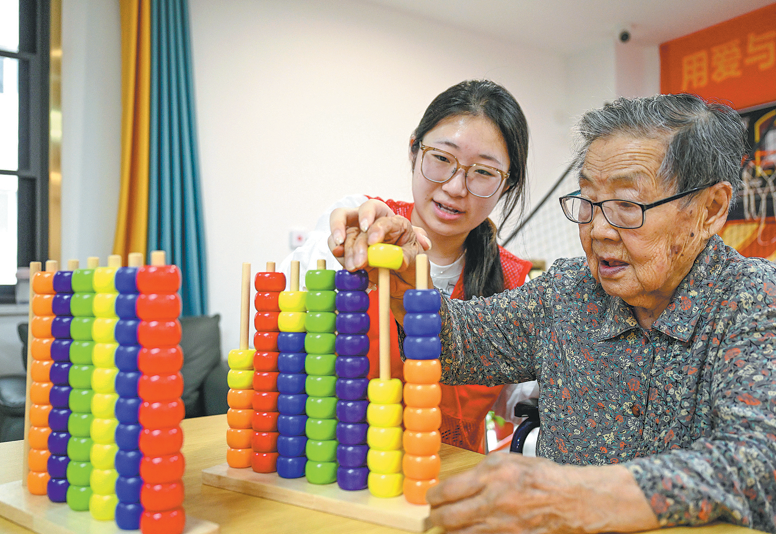
Matching pairs: An elderly woman uses a set of coloured beads to train her thinking and motor skills in Hefei, Anhui province. — Photo: China Daily
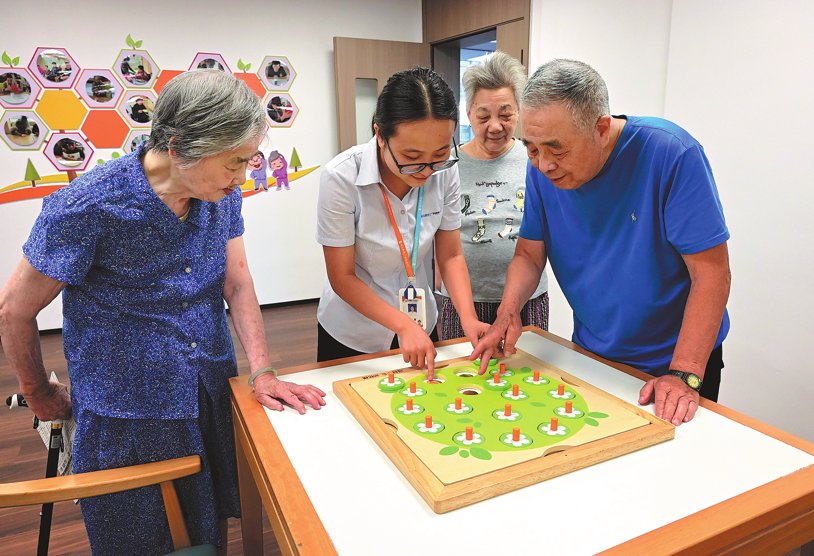
Cognitive care: Seniors sharpen their memorising skills by participating in the ‘remember the fruit’ game at a community centre in Fuzhou, Fujian province. — Photos: China Daily
Hand-eye coordination: Guo’s grandmother trains her motor skills with a tweezing toy.
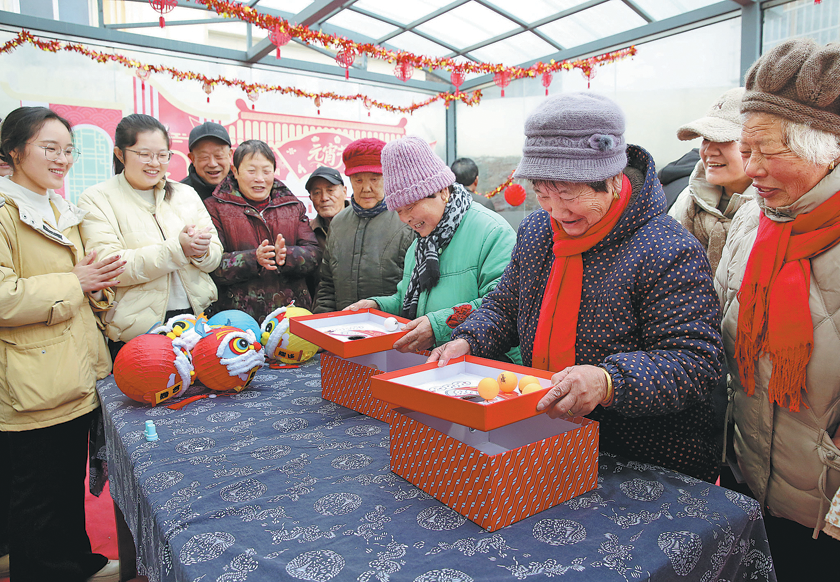
Social connection: Senior residents play a balancing game for Lantern Festival on March 1 in Lianyungang, Jiangsu province.
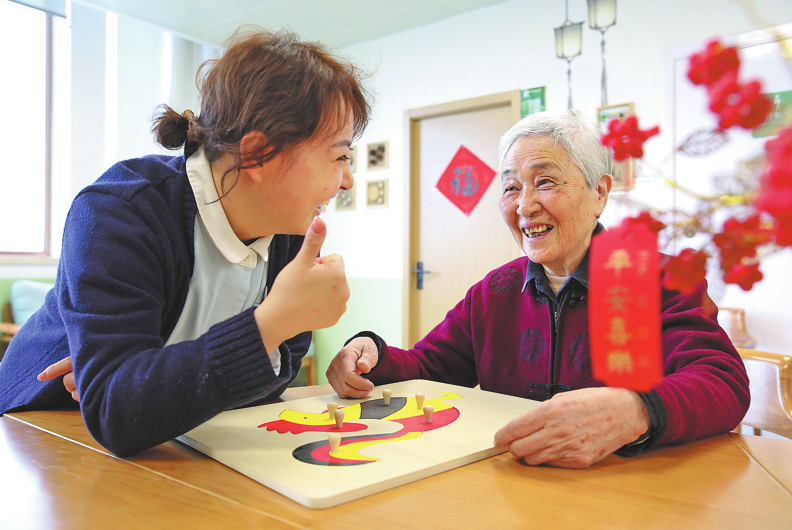
Warm companionship: A social worker accompanies an elderly woman in solving a jigsaw puzzle at a senior care home in Huzhou, Zhejiang province.
Brain exercise: Chu’s mother trains her mind with a string puzzle game.
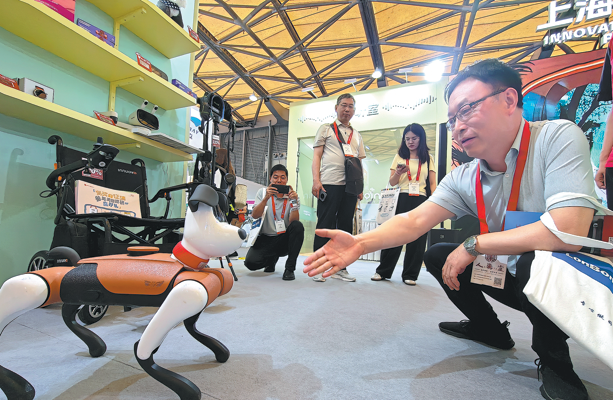
Mechanical friends: A visitor interacts with a robot dog during the International Exhibition of Senior Care, Rehabilitation Medicine and Healthcare Shanghai 2026.