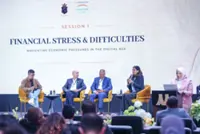
KUALA LUMPUR: Digitally engaged Malaysians demonstrate relatively strong financial literacy, but many continue to face challenges translating financial knowledge into long-term financial resilience and retirement preparedness, according to a joint report by Monash University Malaysia, Versa and AHAM Asset Management.
The report, Financial Literacy and Well-Being in Malaysia’s Digital Economy: Insights from the AHAM–Versa–Monash Financial Literacy and Well-Being Survey, analyses responses from 4,004 Versa platform users and provides one of the most comprehensive snapshots of financial capability among digitally active consumers in Malaysia.
The report finds that the average financial literacy score is 75 out of 100, with financial knowledge scoring particularly strongly at 82 out of 100.
However, financial attitudes and long-term financial behaviours lag, revealing what the authors describe as a “knowledge-action gap” that continues to hinder financial well-being.
"What surprised us most was not the level of financial knowledge, but the gap between knowledge and outcomes. Many respondents understand key financial concepts and are highly motivated to improve their financial futures, yet translating that knowledge into consistent financial behaviours and long-term financial security remains a challenge," said Dr Mirzet Šeho, senior lecturer in finance at Monash University Malaysia and lead author of the report.
The report also highlighted the widespread adoption of digital financial services among Malaysians.
About 88.3% of respondents regularly use digital payment tools such as e-wallets, DuitNow and QR payments, while 77.3% use digital banking applications, 58.1% use digital investment platforms and 43.1% use the EPF mobile application.
Despite growing digital engagement, concerns over fraud and cybersecurity remain prevalent, with nearly 60% of respondents identifying scams and security risks as their biggest challenge when using digital financial services.
The report found that financial well-being remains moderate, with an average score of 75 out of 100. Younger adults and widowed respondents were identified as among the most financially vulnerable groups.
While 70% of respondents said their income generally covers expenses and 79% believed they could manage unexpected expenses for some period, the report noted that rising living costs, economic uncertainty and inadequate retirement savings continue to pose risks to long-term financial security.
The report recommends expanding financial capability programmes beyond traditional financial education, strengthening consumer protection and scam prevention efforts, and improving retirement planning support, particularly for younger Malaysians.