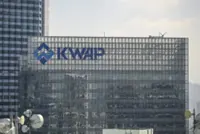
THE renewed attention on Retirement Fund (Inc) or KWAP’s investment in Indonesian aquaculture startup eFishery is understandable.
Public funds deserve public scrutiny, particularly when investments result in losses.
But revisiting the episode without acknowledging the lessons already learnt risks missing the more important discussion: how Malaysia should invest in innovation and where regulators ought to focus their energies.
KWAP invested around US$30mil in eFishery in July 2023. Financial irregularities at the startup first surfaced publicly in December 2024, when the company’s board suspended its founders following an investigative audit.
Like many investors, KWAP was caught up in one of South-East Asia’s higher-profile startup failures.
The pension fund has not ignored the episode. Following that, it conducted a comprehensive internal review and strengthened its investment framework, placing greater emphasis on co-investments with experienced fund managers while enhancing post-investment monitoring.
It should also be noted that even before the eFishery loss unravelled, the government had already begun structurally shifting its institutional capital towards a national fund-of-funds ( OF) ecosystem.
It remains highly risky for government investment funds to make direct bets on their own, let alone compete with one another, as well as with privately owned venture capital funds, for direct investment opportunities, potentially crowding out private capital.
That said, hardly any investment firm can lay claim to making only good bets. Many investments do turn sour, and that is simply part and parcel of investing.
What is more important is fraud taking place on our own shores and involving our own listed companies. In such instances, the integrity of our capital market is at stake.
Malaysia’s capital market has experienced several high-profile corporate governance failures, in which falsified financial reporting, overstated revenues and aggressive accounting practices eroded investor confidence.
Cases such as Transmile Group Bhd and Serba Dinamik Holdings Bhd illustrate the damage that governance failures can inflict on market integrity.
While these cases prompted significant regulatory action, many market participants argue that the eventual penalties did not fully reflect the scale of the misconduct.
This is where the authorities ought to spend more time focusing on.
While Malaysia’s regulators are recognised for their advanced investigative tools and proactive monitoring, the final legal outcomes too often dilute these efforts through lengthy processes, institutional constraints and penalties that many perceive as falling short of being effective deterrents.
A market is only as credible as its willingness to hold wrongdoers to account.
Already a subscriber? Log in
Get 20% OFF The Star Digital Access
Cancel anytime. Ad-free. Unlimited access with perks.