AMONG the various functions in an organisation, procurement is not generally regarded as the most exciting.
Associated with mundane, administrative back-end processes, it is often overshadowed by more prominent counterparts such as product or strategy.
Supplycart Technologies, a Malaysian procurement software-as-a-service, or SaaS, company, intends to change this.
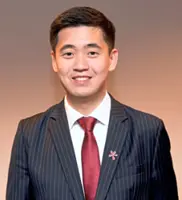
“We see procurement evolving from a manual function into a strategic, digitally-enabled operating layer for businesses,” says Jonathan Oh, chief executive officer (CEO) and co-founder of Supplycart.
Through its Adam-Procure (Adam) platform, it enables organisations to digitise their procurement processes, enabling automated workflows and improved sourcing, vendor management and spend control.
“Companies want better visibility, faster decisions, stronger compliance, and better supplier outcomes. Our platform is designed to support that shift,” he adds.
Founded in 2016, Supplycart emerged out of a previous business which specialised in sourcing and supplying office supplies and business services for companies. It was during this time that the co-founder became aware of significant issues in procurement management within many organisations.
“Processes were largely manual, fragmented, and unstructured. Businesses relied on in-person approvals, spreadsheets, and multiple communication channels scattered across emails, messaging apps and phone calls,” Oh says.
In addition to being inefficient, these systems were not transparent or scalable, often hindering business growth. This catalysed the company’s pivot from a supplier and procurer to a technology-based enterprise.
“We began investing into building up the technology so that we could create a more seamless experience for procurement,” he recalls.
Supplycart’s cloud-based Adam platform offers a full, source-to-pay solution that integrates a company’s requests, approvals, sourcing events, and vendor interactions in one consolidated system, allowing simplified management and tracking.
Teams are also able to compare and verify suppliers, match purchase documents, and configure workflows that ensure adherence to internal policies.
Meanwhile, the unified platform gives organisations enhanced governance, compliance, auditability, budget control, and accountability, with analytics providing detailed insights into spend patterns and opportunity costs.
Oh shares that the platform is constantly evolving and developing as more customer needs emerge.
“We are a product-driven company. The platform is intentionally configurable, flexible, and easy to use, as we are building it so that as many businesses as possible can use it,” he says.
While Adam was created to be industry agnostic, the product tends to offer greater value to companies in sectors like healthcare, pharmaceuticals, education, and services, which involve high levels of engagement with suppliers.
He also notes that growing mid-sized businesses with over 50 employees are a key market for Supplycart.
“This stage of organisational growth is when complexities in back-end processes start to become a problem. That’s where we come in and help them manage that so that they can focus on scaling,” he says.
The company operates on a subscription model, in which clients are charged based on their required modules, scale, and use-case needs, rather than number of users.
Offering unlimited user access allows businesses to expand without being restricted by licensing costs, Oh explains.
Clients subscribe for a fixed-term, such as one year, during which they automatically benefit from upgrades added to the platform at no additional cost.
“Our commercial model is built around long-term customer adoption, and lets us grow alongside them,” he adds.
Notably, from 2021 to 2024, Supplycart recorded an absolute growth rate of around 1,300% and a compound annual growth rate of 144%, achieving a top-line revenue of approximately RM65mil.
Additionally, its presence today extends beyond Malaysia to Singapore, Thailand, Philippines, and Indonesia.
“In terms of impact, our clients have typically seen around 10%–15% cost savings in sourcing and procurement cycle time is down by up to 50%,” he adds.
A key factor in the company’s growth, Oh shares, has been its hybrid approach to funding, which includes both venture capital and equity crowdfunding (ECF).
“ECF uniquely unlocked a broader base of investors for us, comprising individuals with real life experience, industry knowledge, and networks,” he says. “It increased our visibility, credibility, and enhanced market engagement as we had a community of investors backing us.”
On top of this, the Malaysia Co-Investment Fund (MyCIF), provided Supplycart a further boost. Administered by the Securities Commission on behalf of the Finance Ministry, MyCIF co-invests in micro, small, and medium enterprises with private investors on ECF and peer-to-peer platforms.
“The initiative played an important role in strengthening investor confidence, and gave us a runway to continue investing in our product, team, market expansion, and enterprise readiness,” Oh adds.
Looking ahead, the company sees significant opportunities, especially in the Malaysian market, where the need for structured digital adoption has been accelerating.
“The country’s broader direction towards governance, transparency, and accountability, such as the Government Procurement Bill 2025 passed last year, has started to ripple into the private sector, with businesses now recognising the importance of strong procurement practices,” Oh notes.
Disruptions in the global supply chain due to current geopolitical tensions are also expected to drive demand for the platform as businesses increasingly seek ways to diversify their supplier networks.
The next frontier for Supplycart, Oh reveals, is to build on the platform with artificial intelligence-driven capabilities to more effectively automate and streamline procurement work.
“Our goal is to move beyond just digitalising procurement, and we hope to help organisations operate their procurement processes more efficiently, competitively, and intelligently, with less manual intervention and better business outcomes.”