IT was halted in 2012, but it is back on the table – and the proposed free trade agreement (FTA) between Malaysia and the European Union (EU) region could be one of the more significant deals this year, despite geopolitical tensions that cloud global trade.
The FTA talks began to resurface in June last year when an assessment was done, and both parties decided it was time to restart negotiations.
The negotiations could be successfully concluded by 2027, sources say.
The EU already has FTAs in place with two Asean countries – Singapore and Vietnam.
In Malaysia, the European Chamber (Eurocham) has been the amplified voice for European businesses.
Founded in 1993, the chamber is represented by 27 EU member states plus nine bilateral chambers.
Within its network, there are some 1,600 companies across 54 markets.
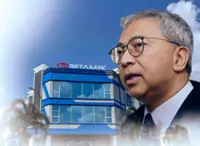
Chief executive officer (CEO) Kati Ferry recently had an in-depth discussion StarBiz 7 on FTA matters and what makes Malaysia a particularly attractive trading partner.
Malaysia is the EU’s third-largest trading partner in Asean and the EU’s 22nd-largest trading partner globally.
In 2024, trading for goods alone stood at RM216bil – with RM28.6bil of imports and RM17.8bil of exports.
EU exports in Malaysia have grown at an average of 13.9% annually, significantly outpacing imports.
“The trading relationship between both have been very beneficial, in fact they’ve enjoyed a trade surplus which has increased threefold in 10 years.
“Of course there was a peak during the Covid-19 pandemic but it’s definitely more normalised now,” Ferry says.
While acknowledging that countries like Vietnam or Indonesia may be larger in size, she believes Malaysia is more strategic and mature.
European companies see South-East Asia as a whole – all offer attractive and distinct value propositions – but Malaysia is still viewed as very credible and competitive.
“The strength lies in the established industrial base, strong infrastructure, and experienced global value chains.
“For instance machinery and transport alone account for RM79bil of EU imports.
“EU exports in this segment are growing strong annually, about 17.5%, showing deep industrial aggregation,” she explains.
Apart from that segment, over a quarter of EU imports from Malaysia are integrated circuits and electronic components.
“Malaysia has not only evolved as a major hub in the semiconductor industry but its broad objectives are also very similar to the EU in terms of frameworks and regulations like the National Semiconductor Strategy and the New Industrial Master Plan 2030,” she opines.
On top of that, it does seem that Malaysia’s neutrality has proven to be a prudent and strategically advantageous stance.
“This neutral, pragmatic approach to geopolitics is well understood and respected by the EU,” Ferry says.
“What matters most is that both sides share a strong interest in maintaining open, stable, and predictable economic relations.
“So EU and Malaysia, are aligned in their support for rules-based international trading under the World Trade Organisation.”
Malaysia also offers optionality. Ferry explains that for digital strategy, Malaysia happens to be one of the few countries that can operate across both global and China-linked technology ecosystems, supported by its dual 5G network approach.
“This allows companies to deploy across multiple platforms, reduce dependency risks, and maintain operational flexibility.
“From an investment standpoint, that is a very powerful proposition,” she adds.
“Flexibility is one of the reasons why the EU has continued its relationship with Malaysia.
“It’s no surprise that stakeholders in Malaysia all wish to have more connections with the EU.
“Why, you may ask? Europe is a premium market, it has over 450 million consumers and a gross domestic product of approximately €18 trillion.
“But goods that go in are of a certain quality so many want to be a part of that market.”
She forecasts that the advanced manufacturing and semiconductor industry will continue being the key drivers for Malaysia in the coming years.
So what does the EU look at when considering trade deals and determining which partners align with its economic, regulatory and strategic priorities?
Firstly, it’s vital to realise that the EU no longer sees Asean as just a factory hub, instead, it sees a strong player within the value chains both regionally and globally.
Ferry highlights three main areas to which the EU pays much attention in this day and age – sustainability, predictability and security.
Investors are always aware of a few things – will investments be safe, will they increase, and is it sustainable?
“This is why we advocate that policies coming in can be sustainable and safe.
“We engage with governments and we believe, beyond just trade, a close partnership will help both sides secure access to key inputs, reduce vulnerabilities all the while supporting more predictable and transparent trade conditions” she says.
Ferry, meanwhile, has her work cut out for her.
Since taking on the CEO role in February this year, she’s hit the ground running – in March, 32 meetings were held with stakeholders so she could engage immediately with them.
“I used to be in hospitality, so I’m very familiar with the definition of stakeholder management.
“As a Romanian, I am actually the founder and chair of Romanian Association of Malaysia, and I also founded and led the Central and Eastern European Business Circle, and this is within Eurocham’s ecosystem,” she says.
This year, Eurocham will host a flagship event in October, in collaboration with Invest Selangor, bringing together government leaders, EU ambassadors, CEOs, investors, and industry stakeholders.
Ferry says this will go beyond panel talks, but will have CEO-run tables, policy dialogues, investment pitches and structured networking.
“My personal return on investment from this event is not something that will take place overnight, but what we will see is closer engagement with the relevant ministers and stakeholders to bridge the gap when it comes to policy confusion with businesses.
“I’m hoping for a lot of meetings that will diverge from this event in the six months after the event.”
Already a subscriber? Log in
Get 20% OFF The Star Digital Access
Cancel anytime. Ad-free. Unlimited access with perks.