SINGAPORE: The energy shock from the Iran war will cascade down the Singapore economy in direct and indirect ways, with businesses in construction, real estate and food & beverage (F&B) among those also likely to face higher costs, on top of transport operators.
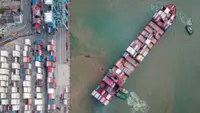
The bunkering industry, which underpins Singapore as the world’s biggest refuelling port, is already feeling the impact, according to the Republic’s central bank.
The labour market may also suffer some fallout from a prolonged energy disruption in terms of slower hiring and pay growth, along with the wider risks of higher inflation and weaker growth, according to the Monetary Authority of Singapore (MAS) in its latest macroeconomic review.
The report on Tuesday came after MAS tightened its monetary policy stance for the first time since 2022 to allow for a stronger currency in the face of soaring oil and natural gas prices.
It also raised its all-items and core inflation forecasts for 2026 to an average of 1.5% to 2.5%, up from an earlier projection of 1% to 2%.
Global oil and natural gas prices have surged since Feb 28, when the United States and Israel launched an air campaign against Iran.
The Islamic republic, in turn, has effectively blocked the Strait of Hormuz, which in peacetime sees the flow of a fifth of global oil and natural gas supplies from the Persian Gulf.
There is significant uncertainty over how long the conflict is likely to and keep the flow of oil, natural gas and other inputs and commodities from the region constrained.
But the disruption to supplies and maritime trade routes could result in a near-term negative impact on the Singapore economy, said MAS in its report.
Edward Lee, chief economist and head of foreign exchange, Asean and South Asia at Standard Chartered Bank in Singapore, said Singapore’s open economy will be confronted by higher inflation, an erosion of real income and physical supply shortages.
“Higher energy costs would increase production expenses, compress margins and potentially weigh on firms’ capital expenditures and output decisions,” Lee said.
“Supply disruptions and shortages of key intermediate inputs could further constrain industrial production,” he added.
Sectors in Singapore that depend most heavily on energy supplies will, therefore, likely be directly affected, MAS noted.
Top energy-dependent industries here include petroleum, gas and electricity, petrochemicals, transportation services for land, air and sea, and water and waste services.
First, their production volumes may be affected. Second, higher production costs would squeeze profit margins and discourage investment, which in turn could result in these industries passing down the costs to consumers.
This would erode household real incomes and dampen aggregate demand, said MAS.
The impact from disruptions to critical imported raw materials has so far been concentrated in the chemicals industries, evidenced by a wave of force majeure declarations across Asia, including Singapore.
Indirectly affected sectors will include wholesale trade, which accounts for 19% of the country’s gross domestic product, as such businesses depend on transport services.
MAS noted that about half of the sector’s resource requirements stem from the energy-intensive transport and storage sector, particularly water transport services.
“Indeed, effects on the wholesale trade sector appear to have already materialised, especially for oil bunkering services,” said MAS.
Bunker prices reached historic highs in March as suppliers rationed inventory, declined new contracts and extended lead times to prioritise existing obligations, it added.
“Although bunkering accounts for only 5% of Singapore’s total exports, it anchors a critical economic cluster comprising marine insurance, ship finance, commodity trading, legal and arbitration services, and port operations.”
Finally, domestic-oriented sectors would likely experience mounting cost pressures and operational challenges from disruptions in upstream supplies.
MAS said most directly impacted would be the land transport operators, which are confronted with significant hikes to petrol and diesel prices.
Recent anecdotal reports have also pointed to rising petroleum-based material costs in construction, while F&B operators could face higher utility, plastic packaging and raw material costs.
“Overall, risks to growth are tilted to the downside, particularly if the fallout of the energy crisis becomes prolonged,” said MAS.
The latest advance estimates for January to March released on Tuesday by the Trade and Industry Ministry (MTI) showed that the economy contracted by a seasonally adjusted 0.3% on a quarterly basis.
That was after Singapore’s GDP expanded by 1.3% in the preceding quarter.
MAS said the quarterly slowdown reflected some normalisation in the trade-related and modern services clusters, such as legal, accounting and computing services, following their strong performance in late 2025. — The Straits Times/ANN