SEOUL: SK Innovation Co’s battery unit, SK On, is in talks with multiple American data centres and energy developers to supply batteries for energy storage systems (ESS), aiming to secure at least 10 gigawatt hours (GWh) of contracts in the United States this year.
SK On, which counts Ford Motor Co, Hyundai Motor Co and Kia Corp among its customers, has been accelerating production of lithium iron phosphate (LFP) cells widely used in ESS to meet soaring demand from artificial intelligence (AI) data centres and expanding renewable power capacity.
The Seoul-based company is playing catching up in the fast-growing LFP market, after initially prioritising high-performance nickel-based batteries over what South Korean battery makers once saw as a low-tier technology dominated by China.
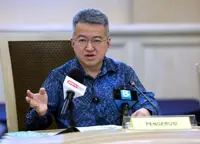
But inquiries have surged since it signed its first deal in September to supply LFP batteries to US-based Flatiron Energy Development, Choi Daejin, SK On’s head of ESS business, said in an interview.
Private ESS developers such as Flatiron and companies serving “hyperscalers” – tech giants like Microsoft Corp and Meta Platforms Inc building massive data centres – are among primary clients, he said on the sidelines of the InterBattery conference.
An announcement is expected as early as this summer.
“Our goal is to secure orders for over 10GWh in the United States this year, though the internal target assigned to me is actually much higher,” Choi said, adding that the company will shift around 20% of its 100GWh global production capacity to ESS cells.
SK’s push into ESS comes as the battery industry adjusts to a slower electric vehicle (EV) transition in the United States, rising tariff pressure and intensifying competition from China.
As they develop next-generation technologies to diversify revenue streams, LG Energy Solution Ltd and Samsung SDI Co are also repurposing some EV battery lines, aiming to raise ESS cell output this year to more than 60Gwh and 30Gwh, respectively.
The pivot comes after SK ended its joint venture with Ford in December just four years after unveiling an US$11bil plan to build three battery factories and an electric pickup assembly plant in the United States.
That led to a 3.7 trillion won (US$2.5bil) writedown, with the company laying off more than a third of the workforce at its Georgia plant.
The ESS business will help drive a turnaround as electricity demand from data centres and renewables energy accelerates, Choi said, noting that some EV production lines in Georgia and at the Tennessee site acquired from the Ford project will be converted to ESS.
BloombergNEF forecast demand from US data centres will more than double from 2024 to 78GWh by 2035, accounting for nearly 9% of the country’s entire electricity demand and outpacing growth in EVs and hydrogen.
Samsung SDI has said the US ESS market is projected to reach 130GWh in 2030 from around 80GWh now.
The AI-driven power boom is just beginning, opening opportunities for South Korean suppliers as the US grid upgrades and buyers seek batteries made outside China, Choi said.
To win market share from South Korean and Chinese rivals, SK is betting on a safety technology known as electrochemical impedance spectroscopy, which can identify abnormal signs at least 30 minutes before a thermal event, helping prevent fires at storage facilities.
The technology helped SK secure more than half the volume in a one trillion won ESS tender from the South Korean government last month, providing momentum to its expansion in the sector.
SK is developing a higher-performance LFP battery, targeting mass production by 2028, Choi said. — Bloomberg