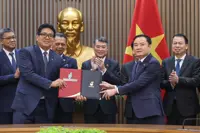
KUALA LUMPUR: TH Plantations Bhd (THP) has commissioned the 1.2 megawatt (MW) Cenergi Lawiang Biogas Power Plant with Cenergi SEA Bhd (Cenergi) in a significant developmentto advancewaste-to-energy solutions in the plantation sector.
A joint statement today saidCenergi Lawiang Sdn Bhd, a joint venture between Lembaga Tabung Haji’s plantation arm THP and Cenergi, has undertaken the project. Cenergi is a UEM Lestra Bhd’s subsidiary,
Today’s commissioning ceremony formally marks the plant’s completion, although it was operational on Dec 26, 2025, the statement said.
"The biogas power plant converts palm oil mill effluent into clean, renewable electricity through methane capture and utilisation.
'"At full capacity, the facility can generate enough green energy to power about 1,500 homes annually and reduce up to 20,000 tonnes of carbon dioxide emissions each year, an environmental impact equivalent to removing more than 4,000 cars from the road," the statement said.
THP chief executive officer (CEO) Datuk Borhan Bachi said the project aligns with the group's sustainability strategy tostrengthen waste management practices and reduce greenhouse gas emissions across its operations.
"This biogas facility demonstrates how plantation operations can play an active role in supporting Malaysia’s energy transition, while improving operational efficiency through the adoption of renewable energy technologies,” he said.
Cenergigroup CEO Kwok Yew Hoe said theplant demonstrates that through innovation and partnership,environmental challenges can be transformed into long-term value.
"Cenergioperates 24 biogas plants with a combined installed capacity of 41.9 MW, with the commencement of theCenergi Lawiang plant,” he said.
The electricity generated will be supplied to the national grid under the Sustainable Energy Development Authority (SEDA) feed-in tariff (FiT) scheme, contributing to Malaysia’s energy transition agenda in line with the National Energy Transition Roadmap and the country’s aspiration to achieve net-zero emissions by 2050. - Bernama