BELEM: A global pledge to triple nuclear power capacity by 2050 has drawn support from two more nations, meaning 33 countries now back efforts to expand the world’s fleet of atomic plants.
Senegal and Rwanda signed up to the goal last Friday during the COP30 talks in Belem, Brazil, as the World Nuclear Association said its latest assessment indicates the target to install about 1,200GW by mid-century is now achievable – if countries fully implement their promises.
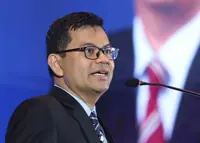
“The path to tripling nuclear capacity is open, but it demands bold, pragmatic and visionary leadership,” Sama Bilbao y Leon, the association’s director general, said in a speech at the United Nations talks. “Governments must act now.”
While dozens of reactors are under construction, other forecasts suggest the world will struggle to meet the ambition agreed during COP28 in Dubai to triple the nuclear fleet from 2020 levels by mid-century.
Capacity is forecast to rise to as much as 992GW by that date under a high-growth scenario, the International Atomic Energy Agency said in a September report.
To have any chance of achieving the nuclear target, nations will need to follow the lead of a country that so far isn’t a signatory to the pledge: China.
Asia’s top economy, and the world’s biggest polluter, has roughly 30 reactors under development and in April approved a 200 billion yuan (US$28bil) programme to add a further 10.
In comparison, the United States – the world’s largest nuclear generator – has connected three new commercial reactors in the last two decades.
“The world is not on pace because the West is not on pace,” said Mark Nelson, chief of staff at The Nuclear Co, a US-based firm focused on deployment of the technology.
China’s bewildering pace of development is on display in the southeastern Fujian province, where the country’s newest nuclear plant – the Zhangzhou facility – was completed in five years across a vast sweep of Dongshan Bay.
A first reactor began producing power in 2024 and another will follow later this year. Two more are already under construction, with an additional pair also planned.
Construction projects in other parts of the world have typically struggled to stick to deadlines or stay within budget.
In the United States, two reactors at the Vogtle plant in Georgia were seven years late and more than double an original budget.
Two reactors at the Hinkley Point C project in the United Kingdom are now years behind schedule and expected to cost billions of pounds more than planned.
Improving the industry’s recent record outside China is seen as crucial, as the artificial intelligence boom and industrialisation in developing economies pushes electricity demand growth to its fastest rate in years – bolstering the case for more nuclear capacity.
Microsoft Corp and Meta Platforms Inc are among firms to have struck recent deals for US electricity supply from existing or revived nuclear plants.
The scale of China’s buildout has aided its success, allowing the nation’s nuclear industry to drive down material costs, expand its specialist workforce, standardise supply chains and refine technologies – most importantly, the homegrown Hualong One reactor design.
“When you do something over and over and over again, you become very good at it,” Bilbao y Leon told Bloomberg Television in an interview last month.
“It’s not one project, it’s a programme. This is what we’re trying to do everywhere else in the world.” — Bloomberg