SEOUL: South Korea has abandoned a controversial plan to lower the capital gains tax threshold for stock investors, marking President Lee Jae Myung’s first major policy reversal since taking office in June.
The decision followed months of opposition from Lee’s core voter base, many of whom are retail investors.
Proposed changes – including lowering the capital gains tax threshold on stock holdings to one billion won (US$717,535) from five billion won – raised questions about the government’s commitment to reviving the stock market and triggered a sell-off in August that erased billions in value.
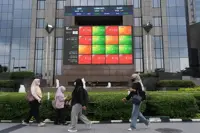
Yesterday, the benchmark Kospi Index rose as much as 0.7% to a record, extending last week’s gains on expectations of the policy reversal.
Fuelled by corporate reform momentum and the global artificial intelligence boom, the index is up about 42% this year, among the world’s best performers.
Government officials had framed the tax proposals as part of a broader effort to boost revenue and offset economic pressures from higher US tariffs. They later reversed course after critics warned the plan would undermine investor confidence and stifle one of the world’s best-performing stock markets this year.
“The U-turn on the stock capital gains tax reflects more than wavering policy consistency – it exposes flaws in the large shareholder gains tax, which stoked retail investors’ fears of a major selloff,” said Hyosung Kwon, an economist at Bloomberg Economics.
“Future reforms must be sharper and distortion-free to avoid repeating past mistakes.”
Lee, who campaigned on a promise to support South Korea’s equity markets, is expected to pledge alternative measures to raise funds while prioritising policies that strengthen the financial system.
The rollback marked an early test of Lee’s ability to balance fiscal demands with political commitments and highlights the growing influence of South Korea’s 14 million small investors, who account for two-thirds of daily stock trading.
Last week, the Kospi saw the biggest weekly foreign inflows since 2013, according to Goldman Sachs. Global investors bought four trillion won worth of Kospi stocks on a net basis last week, mostly in tech.
“The Kospi 5,000 cannot coexist with the capital gains tax from one billion won,” Jung Eui-jung, head of Korea Stockholders Alliance, said at a press conference earlier this month.
“Lowering the threshold will inevitably spark a civil uprising.”
One of Lee’s key election pledges was to lift the Kospi to 5,000 points, and his administration has set up a committee to pursue that goal.
It is not the first time retail investors have derailed tax policy. Late last year, Lee’s party agreed to then President Yoon Suk Yeol’s proposal to scrap a planned capital gains tax on income from financial investments following resistance from retail traders.
Lee proposed the hikes as he seeks new revenue sources to fund campaign pledges and plug holes in a budget buffeted by a weak economy.
“With a third of households invested in stocks, bonds or funds, the government cannot easily dismiss retail investors’ demands. But President Lee’s push for looser fiscal policy makes revenue crucial,” Kwon of Bloomberg Economics said.
“Backtracking on capital gains and delaying the financial investment tax threatens to weaken both tax receipts and fiscal discipline.” — Bloomberg