
PETALING JAYA: Gold prices are expected to continue rising through the rest of this year on a combination of uncertainty over US government trade policy, high debt levels and market bets over lower benchmark US interest rates.
Domestic demand for gold remains undiminished despite the higher prices as the precious metal continues to be seen as a safe-haven asset.
Bank Muamalat Malaysia Bhd chief economist Mohd Afzanizam Abdul Rashid said higher spot gold prices reflect the continuing weakening trend of the greenback despite its lure as the traditional safe haven in times of economic uncertainty.
“Typically, the US dollar will prevail during extreme conditions as the currency is always deemed a safe haven,” he said.
“Given that US president Donald Trump’s policies seem to be detrimental to the American economy and the fact that the United States government no longer carries a AAA rating, the case for higher gold prices is building up.
All three major credit rating agencies do not rate US sovereign debt at triple-A, with Moody’s Ratings downgrading it to AA1 in May.
Fitch Ratings downgraded it in 2023 while S&P Global Ratings have not assigned triple-A ratings to US sovereign debt since 2011.
The downgrades were primarily due to concerns over the rising national debt, high interest costs, and fiscal imbalances that have not been sufficiently addressed by the world’s largest economy.
“On that note, gold prices could end the year between US$3,600 to US$3,700 per ounce.
“The anticipation for lower interest rates in the United States seems to have bolstered gold prices,” Mohd Afzanizam told StarBiz.

“Prevailing gold prices look toppish and may incentivise investors to lock in their gains.
“Nonetheless, the weak US economic policies somehow makes the outlook for higher gold prices look tempting.
“I suppose gold investors may need to have longer investment horizons as potential corrections in gold prices are the risk factor that we cannot totally rule out,” he noted.
As of press time, the price of gold was up by 0.54% to US$3,654.72 per ounce.
Habib Group executive chairman Datuk Seri Meer Habib, a certified gemologist, said gold has consistently proven itself to be a safe-haven asset, especially during uncertain economic times and geopolitical tensions.
“In Malaysia generally, gold is purchased both for adornment and as an investment. Unlike other products, where higher prices reduce demand, with gold we see the opposite, people buying more despite rising prices, and showing strong confidence.
“Customers also have the option to trade in old jewellery for new pieces, which keeps demand steady even when prices increase. And until today, especially as some Malaysians remain unbanked, gold serves as a form of savings, and they would sell back the gold to fund Haj pilgrimages or children’s education, making jewellers almost like a bank for the community,” Meer Habib noted.
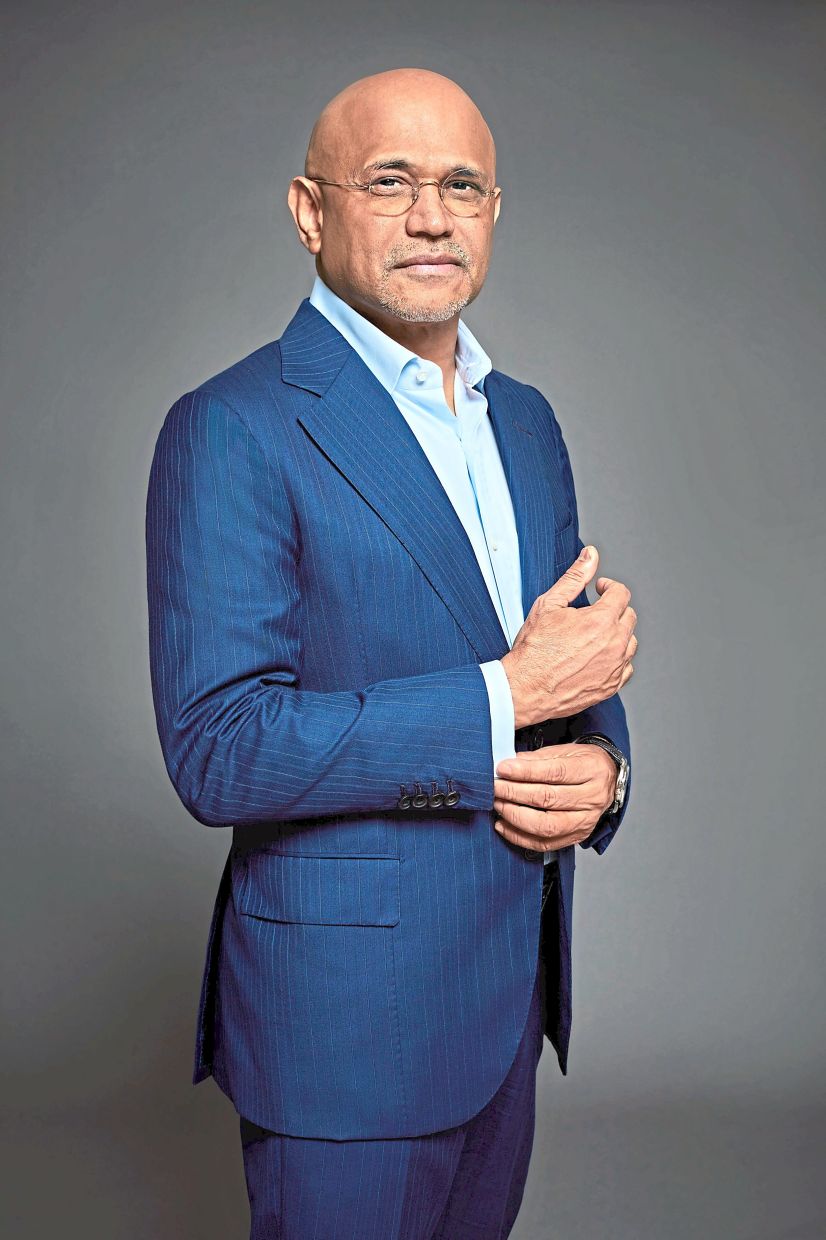
Citing his bullish stance on gold, he said year-to-date, gold has surged about 38% to 40%, continuing a strong rally from the previous year.
Furthermore, he said Goldman Sachs has projected the precious metal to rise to US$3,700 per ounce by year-end.
HSBC chief investment officer (South-East Asia and India) for global private banking and wealth James Cheo said at the current juncture, the Fed’s pivot toward rate cuts marks a turning point for gold.
He said the lower real yields diminish the opportunity cost of holding gold, giving investors fresh reason to turn to bullion.
“History has shown that when policy rates fall, gold often goes up. Central banks’ voracious appetite for gold is no coincidence.
“It reflects a profound shift: the steady diversification away from the US dollar as markets seek to insure themselves against financial fragmentation. Gold has reemerged as the reserve asset of choice in a multipolar world.
“Retail buying in Asia remains robust, reflecting both cultural affinity and pragmatic financial sense. Supply growth, by contrast, is constrained, with global gold mine output inching higher only marginally. The balance tilts toward scarcity,” Cheo noted.
He said the lingering effects from tariffs or geopolitical risk bodes well for gold as a safe haven asset.
Meanwhile, he said further gains in gold may support broader precious metals, and only gold consistently offers both diversification and protection in a lower-rate environment, making it an essential anchor in multi-asset portfolios.
“In a diversified portfolio, gold remains a crucial anchor. It is insurance against what we cannot foresee: monetary instability, market dislocations, or geopolitical shocks.
“If anything, the case today is stronger than it has been in decades. Gold’s shine, far from fading, is being burnished anew by the very forces reshaping the global economy,” Cheo said.
He said a weaker US dollar has been a powerful driver of gold’s ascent. But should global growth slow and risk aversion rise, he said the US dollar could strengthen as investors seek liquidity, pressuring gold prices in the process.
OCBC foreign-exchange strategist Christopher Wong said the prospects of the Fed cutting rates soon would be one of the main drivers behind the recent surge in gold prices above US$3,600 levels.
Furthermore, he said recent data provided strong evidence that the US labour market has weakened.
He said, among others, non-farm payrolls showed a disappointing increase of just 22,000 jobs, well below the expected 75,000, noting that the unemployment rate rose to 4.3%.
Additionally, he said US jobless claims have increased, and a survey have shown job openings dropped below the number of unemployed workers for the first time since April 2021.
Wong said there could be a chance of a 50 basis point cut at the September Fed meeting or even a deeper Fed cut trajectory, and this can further boost the prices of gold.
“Overall, we still look for gold prices to trend higher over time. We raised our gold forecasts to US$3,710 for end-2025 and US$3,950 for end-2026 respectively.
“Downside risks to our view include an expected sharp rebound in US dollar, Fed not as dovish as expected, slowdown in demand from central banks due to diversification or reallocation flows stalling and fast de-escalation in geopolitical tensions,” Wong said.