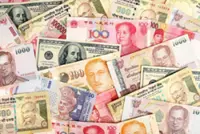
Sell dollar for everything else is echoing across trading rooms


Weakening: No support has been found for the greenback which extended its slide for the worst three-day run since May. — Reuters

SELL the dollar and put money into assets such as emerging-market stocks and gold as the world’s economic recovery gathers steam, money managers say.

A growing chorus of investors is betting the world’s reserve currency has reached a peak in a dramatic turnaround from a month ago when positioning in the greenback was the most bullish since 2015.

K2 Asset Management recommends selling the dollar for Asian emerging bonds and European stocks, while Brandywine Global Investment Management is buying commodity-linked currencies.

Bleakley Advisory Group LLC favours gold and silver.

“The dollar has reached its peak,” said Jack McIntyre, a money manager at Brandywine who turned short on the dollar last month against the Aussie and Chilean peso.

“It’s overvalued, people have been too long on it. To me the biggest factor that’s going to weaken the dollar is just the improvement of global growth.”

No support was to be found for the greenback on Thursday as it extended its slide, falling about 0.1%, putting the Bloomberg Dollar Index on track for its worst three-day run since May.

The dollar was dragged down by moves higher in the Swiss franc and yen, which both gained about 0.4% on the day.

“The dollar has clearly rolled over and in hindsight it really only rallied last year because the Federal Reserve (Fed) was ahead of the Bank of Japan and European Central Bank in tightening,” said Peter Boockvar, chief investment officer at Bleakley Advisory Group in New Jersey.

In this environment, “I still love gold and silver” as an alternative to the dollar, he said.

The dollar is likely to keep weakening as the hypothesis of a wider United States deficit and a broader global recovery favouring assets outside America is now starting to play out, investors say.

At K2 Asset Management’s office in Melbourne’s Collins Street, George Boubouras is looking for opportunities to buy everything from the Chilean peso to sovereign bonds in South-East Asia.

“The dollar’s peak is definitely behind us,” said Boubouras, head of research at the fund manager. “Currency traders are factoring in the Fed’s hikes and economic recovery well and truly now. There’s plenty of opportunities across sovereign bonds, credit and stocks from emerging markets to Europe with convictions the dollar could weaken further.”

Barings Investment Institute is just one of the firms that sees the dollar weakening against its emerging-market peers.

“The dollar’s slide represents a natural part of the global recovery as markets look through the current risks from Omicron to a pandemic that is much more manageable this year,” said Christopher Smart, chief global strategist and head of Barings Investment in Boston.

“As economic activity normalises, there should be even more capital flows to other parts of the world. Emerging-market currencies should finally benefit from the recovery.”

While dollar bears are finding their voice, others say it’s too soon to write off the greenback just yet.

The US currency’s recent slump merely reflected investor relief that there were no hawkish surprises at Wednesday’s inflation numbers and Fed chairman Jerome Powell’s recent hearing, said Ilya Spivak, head of greater Asia at DailyFX.

“I don’t think it has peaked at all,” he said. The dollar “continues to look constructive through the rest of this year, but of course markets don’t move in straight lines.”

Hedge funds also remain bullish, and have even increased their aggregate long positions on the dollar versus a basket of eight other major currencies for the past three weeks, according to data from the Commodity Futures Trading Commission compiled by Bloomberg.

Citigroup Global Markets Inc points to both rising US interest rates and the Fed’s quantitative tightening as “typically negative” for emerging-market rates and currencies.

“The reason why emerging-market rates and currencies has not reacted yet to higher US rates is largely that spreads of Treasuries versus bonds have been mostly stable,” Citigroup strategists including Dirk Willer wrote in a note.

“We still keep a long US dollar bias, but are more in relative value space than we were before the recent spike in US real yields.”

Others though are anticipating further greenback losses and are looking for alternatives.

“The fundamentals for the dollar are weak with low real rates and large external negative balances,” said Rob Mumford, an investment manager at GAM Hong Kong Ltd.

“In a higher inflation and higher developed world interest rate or discount rate environment emerging markets is a good place to be.” — Bloomberg

Get 20% OFF The Star Digital Access

Monthly Plan

RM 13.90/month

RM 11.12/month

Billed as RM 11.12 for the 1st month, RM 13.90 thereafter.

Best Value

Annual Plan

RM 12.33/month

RM 9.87/month

Billed as RM 118.40 for the 1st year, RM 148 thereafter.

Follow us on our official WhatsApp channel for breaking news alerts and key updates!
ringgit , US dollar , fund flows ,

Next In Business News

IHH hospitals in India, Singapore saw fewer patients from Middle East due to war
MOF: Govt's total 1MDB obligation amounts to RM51.4bil
Gold rises from one-week low as softer dollar lends support
THMY breaks ground on new factory, HQ in Penang
Hedge funds record best first-half performance in 13 years, sources say
Oil prices little changed as markets weigh impact of US strikes on Iran
Malaysia Airlines expands China network with direct flights to Shenzhen, Changsha
Bank Negara holds OPR at 2.75%, maintains 4%-5% growth forecast
Uniqlo operator Fast Retailing says Q3 profit jumped 45.7%, raises forecast
Fresh options for Chinese investment

Others Also Read