
China is enlisting civilian engineers who helped to build the world’s highest bridge to repair airfields in wartime as part of wider efforts to integrate civilian expertise into its defence preparations.
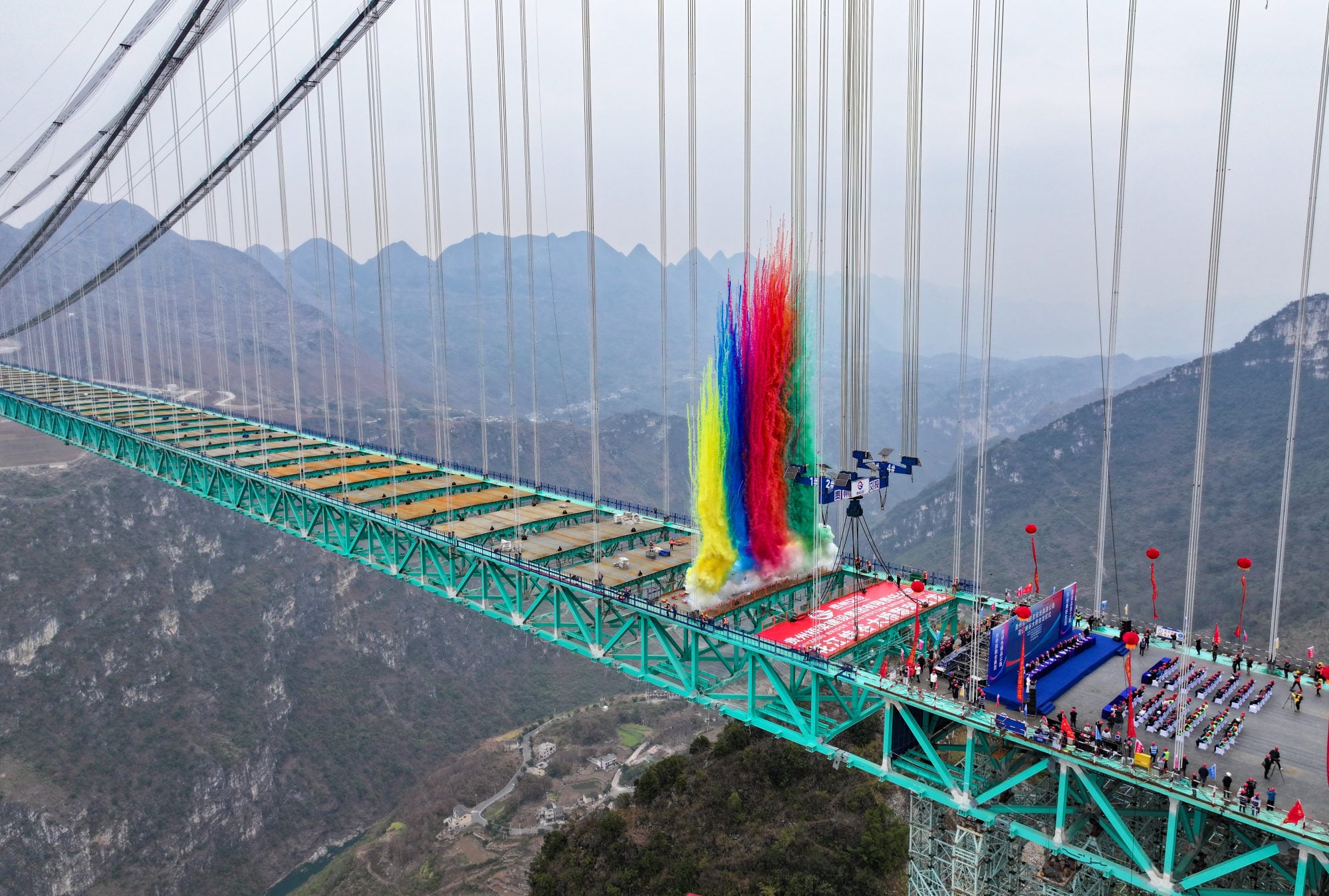
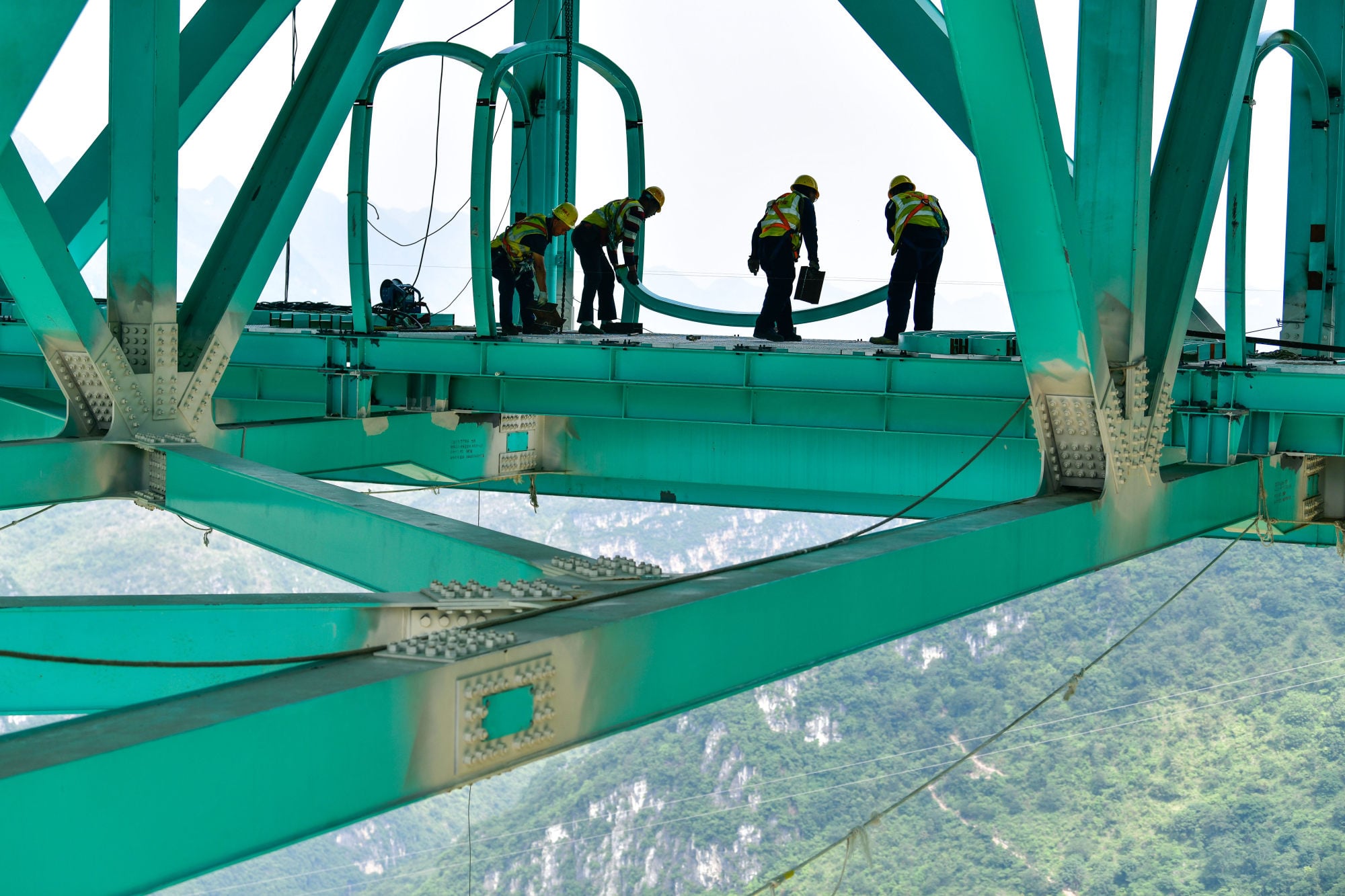
The Chinese military’s PLA Daily reported on Monday that authorities in Guiyang, southwestern China’s Guizhou province, had formed a specialist militia company comprising road and bridge workers from an unnamed major firm involved in building the Huajiang Grand Canyon Bridge. The 2.9km (1.8 mile) bridge rises 625 metres (2,050 feet) above the bottom of a gorge.
Analysts say the Chinese authorities are setting up dedicated units in peacetime to ensure that civilian resources are organised, trained and available before the start of a potential conflict, rather than relying solely on emergency requisitioning once hostilities break out.
While China’s use of civilian resources for defence is not new, a 2025 study by the US-based National Bureau of Asian Research found that the country’s mobilisation system had placed greater emphasis on wartime preparations since 2015.
These preparations span sectors ranging from construction to rail and commercial shipping. Under China’s National Defence Mobilisation Law, revised in August, organisations in key sectors must set up and train specialist support teams in peacetime.
Those efforts are also very important for the PLA Air Force.
A 2023 report by the US Air Force’s China Aerospace Studies Institute (CASI) noted that, following the 1991 Gulf war, the People’s Liberation Army concluded that its airfields would likely come under attack early in a conflict with the United States.
The institute assessed that quickly resuming air operations could complicate US efforts to establish air superiority and divert American resources from other operations.
Michael Bosack, director of the Parley Policy Institute, said the survival and repair of airfields was “critical in a battle for air superiority”.
He said damage to runways not only prevented aircraft from carrying out their missions but also left them stranded on the ground as “mass targets for follow-on air or missile strikes”.
“If there are no hardened aircraft shelters, it can be like shooting fish in a barrel,” he said.
While the PLA has its own specialist airfield repair units, it also draws on civilian engineers and equipment.
Bosack said engineering units that could respond rapidly tended to be limited in number but in high demand, adding that having designated civilian personnel provided “backup options that can fill critical gaps”.
According to the PLA Daily report, existing militia repair units in Guiyang’s Nanming district could not handle extensive runway damage or major disruptions to road networks.
To address that shortfall, local authorities began recruiting skilled workers from the transport infrastructure sector in 2022, drawing on the expertise of the construction firm, which has built 28 bridges ranked among the world’s 100 highest.
A key challenge is adapting civilian construction practices to wartime requirements, when speed becomes critical.
The militia company has since repeatedly trained alongside active-duty troops, practising runway surveys, rubble clearance and emergency concrete pouring, with military units setting repair deadlines and standards.
The construction firm stores the heavy machinery and materials, while military and civilian authorities jointly manage them for peacetime and wartime use.
Timothy Heath, founder of US-based consultancy Perceptum and a specialist on the Chinese military, said organising and training civilian personnel in peacetime should make wartime mobilisation “more efficient and less chaotic”.
“War is inherently chaotic,” Heath said, adding that peacetime preparations and training could improve the performance of government and military personnel under wartime pressures.
The Guizhou initiative is not an isolated case. Similar militia units were established and trained for airfield repairs in Shandong province in 2018, Jiangsu province in 2024 and in April this year in Chengdu, the capital of Sichuan province neighbouring Guizhou.
The CASI study found that agreements with civilian organisations specified responsibilities and, in some cases, emergency response times. Civilian support for military airfields extended beyond runway repairs to medical assistance, air traffic control and fuel supplies.
The PLA is also exploring ways to accelerate airfield recovery using uncrewed systems. In October, state-run Science and Technology Daily reported that a naval aviation unit under the Southern Theatre Command had conducted a joint military-civilian exercise simulating the aftermath of an air strike.
Drones mapped runway damage while robotic dogs used lasers to deal with unexploded ordnance and uncrewed ground vehicles removed hazardous explosives before repair crews moved in.
Beijing has also explored using civilian airports and highways as alternatives when damaged runways cannot be repaired quickly.
While China has been conducting highway landing exercises since 1989, a 2024 article in the PLA Daily noted that few highways could withstand the impact of modern fighter jet landings.
“Once a runway is damaged, warplanes cannot take off or land and supplies cannot get through. Every additional minute of delay increases the risk,” the PLA Daily quoted an exercise controller as saying during a drill review.
Heath said repair times would depend on the severity of the damage, “but with the right training and materials, runways could be repaired within hours”, while Bosack said recovery speed also depended on “the nature of the damage and the needs of the aircraft”.
Yet peacetime drills may not fully reflect wartime conditions. The CASI study noted that some exercises began with workers and equipment already on site, rather than testing how quickly they could be mobilised.
Heath also warned that civilian experts could be harmed in the fighting and that “skilled personnel could then become in short supply”.
Despite these challenges, Bosack said the main value of having civilian personnel available to supplement military engineering units lay in sustaining operations beyond 30 days.
“They won’t provide much use in a fast-moving crisis or contingency, but they certainly could in a full-blown conflict,” he said. -- SOUTH CHINA MORNING POST