




Talks between China, the US and Russia could yield a commitment to control AI in nuclear arsenals as part of a broader agenda on global governance, sources told the South China Morning Post.
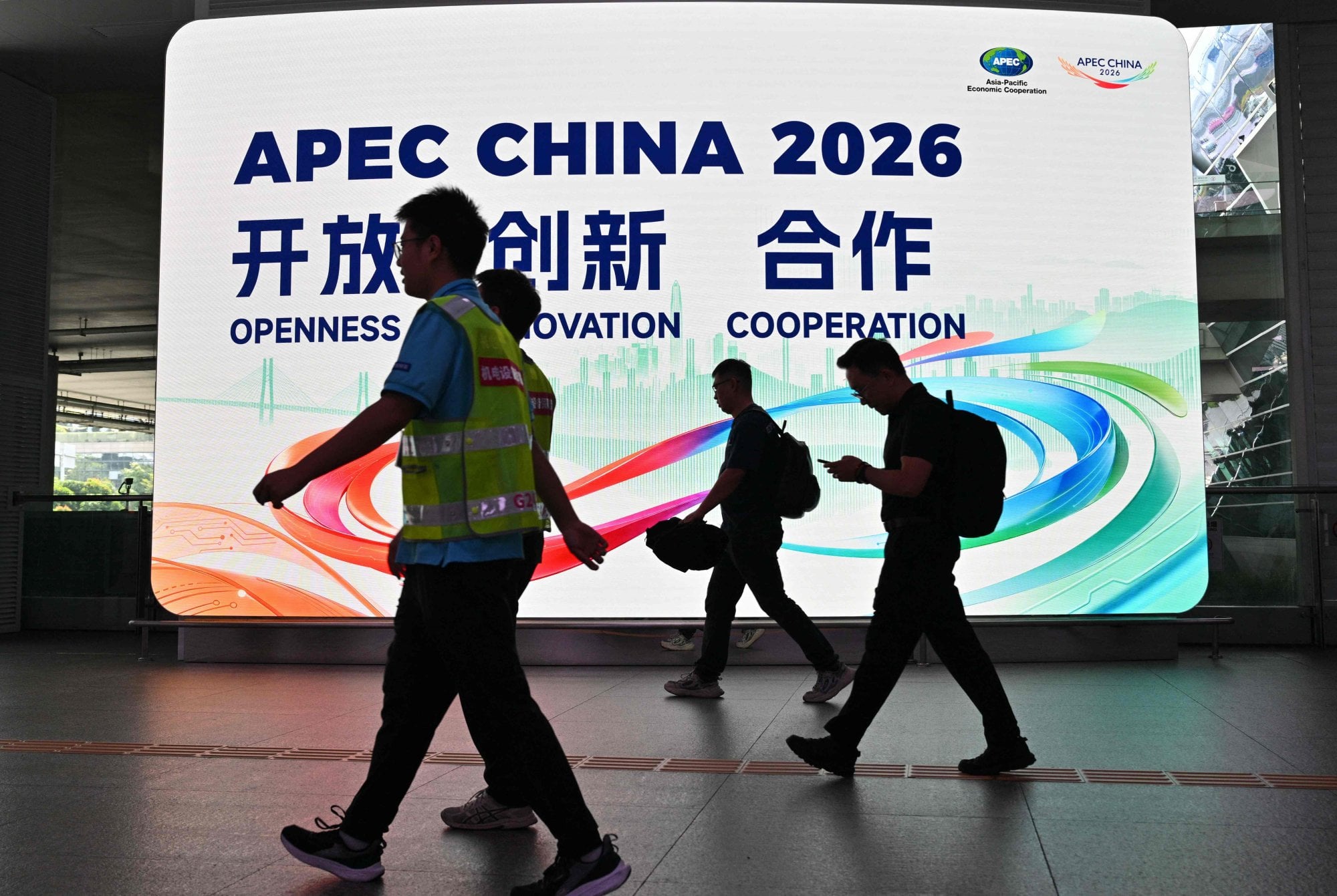
The three nations have engaged in weeks of back-and-forth discussion to nail down the agenda and protocol for talks between the countries’ leaders on the sidelines of the Apec summit in Shenzhen next week.
The sources said that the war in Ukraine and denuclearisation of the Korean peninsula had largely fallen off the table as possible topics, with the focus shifting to areas of potential consensus, particularly the role of artificial intelligence in nuclear command and control.
They said working-level teams had discussed AI in critical weapons systems, as well as a possible joint statement against any future nuclear war.
The US has also insisted on raising nuclear arms controls between the three countries, a suggestion that China has long rejected.
One of the sources said China offered discussions on nuclear transparency, likely as a lighter alternative to full strategic-stability talks.
The source said Beijing appeared to see progress on nuclear and strategic issues as a way to stabilise the overall relationship with the United States.
They also said China would prefer that any talks on Ukraine be held directly between the United States and Russia, and discussions about the Korean peninsula to be between the US and North Korea.
As a result, AI governance on nuclear weapons remained a safe but “stale” choice, an “easy deliverable”, and consistent with past policies, one source said.
Heather Williams, a senior fellow at the Centre for Strategic and International Studies, said a joint statement among the three affirming that a nuclear war could not be won and must never be fought was possible.
Williams noted that the three countries had already agreed to this language as part of the five permanent members of the United Nations Security Council. “But within the nuclear community, this phrase means a lot and carries a lot of weight.”
Missile-launch notification could also come up for discussion. China came in for heavy criticism in July when it tested a missile from a nuclear submarine without following standard notification practice for other countries.
Williams described an agreement on the issue as the “lowest-hanging fruit” for any substantive trilateral outcome.
In recent years the three powers have occasionally co-sponsored one another’s broader UN General Assembly resolutions on AI governance, most notably in 2024 when the US and China co-sponsored one another’s texts on safe, secure and trustworthy AI, and again on capacity-building, with Russia supporting the Chinese resolution.
Russia has been more cautious than China about formal curbs on AI in nuclear command and control. While engaging in broader discussions on the technology’s risks, Moscow has resisted commitments that could limit its military freedom of action and has not publicly endorsed the US-China position that humans must retain control over nuclear-use decisions.
Williams also pointed to “some sort of agreement on human control of nuclear weapons, nuclear command and control” as a possible outcome.
She added that Trump remained committed to sealing some form of cooperation with the other two powers on “superintelligence” to distinguish his efforts from those of the Joe Biden administration.
Trump and Xi discussed superintelligence in September. Biden, Trump’s predecessor, also addressed human control of nuclear weapons in 2023, when sources indicated that an agreement was within reach but fell apart at the last moment. Biden and Xi returned to the issue in Peru in 2024, with both sides issuing separate statements.
Trump has said he wants the meeting to focus on nuclear issues. Last month he said “we would have it to talk about nuclear weapons and denuclearisation” and that “we would schedule a meeting based on the denuclearisation, and that’s a very positive thing for the world”.
On Sunday, he said one of his meetings in China would likely involve both Russian President Vladimir Putin and Chinese leader Xi Jinping and cover “a lot of things, including denuclearisation”.
Beijing has repeatedly said that its arsenal is much smaller than those of the other two and that Washington and Moscow should first substantially reduce their own forces before Beijing joins any such negotiations. China continues to adhere to a no-first-use policy and a self-defence nuclear strategy based on minimum deterrence.
Other proposals, considered less likely but still possible, include an agreement to prohibit cyber or AI-enabled attacks on nuclear command, control and communications systems.
While not interested in nuclear arms control talks, China was keen to explore some form of limits on strategic competition or the deployment of nuclear weapons in space, Williams said. Iran could also feature, with Trump likely to seek a joint statement affirming that Tehran must never acquire nuclear weapons.
Still, one source described progress towards next week’s trilateral talks as slow.
With one week until the Asia-Pacific Economic Cooperation forum, scheduling might be a “hurdle” given all three leaders’ “packed calendars” during the November 18-19 meetings.
The three-way talks, framed by some as a “G3” gathering of the world’s three biggest nuclear powers, is also closely watched by other countries. There is growing unease among some middle powers about being left out without a say in shaping a new world order.
One source said that Japan, in particular, had raised concerns, wary that the three leaders could frame their cooperation in language evoking their wartime alliance against Japan, as Trump and Xi did during the Chinese leader’s state visit to Washington in September.
But hosting both the US and Russian presidents at a multilateral event would help Beijing cement its role as a major player in global governance and an international diplomatic hub. Another source said the Chinese side wanted the trilateral talks to be a major part of Xi’s diplomatic legacy.
Meanwhile, Trump’s interest in meeting Putin in Shenzhen was less about Ukraine and more about positioning himself as the leader who delivered nuclear peace, one source said.
Citing Trump’s preference for leader-to-leader diplomacy and high-profile geopolitical theatre, another person said the chance to appear alongside Xi and Putin was very appealing to the US leader, despite concerns in the US security and diplomacy establishments that Xi and Putin stood to gain more from the meeting.
For Putin, stuck in the quagmire of the Ukraine war, it was the opportunity to reestablish himself and Russia as a major global actor despite Western isolation, a source said. -- SOUTH CHINA MORNING POST


