VIENTIANE; Nakai-Nam Theun National Park is placing nearly 9,000 residents at the heart of its 2027-2035 conservation plan and efforts to gain international recognition.
The initiative aims to give communities living inside the Park a stronger voice in decisions affecting their land, natural resources and livelihoods, while supporting the Park’s ambition to become a model protected area in Laos and the Greater Mekong Subregion.
The Park is pursuing three international recognition goals: International Union for Conservation of Nature (IUCN) Green List certification, ASEAN Heritage Park status and nomination as a UNESCO Natural World Heritage Site.
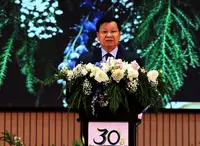
To prepare for the consultations, Nakai-Nam Theun National Park and the Lao Civil Society Coordination Committee held a Training of Trainers workshop at the Nam Theun 2 Power Company office in Vientiane on November 6.
The workshop brought together representatives of the Park, the Agriculture and Environmental Working Group of the Lao Civil Society Coordination Committee, Nam Theun 2 Power Company and the Department of Heritage to prepare for the first round of consultations under the internationally recognised Free, Prior and Informed Consent approach.
The consultations will cover the Park’s new Social and Environmental Management Framework and Operational Plan for 2027-2035, known as SEMFOP 5, as well as three international recognition processes.
These include certification under the International Union for Conservation of Nature (IUCN) Green List, ASEAN Heritage Park status and nomination as a United Nations Educational, Scientific and Cultural Organisation (UNESCO) Natural World Heritage Site.
The Director of Nakai-Nam Theun National Park, Dr Teuanchay Phongkhamphanh, stressed the importance of involving communities in decisions about the Park’s future.
“SEMFOP 5 belongs to the people who live in the Park as much as to those who manage it. Before we take the next steps towards the Green List, ASEAN Heritage Park status and World Heritage, we want every village to understand what each one means for them, and we will respect their decisions,” he said.
Following the workshop, five teams of facilitators from Lao civil society organisations will visit every cluster of the Park’s 15 villages in Navang, Tha Phai Ban and Terng Tasaeng in Nakai district, Khammuan province, during 2026.
Each visit will combine consultations on the Park’s management plan and international recognition processes with preparations for the villages’ 2027 development plans.
This will allow communities to identify their priorities and contribute to the Park’s annual work plan and budget, the first under SEMFOP 5.
Chair of the Lao Civil Society Coordination Committee, Ms Minavanh Pholsena, highlighted the role of civil society organisations in helping residents understand the proposals and participate in decisions.
“Our role is to help communities understand the proposals, make informed decisions freely, and ensure their voices and priorities guide conservation and village development,” she said.
The Park has committed to providing clear information in Lao, supported by interpretation in local languages and maps, before asking communities to make decisions.
Each of the three international recognition processes will be explained separately, allowing villagers to consider and express their views on each proposal.
The consultations will also make space for women, ethnic groups, young people, older residents and poorer households to participate.
Community decisions will be recorded faithfully, including any conditions raised or requests for additional time. Attendance at a meeting will not be treated as consent.
Importantly, the Park has committed to keeping village development planning and support independent of the outcome of the consultations.
It will also report back to each village on how community views have been taken into account.
The consultations form part of a broader effort to guide Nakai-Nam Theun National Park’s development over the next nine years.
SEMFOP 5 outlines seven strategic interventions covering partnerships, financing, governance, biodiversity research, law enforcement, community livelihoods, sustainable tourism and conservation awareness.
Together, these priorities support the Park’s vision of becoming a model protected area for Laos and the Greater Mekong Subregion by 2035.
The vision calls for international recognition, long-term financing and management that meets international standards.
It also aims to ensure that the forests and wildlife of the Annamite Mountains are protected and thriving, while communities living in the Nam Theun watershed enjoy improved wellbeing and share both the benefits and responsibilities of conservation.
Nakai-Nam Theun National Park has already made progress in its efforts to gain international recognition.
The Park has been a candidate for the IUCN Green List since 2020, while an assessment mission for ASEAN Heritage Park status took place in August 2026.
In 2025, the Park was also added to Laos’ World Heritage Tentative List, marking a step towards a possible nomination as a UNESCO Natural World Heritage Site.
UNESCO guidelines encourage wide community participation in World Heritage nominations and free, prior and informed consent where appropriate. A similar approach formed part of the nomination of Hin Nam No National Park, which became Laos’ first natural World Heritage Site in 2025.
Covering about 4,700 square kilometres of the Annamite Mountains along the border with Vietnam, Nakai-Nam Theun National Park is home to some of mainland Southeast Asia’s most important forests and wildlife.
The Park lies within the Indo-Burma Biodiversity Hotspot and protects wildlife found only in the Annamite region, a significant population of Asian elephants and a globally unique stand of old-growth Asian swamp cypress.
It also protects the watershed of the Nam Theun 2 hydropower project, linking the conservation of forests and natural resources with the sustainability of a major energy development.
The forthcoming consultations will take place under the guidance of the Lao Civil Society Coordination Committee’s Working Group on Agriculture and Environment.
The collaboration reflects the Park’s commitment to working with civil society and other partners to support conservation and community development.
The Park also welcomes further cooperation with government agencies, civil society organisations, research institutions, technical experts and financial partners to support SEMFOP 5 during 2027-2035 and beyond.