
The United States on Thursday banned all Chinese laboratories from testing electronic devices destined for the US market, just weeks before US President Donald Trump is due to meet Chinese leader Xi Jinping on the sidelines of the Asia-Pacific Economic Cooperation summit in Shenzhen.
The Federal Communications Commission (FCC) voted to bar testing laboratories and certification bodies in China and other economies that lack a “mutual recognition agreement” or reciprocal trade agreement with the US.
“This is consistent with President Trump’s broader effort to restore balance and fairness with respect to America’s dealings with foreign nations,” said FCC Chairman Brendan Carr.
“We are only allowing test labs to be based in the US or in reciprocal economies.”
The ban would take effect in December 2028, giving domestic labs more than two years to expand their testing capacity. However, the agency kept the option of barring more foreign labs in the meantime.
The latest ban follows last year’s “bad labs” rules, which prohibited labs owned or controlled by entities deemed national security threats. As a result, 32 test labs lost their FCC recognition.
In a response to a question from the South China Morning Post, Carr said the transition period doesn’t mean that the agency “would look the other way over the next two years”.
“There’s a reason why those 32 were identified and moved out of the system,” Carr said.
“If there are others like the 32, or similar to 32, then they will similarly be moved out of the system before these new reciprocity rules take place.”
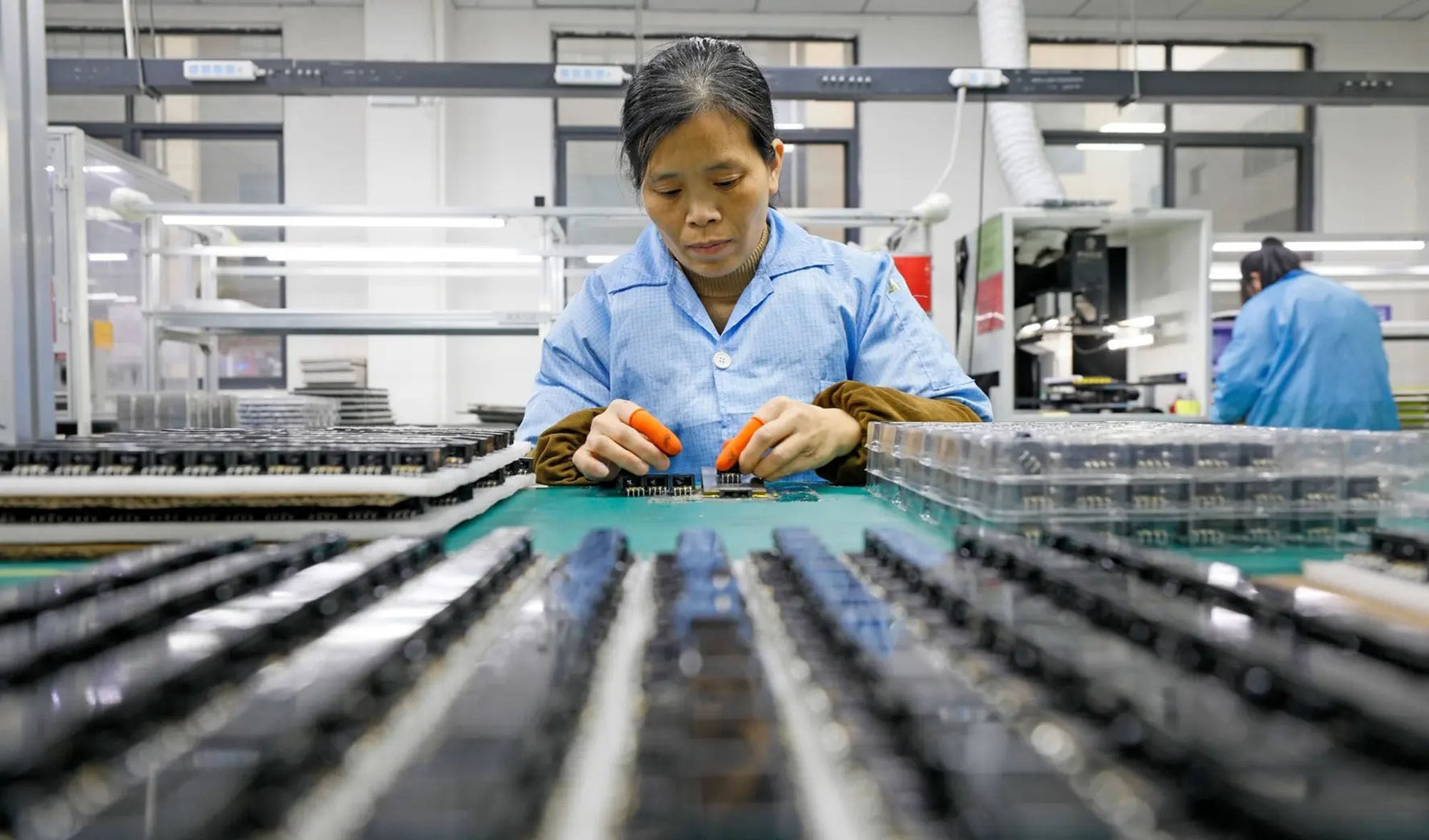
According to the FCC, more than 80 per cent of electronics headed to the US are currently tested in facilities in China.
Carr alleged that these labs could use their “privileged position” to allow “insecure gear into the US market, disrupt communications networks or even steal intellectual property”.
“Some of those labs themselves were linked or controlled by or tied to the PLA [People’s Liberation Army], so not necessarily the most trustworthy,” Carr told TBPN, a technology-focused online network, in August.
“Today, we go a step further and restore reciprocity to the FCC’s equipment authorisation programme,” Carr said on Thursday.
FCC commissioner Anna Gomez termed the two-year grace period as the “good, responsible, balanced deadline” and added that the agency is seeking to “balance the costs” for the manufacturing industry while moving ahead with its measures.
“I think it’s important that we act. But we also need to balance that with ensuring that we don’t have such huge costs and that consumers can’t get access to their devices.”
The low-profile US regulatory agency has emerged as one of the Trump administration’s most aggressive agencies targeting Chinese technology companies, even as other departments, including Commerce and Treasury, have adopted a more restrained approach.
Under Carr, the agency has adopted a two-track approach, targeting specific Chinese companies while imposing broader bans on entire product categories and tightening supply-chain restrictions.
Last week, it blocked two devices – a dashboard camera and a wireless video transmitter – containing chips made by Huawei Technologies subsidiary HiSilicon, arguing that they were “designed for the surveillance market”.
In July, the agency announced bans on imports of new Chinese robots and power inverters, citing threats to US national security and supply chain vulnerabilities.
“The networked capabilities of advanced robotic systems create extensive vulnerabilities and vectors for attacks that can manipulate the data and physical operation of the advanced robotic system,” the FCC notice said.
In April, the agency advanced a proposal to bar three Chinese telecoms operators – China Mobile, China Telecom and China Unicom – from operating data centres in the US. The actions were followed by restrictions on new models of consumer routers in May.
It also sought to prevent Hong Kong telecoms carrier HKT International from operating in the country, with Carr declaring that “CCP [Chinese Communist Party]-controlled entities that pose national security risks to our country cannot connect to our telecom networks”.
The measures came after a broader crackdown in December last year, when the FCC introduced restrictions across several sectors, including a sweeping ban on imports of new Chinese drones.
After holding its fire for nearly a year, China retaliated in August by imposing tighter export controls on drones and related technologies, sanctioning US testing firms and launching its first national security investigation related to foreign trade.
The tit-for-tat tech measures are in addition to an already crowded field of actions involving tariffs, export controls and the blacklisting of each other’s companies. -- SOUTH CHINA MORNING POST