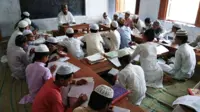
DHAKA: Allegations of rape, attempted rape and sexual abuse of children at six madrasahs in just 16 days have sparked public outrage.
There have been protests, assaults on accused teachers, vandalism and arson.
The incidents, reported between October 8 and 23 in Gazipur, Dhaka’s Savar, Kushtia and Pabna, involved boys and girls as young as seven. Several were allegedly threatened into silence.
Rights groups have raised concerns over madrasah students’ safety, warning that protests alone cannot ensure their protection. They called for stronger and coordinated monitoring and anti-sexual harassment panels at every institution.
The incidents are disturbing.
In Gazipur’s Gacha, teacher Md Oliullah Islam, 23, allegedly raped an eight-year-old residential student at Darul Hedayah Qawmi Madrasah on three consecutive nights (October 10, 11 and 12) and threatened him into silence.
The boy told his mother on October 13, prompting her to file a case. Police arrested Oliullah and governing body member Mohammad Mizan, 38, on October 22. Both were sent to jail the next day, while another accused, Md Abdul Quddus Sheikh, 45, remains at large.
In Tongi, Moslem Ahmed, 30, teacher of Qariul Quran International Madrasah, allegedly sexually abused a seven-year-old Class-I girl on October 19, her family said.
Threatened with a beating if she spoke out, the girl stayed away from classes for three days before telling her parents.
Relatives and locals assaulted Moslem on October 21 before police rescued and detained him. The girl’s father filed a case on October 22, when a court sent Moslem to jail.
The madrasah Principal Almas Hossain claimed that the allegation was fabricated and that the attackers assaulted teachers, vandalised the office and looted Tk 17,000,000 (US$137,890) in cash and five mobile phones. The girl’s father denied the looting allegation. Madrasah authorities filed a separate case on October 23.
In Savar, madrasah owner and headteacher Abdul Bari, 50, allegedly raped a 13-year-old residential student on October 21 and threatened to kill her if she spoke out.
His wife, Tohfa, 40, was detained that evening and arrested following a case filed on October 22 accusing her of aiding the rape and threatening the girl. Bari remains at large.
Residents vandalised the madrasah on October 21, briefly trapping police trying to rescue Bari’s wife and son.
Bari’s eldest son, Mufti Umaer, filed a separate case alleging theft of Tk 77,000,000 in cash and gold ornaments and vandalism causing damages exceeding Tk 1 million.
In Pabna, Nurani Madrasah teacher Md Abu Eusuf Pramanik was detained over allegations of attempting to rape a residential girl student on October 22.
The girl escaped and alerted locals, who assaulted him before handing him over to police. He was jailed after her family filed a case.
Residents vandalised and torched the madrasah early on October 23.
In Kushtia’s Daulatpur, Darul Abbar Madrasah teacher Sayeed Hossain Nannu allegedly attempted to rape a Class-III girl on October 14 but fled when her screams alerted locals.
Her mother filed a complaint on October 20. Police arrested him, and a court sent him to jail on October 21.
On October 8, Ashikullah, 40, head of another Daulatpur madrasah, Markazul Sunnah, was arrested over allegations of sexually abusing a boy.
Thousands surrounded the madrasah, and several police personnel were injured trying to rescue him.
Police said Ashikullah was sent to jail.
Asked about the incidents in madrasahs, Religious Affairs Minister Kazi Shah Mofazzal Hossain Kaikobad yesterday said the alleged abuse was “extremely distressing and shameful” and pledged preventive measures.
“We’ll do whatever is necessary in this regard,” he told journalists after attending the triennial council session of the Bangladesh National Imam Association in Agargaon.
He said he had urged imams to explain permissible and forbidden conduct under Islamic teachings during Friday sermons.
The prime minister was also aware and had issued instructions to prevent such abuse, he added.
Hefazat-e-Islam Bangladesh, a Qawmi madrasah-based Islamist group, yesterday called for fair investigations and exemplary punishment over child abuse allegations and condemned some people’s attempts to take the law into one’s own hands.
In a statement, its Ameer Allama Muhibbullah Babunagari and Secretary General Sajedur Rahman said proper investigations, administrative action and punishment were essential to maintaining law and order.
Calling child sexual abuse a longstanding problem affecting schools, madrasahs and other settings, they stressed the importance of children’s safety and psychological well-being.
Manusher Jonno Foundation (MJF) yesterday demanded stronger child protection in madrasahs, impartial investigations, legal action and effective Sexual Harassment Prevention Committees in all educational institutions.
It warned that actual cases could be higher, as children often remain silent due to fear, stigma or pressure.
“No child should fear the people responsible for their care and education. When a child reports abuse, we must listen, take immediate action and ensure their safety,” said MJF Executive Director Shaheen Anam, urging parents to encourage disclosures and assure children of support.
Citing the High Court’s 2009 guidelines and subsequent directions, MJF urged the ministries of women and children affairs, social welfare and education, madrasah authorities and local administrations to establish prevention committees, safe reporting channels and accountability mechanisms.
Salma Ali, adviser to the Bangladesh National Woman Lawyers’ Association, welcomed the protests but called them belated.
“Protests alone are not enough. We also want to see what the government does in response,” she said.
Many cases, particularly in rural areas, never reach police or courts due to stigma, fear of further victimisation and local settlements, she added.
Concerned about abuse of boys at residential madrasahs, particularly orphans who often remain silent, she recalled an earlier case involving an 11-year-old pregnant madrasah student.
She sought coordinated monitoring by the ministries of religious affairs, education, home, law, and women and children affairs and local authorities, alongside police training, effective investigations, safe accommodation, legal aid and rehabilitation.
“Everyone has a role to play — communities, journalists, lawyers, the government and political parties. Without collective action, these incidents cannot be prevented,” she said.
Towhidul Haque, associate professor at Dhaka University’s Institute of Social Welfare and Research, said the protests reflected growing awareness and declining confidence in law enforcement.
Previously, accused teachers often escaped accountability through quiet settlements, apologies or promises not to reoffend, he said.
“Had the authorities taken legal action from the beginning, people would not have felt compelled to take the law into their own hands.”
Warning that mob violence was no solution, he urged stronger institutional oversight, better teacher-student relationships, modern teaching practices and changes in institutional attitudes and culture. - The Daily Star/ANN