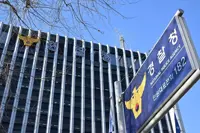
SEOUL (The Korea Herald/ANN): Growing demand for police interpretation services in South Korea is exposing gaps in multilingual support, from emergency calls to arrests and questioning.
Foreign-language calls to the 112 emergency hotline reached 21,252 in 2025, more than double the 10,348 recorded in 2024, according to police data provided to Representative Park Ju-min of the ruling Democratic Party of Korea.
Another 21,012 calls were received in the first eight months of 2026, nearly matching the total for all of 2025.
The 112 centres provide in-house interpretation for English and Chinese, while calls in other languages require assistance from outside interpretation services, according to police.
The need for interpretation extends beyond emergency calls to face-to-face questioning at police stations, where police rely on civilian interpreters.
These interpreters generally have other jobs and attend questioning sessions at the request of police.
The Seoul Metropolitan Police Agency had 629 civilian interpreters as at September, according to police data provided to Representative Kim Yea-ji of the People Power Party.
Chinese-language interpreters formed the largest group at 198, followed by English-language interpreters at 97 and Vietnamese-language interpreters at 64.
Gaps at arrest scene
Accurate communication is particularly important during arrests, when officers must explain the reasons for arrest and the right to counsel – a notification referred to in South Korea as the Miranda warning.
Police say, however, that securing an interpreter promptly at the scene can be difficult.
Officers use smartphone apps and interpretation devices to help bridge the gap, but these tools are available only in some regions.
Gyeonggi police, for example, developed an app in 2011 that remains in use to deliver the warning.
Officers select a language, and the app presents the warning in audio and text.
To improve support at the emergency-call stage, the National Police Agency is developing a new 112 system incorporating artificial intelligence.
Its interpretation function will automatically identify the language used by callers and interpret their conversations with Korean-speaking officers in real time. It will support English, Chinese, Japanese, Vietnamese and Thai languages.
The agency completed its information strategy plan in August. Development is scheduled to finish by the end of 2027, followed by upgrades in 2028 and 2029.
The project has a proposed 2027 budget of 13.6 billion won (S$13.1 million), with total spending over three years estimated at 45.6 billion won.
Police will continue relying on existing interpretation arrangements while the system is developed.
Experts also recommend human verification of AI interpretation in the field, citing the risk of mistranslations and other technical limitations. -- THE KOREA HERALD/ASIA NEWS NETWORK