
Hong Kong has vowed to engage more international banks in a debt securities clearing system, as part of a wider push to develop the city into a leading global yuan trading hub.
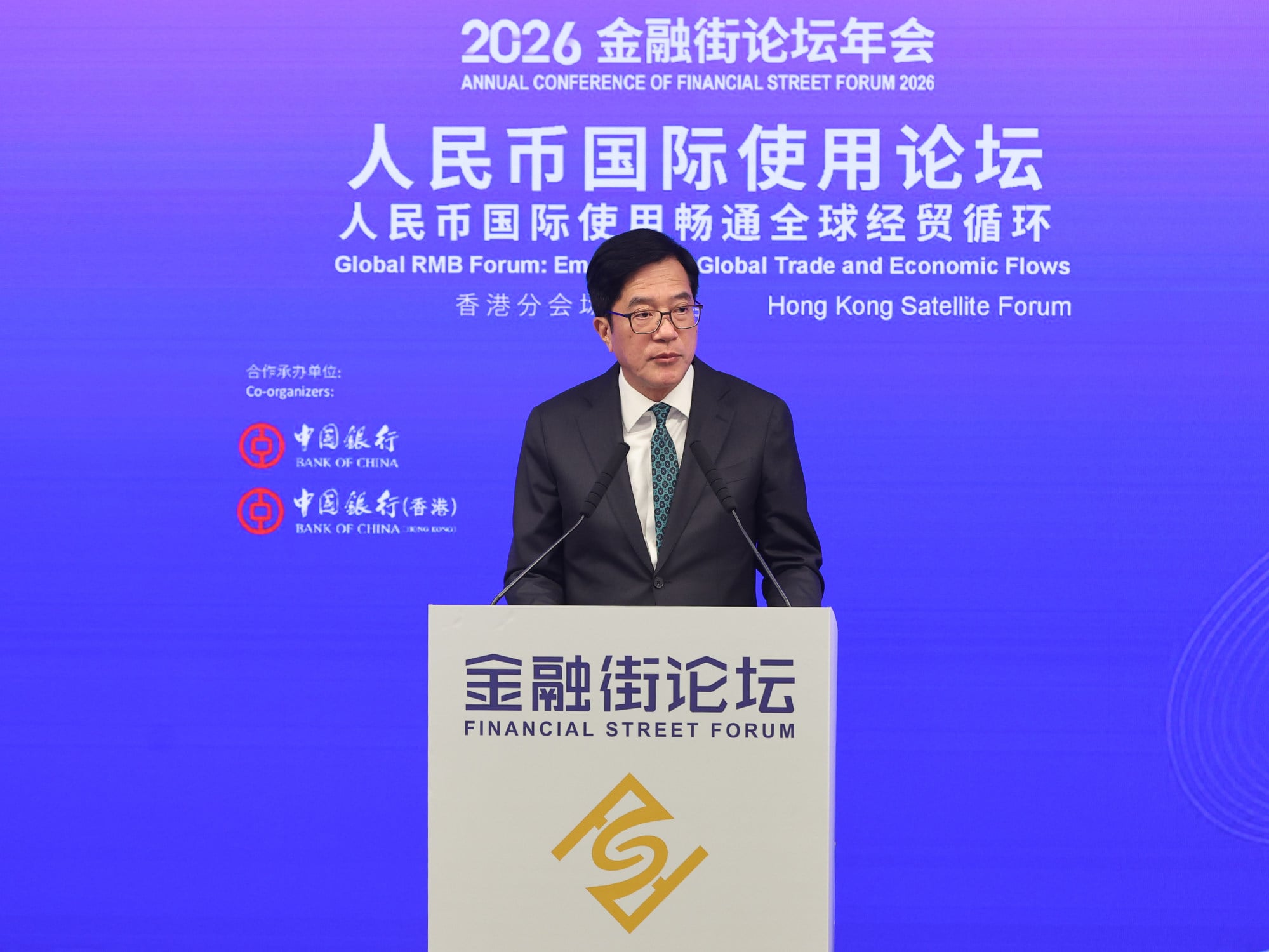
“Hong Kong is actively promoting a number of measures to advance the city’s offshore yuan market to higher and deeper levels,” said Michael Wong Wai-lun, the city’s deputy financial secretary, during a Hong Kong event related to the Financial Street Forum on Wednesday.
On the infrastructure side, Wong said the government would encourage more foreign banks in Hong Kong to join the Central Moneymarkets Unit (CMU), further enhancing the efficiency, security and resilience of the city’s cross-border settlements.
The CMU – set up by the city’s de facto central bank, the Hong Kong Monetary Authority, in 1990 – is the city’s central securities depository and clearing house for multicurrency bonds and money market instruments.
China’s Ministry of Finance started to issue yuan-denominated sovereign bonds to institutional investors via the CMU tendering platform in 2010, with plans to issue 84 billion yuan (US$12.6 billion) worth of bonds this year.
Around 200 financial institutions are currently members of the CMU. But many lenders based outside the region have not yet engaged in the Bond Connect, which is a cross-border link between mainland China’s and Hong Kong’s bond markets.
Besides boosting yuan bond participation, Wong said Hong Kong was working to enhance offshore yuan liquidity, widen the variety of offshore yuan products, and proactively explore new markets from the Middle East to Central Asia.
“We believe that Hong Kong has the capability to make significant contributions to promoting the internationalisation [of the yuan],” Wong said.
Hong Kong remained the world’s largest offshore yuan liquidity pool with more than 1 trillion yuan in bank deposits. The issuance scale of offshore yuan bonds in the city has also reached 1.1 trillion yuan last year.
At the same event, officials from Beijing and London pledged to continue to deepen financial communications to support yuan internationalisation and market opening-up.
“As the global economic and trade landscape is undergoing a profound restructuring, the diversification of the international monetary system has noticeably accelerated, leading to an increased demand among economic entities to actively use yuan,” said You Jun, vice-chairman of the Standing Committee of Beijing Municipal People’s Congress, via video link.
“We should think about the international use of the [yuan] not as an end in itself, but as a tool to support trade, to support investment and to support the real economy,” said Peter Wilson, the British Ambassador to China.
Meanwhile, the state-run Bank of China plans to keep Hong Kong in a core leading role and work together with other key markets, including London and Singapore to attract global institutions to invest in yuan assets, according to Zhang Hui, the bank’s president. -- SOUTH CHINA MORNING POST