Supendi, a 33-year-old palm fruit farmer, cooled his heels at a mill in West Kalimantan for four frustrating days earlier this month trying to unload his harvest of fresh fruit bunches before being told to leave as the site was full.
For several weeks, local palm oil mills have cut their fresh fruit bunch purchases because storage tanks are filled with processed oil they cannot ship out as a prolonged drought driven by “super El Nino” conditions has dried out the area’s main transportation artery, the Kapuas River.
“The fruit was not accepted,” Supendi said. “Now we’re at a loss as to how to sell it.”
He is one of thousands of smallholder farmers in West Kalimantan stuck with rotting fruit.
Supendi’s struggles illustrate one of the many impacts of this year’s extreme El Nino in Indonesia and South-East Asia.
The weather phenomenon caused by a warming of the Pacific Ocean waters off South America typically causes hot, dry weather in South-East Asia.
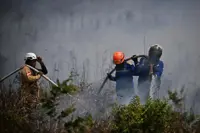
But the strength of the current pattern has parched rivers and wells in Indonesia and fanned forest fires in Borneo – where West Kalimantan is located – and Sumatra that have spread choking haze over the province and as far as Malaysia and Singapore.
The Kapuas – Indonesia’s longest river at 1,143km – transports 40% of West Kalimantan’s palm oil output, according to data from the Indonesian Palm Oil Association.
Sandbanks have emerged from the receding waters of the river, causing several barges and tugboats to run aground, according to Reuters witnesses.
Road delivery is a limited alternative, because trucks carry less than barges and fewer are available, millers say.
During El Ninos in 2015 and 2018, similar droughts lasted for about a month, several local farmers said. But this year the Kapuas has dropped to a lower level and the effects have lasted for two months already.
Indonesia’s weather agency expects the start of the rainy season to be pushed back to November, from October normally, delaying the river’s resurgence and relief from the country’s most intense wildfires in 11 years. — Reuters