PETALING JAYA: Two nuclear power plants will be installed within Indonesian waters, at a spot about 3,000km from Kuala Lumpur, or 1,400km from Kota Kinabalu, five years from now.
This follows the signing of an agreement between Indonesia and Russia's state-owned energy conglomerate, Rosatom State Corporation, to facilitate the first-ever export of Russian expertise in civilian nuclear power, with the deal covering two floating nuclear power plants (NPPs) in North Maluku.
In a statement on Oct 19, Rosatom said it had reached an agreement with Indonesia's state-owned company, PT Pembangkit Listrik Nuklir, to supply electricity generated by two floating NPPs in North Maluku, which is located in the eastern part of Indonesia, with the installation to be completed as early as five years from now.
The agreement was signed on the sidelines of Russian Energy Week in Moscow on Oct 16, marking a significant milestone in bilateral energy cooperation between Russia and Indonesia.
According to Rosatom, it will deploy two FPU-100 floating power units with a combined capacity of 200MW to supply electricity to the northern part of Halmahera Island in North Maluku.
"The units will provide reliable, low-carbon electricity using RITM-series reactor systems, which have demonstrated their efficiency, reliability, and safety through years of operation aboard nuclear-powered icebreakers.
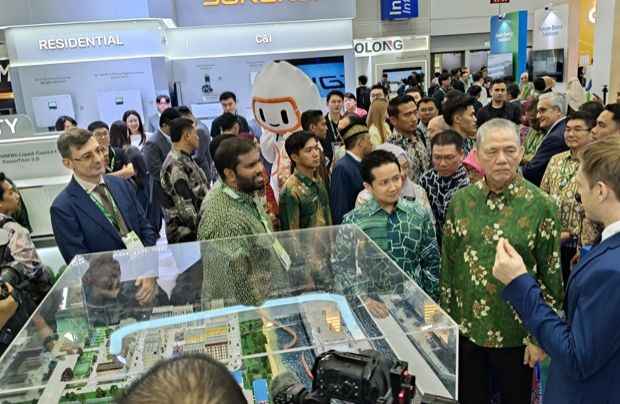
"The FPUs are expected to begin supplying their first megawatts of electricity to consumers in Indonesia as early as five years after the key terms of the electricity supply contract come into effect," said the Russian company that exhibited a replica of its floating NPP at the recently concluded International Greentech & Eco Products Exhibition and Conference Malaysia (IGEM) in Kuala Lumpur.
“Rosatom is ready to offer the most advanced and proven technological solutions available on the global market," said Alexey Likhachev, director general of Rosatom, on what is touted as the world’s first-ever export agreement for electricity supply from a floating power unit, in the statement.
In 2025, Indonesia included nuclear power in its National Energy Plan, recognising it as a key instrument for ensuring long-term energy security and carbon neutrality by 2060.
Likewise, Malaysia has revived its nuclear energy journey, and restarted Phase 1 of the International Atomic Energy Agency (IAEA) Milestones Approach to assess the feasibility of adding nuclear power to its national grid.
Malaysia's nuclear energy journey is a rather convoluted one, with concrete steps taken during the administration of Datuk Seri Najib Razak.
Following the change of federal government in the May 2018 general election, the new government disbanded the Malaysia Nuclear Power Corporation (MNPC) that was supposed to deliver nuclear power in Malaysia, as outlined under the then Economic Transformation Programme.
However, hard geopolitical realities have led to nuclear power to be considered again, and in November 2024, the task of charting the path towards nuclear was given to the Malaysia Programme Office for Power Electricity Reform (MyPOWER) Corporation, a special purpose agency under the Energy Transition and Water Transformation Ministry, which comes under the watch of Datuk Seri Fadillah Yusof, who is also the Deputy Prime Minister.
According to Rosatom, there are currently approximately 80 small modular reactor projects at the design stage worldwide.