JAKARTA: President Prabowo Subianto has further elevated leaders of his ruling coalition in the latest cabinet reshuffle, putting four party chairmen in coordinating ministerial posts as political maneuvering ahead of the 2029 elections begins to take shape.
Prabowo on Thursday (Oct 1) carried out his seventh and largest Cabinet reshuffle since taking office in October 2024, appointing or rotating 18 senior officials, including four coordinating ministers, two ministers, four deputy ministers, several agency leaders and the National Police chief.
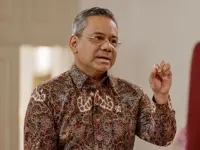
Among the most notable changes was the elevation of Golkar Party chairman Bahlil Lahadalia to coordinating minister for downstreaming and energy transition, while retaining his post as energy and mineral resources minister.
The dual role puts the Golkar chairman at the centre of one of Prabowo’s key economic priorities in his Asta Cita, which is expanding domestic processing of the country’s natural resources and advancing the country’s energy transition.
Bahlil now joins other leaders of parties in Prabowo’s coalition who hold coordinating ministerial posts, including Democratic Party chairman Agus Harimurti Yudhoyono, National Mandate Party (PAN) chairman Zulkifli Hasan and National Awakening Party chairman Muhaimin Iskandar.
Political researcher Arya Fernandes from the Jakarta-based Centre for Strategic and International Studies said the reshuffle could be viewed as an effort by Prabowo to reinforce ties with coalition parties as they begin to weigh their interests ahead of the 2029 elections.
“The reshuffle indicated the President’s need to secure the loyalty of parties in his ruling coalition,” Fernandes explained, pointing to the increased presence of party leaders, particularly in coordinating ministerial positions.
He said coalition dynamics could become more consequential as parties assess their own electoral prospects, including the emergence of potential challengers such as West Java Governor Dedi Mulyadi, who has performed strongly in recent opinion polls.
Another consideration, Fernandes said, was the need to maintain coalition support as lawmakers consider revisions to the General Elections Law that could affect the rules governing the 2029 contest, including presidential nomination and the legislative threshold.
A proposal has recently emerged within the ruling coalition for a new provision in the elections law requiring presidential tickets to receive support from at least two political parties in the House of Representatives. Analysts have said such a provision could narrow the field of competition and make it harder for potential challengers to mount a viable bid against Prabowo.
Thursday’s reshuffle also brought other senior figures from pro-government parties into the cabinet. Golkar secretary-general Muhammad Sarmuji was appointed industry minister, replacing fellow Golkar politician Agus Gumiwang Kartasasmita, while PAN politician Drajad Hari Wibowo became deputy coordinating economy minister.
Political analyst Agung Baskoro of Trias Politika Strategis said the stronger representation of Golkar and PAN was likely tied to their staunch support for Prabowo’s agenda, including his potential bid for a second term. Both parties have explicitly voiced their commitment to backing Prabowo’s reelection.
“PAN’s support for Prabowo has remained consistent across recent elections, even when the party did not have its own presidential candidate [...] while Golkar has historically tended to maintain close ties with whoever is in power,” Agung noted.
The reshuffle further reinforced PAN and Golkar as “the main pillars of Prabowo’s ruling coalition”, whose continued support could help “stabilise political dynamics” within the coalition as parties begin positioning themselves ahead of the next elections, Agung added.
Democratic Party chairman Agus last month made several remarks that some observers and politicians interpreted as indirect criticism of the government, fueling speculation that he is positioning himself for the next presidential race.
Agus subsequently denied the speculation. Fernandes and Agung also pointed to recent opinion surveys showing declining approval ratings for Prabowo as one factor that could make coalition management more important as the 2029 election approaches.
“Parties will increasingly assess whether remaining aligned with Prabowo will serve their interests as the 2029 election approaches, particularly if the President’s approval ratings and electoral standing continue to weaken,” Agung said. - The Jakarta Post/ANN