




Poor treatment of guard dogs at warehouses before ditching them in unfamiliar environments could make the animals easier to agitate, rescuers have said, calling for a “trap, neuter and release” approach, among other solutions.
Concerns about the handling of stray dogs entered the media spotlight after a 27-year-old woman was discovered along a cycle path in Yuen Long after suffering lacerations to her head, face, neck, arms and legs. She was later pronounced dead at Pok Oi Hospital.
On Saturday night, three dogs were seen chasing the woman along Pok Wai South Road in an area with several warehouses.
Jacqueline Cheung, founder of the non-profit Love Adopt Animal Society, said that free-roaming warehouse guard dogs fell under the broad definition of stray dogs, which also covered abandoned pets on the streets and wild canines that stayed in the mountains and away from urban areas.
She warned that these dogs, which have strong territorial instincts, could turn aggressive if they felt someone was intruding on their territory. Much of a canine’s behaviour was shaped and conditioned by humans, the veteran rescuer added.
“Some warehouse dogs are constantly chased away, beaten, splashed with water or have things thrown at them ... while others may be chained up with heavy iron chains,” Cheung said.
This factor, combined with the clearance of warehouses and car parks as part of land resumption works, could naturally leave dogs feeling anxious and insecure in an unfamiliar environment, putting them on high alert, she said.
Cheung said many warehouses, open car parks and villages in the New Territories, including parts of Sheung Shui, Ping Shan, Fanling and Yuen Long – where the suspected attack took place – had resorted to guard dogs for decades.
She estimated that about 80 per cent of dogs in those environments were kept as working animals and largely suffered neglect.
Such dogs were often fed table scraps and leftovers, while warehouse operators would frequently leave them unfed over public holidays, she said.
Cheung added that warehouse and car park operators typically did not neuter their dogs and raised them in a free-roaming manner.
“It is very hard for us to tell whether they actually belong to someone or not. Some might have a collar, but most probably do not. It’s just that they constantly linger around those warehouses or car parks,” she said.
When these free-roaming dogs were injured or infected, some owners would call volunteers to collect them after the animals ceased to be useful, she said.
Cheung described the situation as a decade-long issue that needed to be solved at its roots.
Temporarily trapping such canines, spaying them and then releasing them back into their original environment was the best solution for controlling the population while sparing their lives, she said.
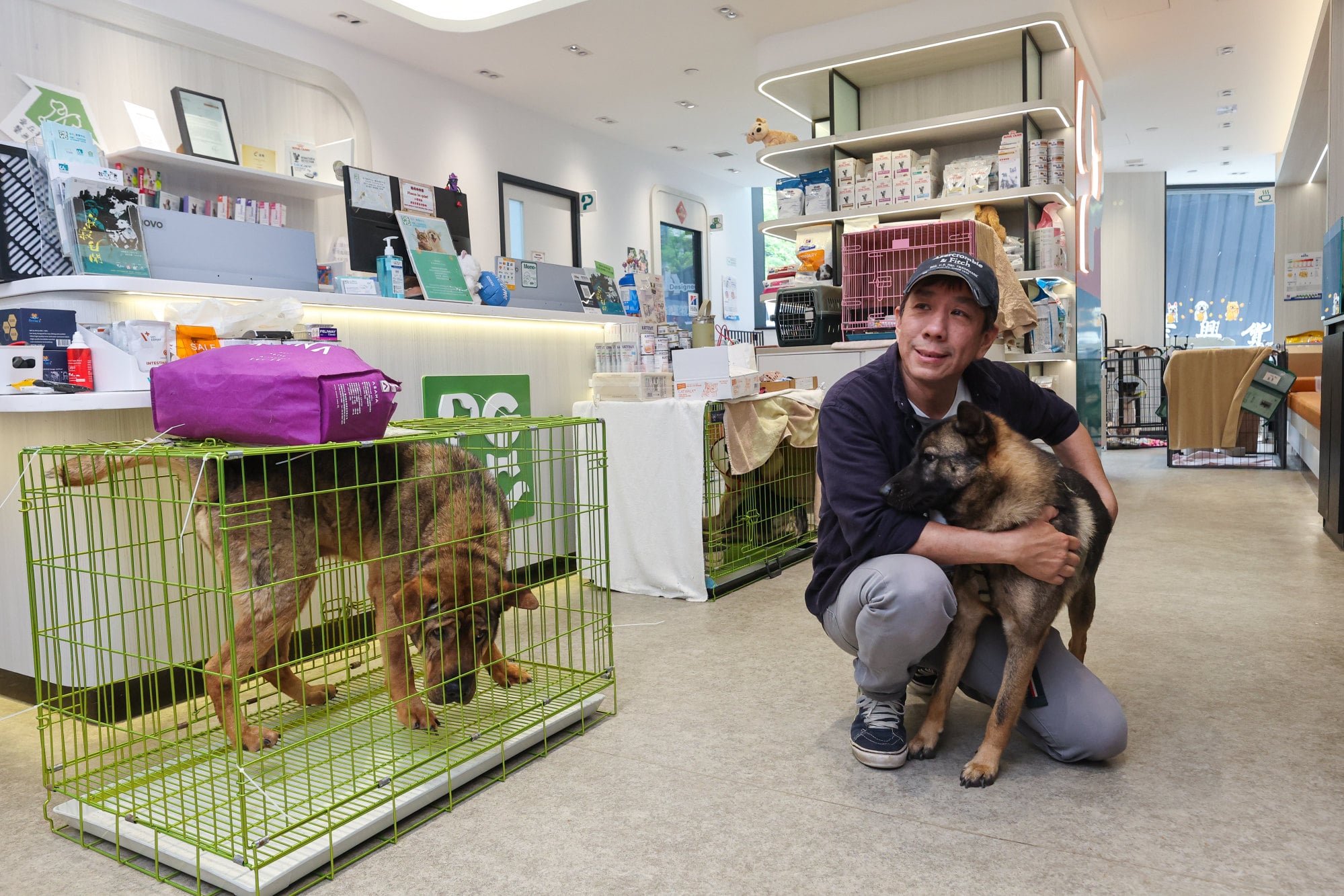
Kent Luk Ka-chit, founder of Paws Guardian Rescue Shelter, said a possible long-term solution was creating a government animal shelter managed by charitable organisations that could neuter the dogs and help them find adopters, and an alternative to culling.
Figures shared by the Agriculture, Fisheries and Conservation Department on Tuesday revealed 338 dogs were euthanised in 2021, before dipping to 280 a year later. In 2023, the figure reached 372, before rising to 436 a year later and then dipping to 375 in 2025.
Counting the 102 dogs euthanised in the first three months of this year, the tally since 2021 stood at 1,903. The figures included strays, animals surrendered by owners and dogs involved in court cases.
The number of dogs transferred to animal welfare organisations for adoption arrangements dropped steadily from 348 in 2021, the same number the next year, before dipping to 319 in 2023, climbing slightly to 328 a year later and falling to 226 in 2025.
But since 2004, complaints related to stray dogs had dropped from nearly 20,000 cases annually to about 1,300 in recent years, the department said.
Luk said education and subsidies were needed to promote an adoption culture, adding that harsher fines and penalties should be imposed on pet smugglers to potentially help bring down the stray animal population.
A San Tin resident also spoke to the South China Morning Post about his own experiences with dogs in the area.
The resident, who only gave his name as Chan, recalled cycling home from Yuen Long in late February when his path was blocked by four or five dogs, about 1km (1,093 yards) from where the woman was found over the weekend.
Chan said he tried to loop his bike back towards the vehicle road beside the cycle lane, but the dogs rushed onto the road and barred any way forward, forcing him to turn back and take a longer alternative route home.
He said the problem had persisted for a long time, with many residents in Yuen Long and his village having been bitten or chased by dogs.
The dogs behind the attacks included “free-range” animals kept at nearby container gardens, recycling depots and car workshops in the district’s big open-air working areas, he said.
“The dogs are there to guard the entrance, but somehow they end up sitting further and further out, until they have basically left their original spot and wandered out onto the road,” Chan said.
“I don’t have a problem with stray dogs existing as purely a road user, but it will be dangerous if they are blocking the road for passers-by.”
A Thread user also shared in February that he, his father and a cousin were chased by about 10 more dogs near the Yuen Long Sewage Treatment Works in January.
“I pedalled as hard as I could – I nearly lost my balance, and the bike nearly went out of control before I managed to shake them off,” he said. -- SOUTH CHINA MORNING POST



