Arm touches, laughs, and firm handshakes were on display as Chinese President Xi Jinping and his American counterpart Donald Trump began their high-stakes summit in Washington, which has so far featured a rare airport welcome, military pageantry and closed-door bilateral talks.
While the outcomes of the pair’s discussions are being closely watched, so are the exchanges between the leaders of the world’s two largest economies. A body language expert who reviewed the interactions said Trump’s gestures appeared to assert dominance, while Xi remained formal but comfortable.
Their interactions began when the US president and first lady Melania Trump met Xi and his wife Peng Liyuan at the bottom of the aircraft steps at Joint Base Andrews, a gesture Patti Wood, a body language expert, said showed respect for the Chinese leader.
“You know, the president doesn’t always come to the tarmac to do that. To me, again, that’s symbolic,” Wood said, noting that Xi looked very comfortable at the end of the airport greeting.
Xi’s shoulder stance and the way he walked were normal for him, Wood said, adding, “I’m not seeing that he’s changing anything from the way he would normally be in these formal visits.”
On Thursday morning, the couples kicked off another day of engagements. Xi and Peng joined the Trumps at the White House, just after 10am.
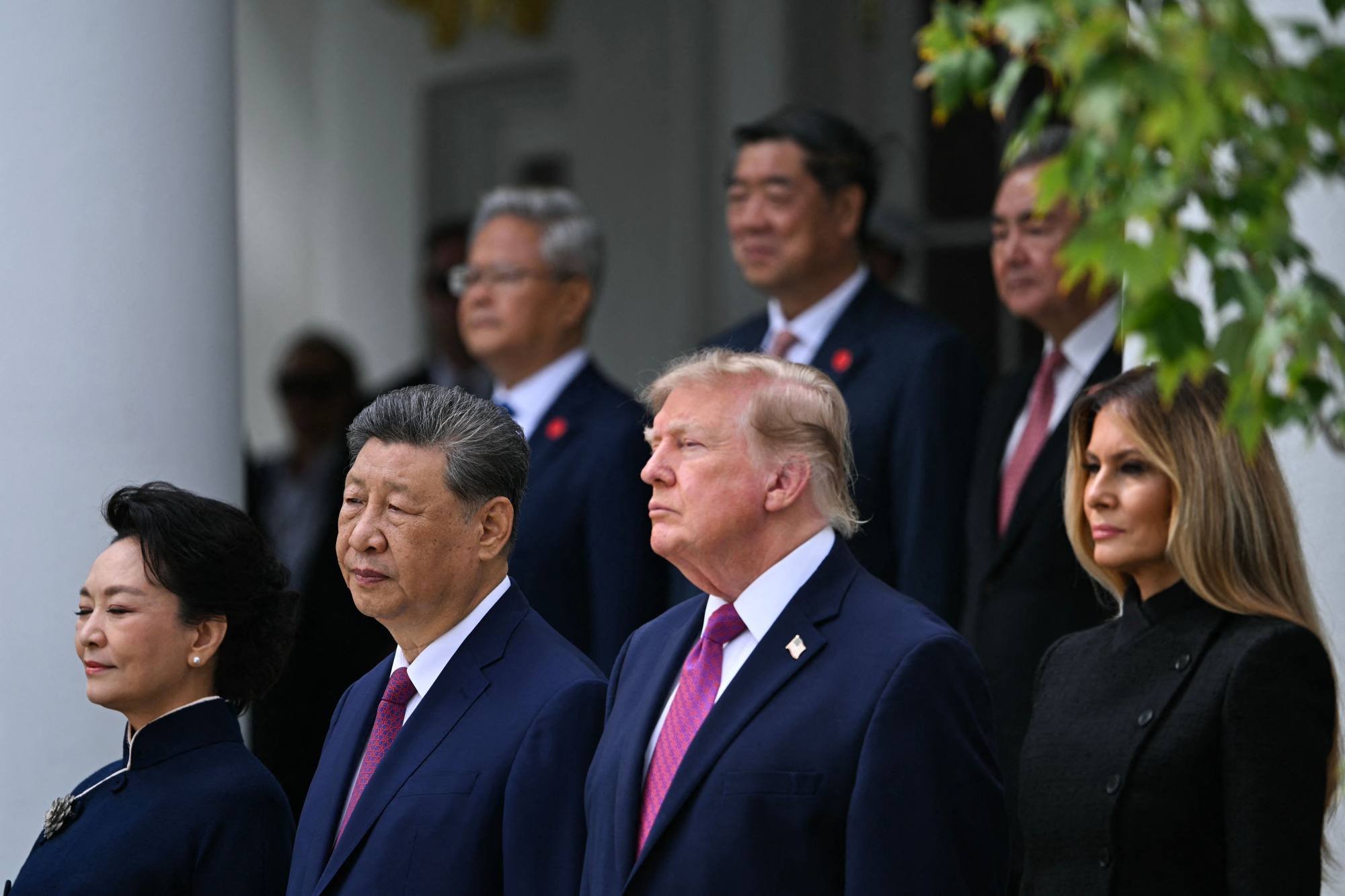
As Trump walked out of the White House for Xi’s arrival, Wood noticed that his chin was tilted slightly downward. While he may have simply been looking down to see where he was walking, she said that, from a body language perspective, a downward-tilted chin non-verbally projects less authority than a chin-up or chin-forward stance.
“Downward chin placement, no matter what the motivation is, typically shows less power,” she said.
When the pair met at the White House, Xi executed a traditional head bow appropriate for Chinese culture, Wood said, while Trump immediately extended his hand straight out to shake hands without matching the bow or leaning back.
She called their greeting “standard Trump” but noted that it did not take into consideration Chinese protocol, etiquette or cultural norms.
Xi is “keeping decorum and is very formal. Trump is not affecting him in any of this”, Wood said. “Nothing would indicate that he is being affected by it, that this would ruffle him at all,” she added.
During the handshake, Trump also patted Xi on the upper arm. His repeated arm and back patting, which is typical of the US president’s greetings, projects hierarchy, Wood added, symbolically saying “I am better” than you.
Later, Xi was also recorded returning the gesture by patting Trump on the back.
“That would be a little bit of a symbolic battle,” Wood said, interpreting Xi’s mirroring of the touch as a way of neutralising the perceived dominance.
While a back pat can sometimes be perceived as warm and friendly in American culture, there is usually a close personal relationship involved, she said, explaining that even in the US, in formal or non-personal contexts, it functions as an “I am going above you in hierarchy”.
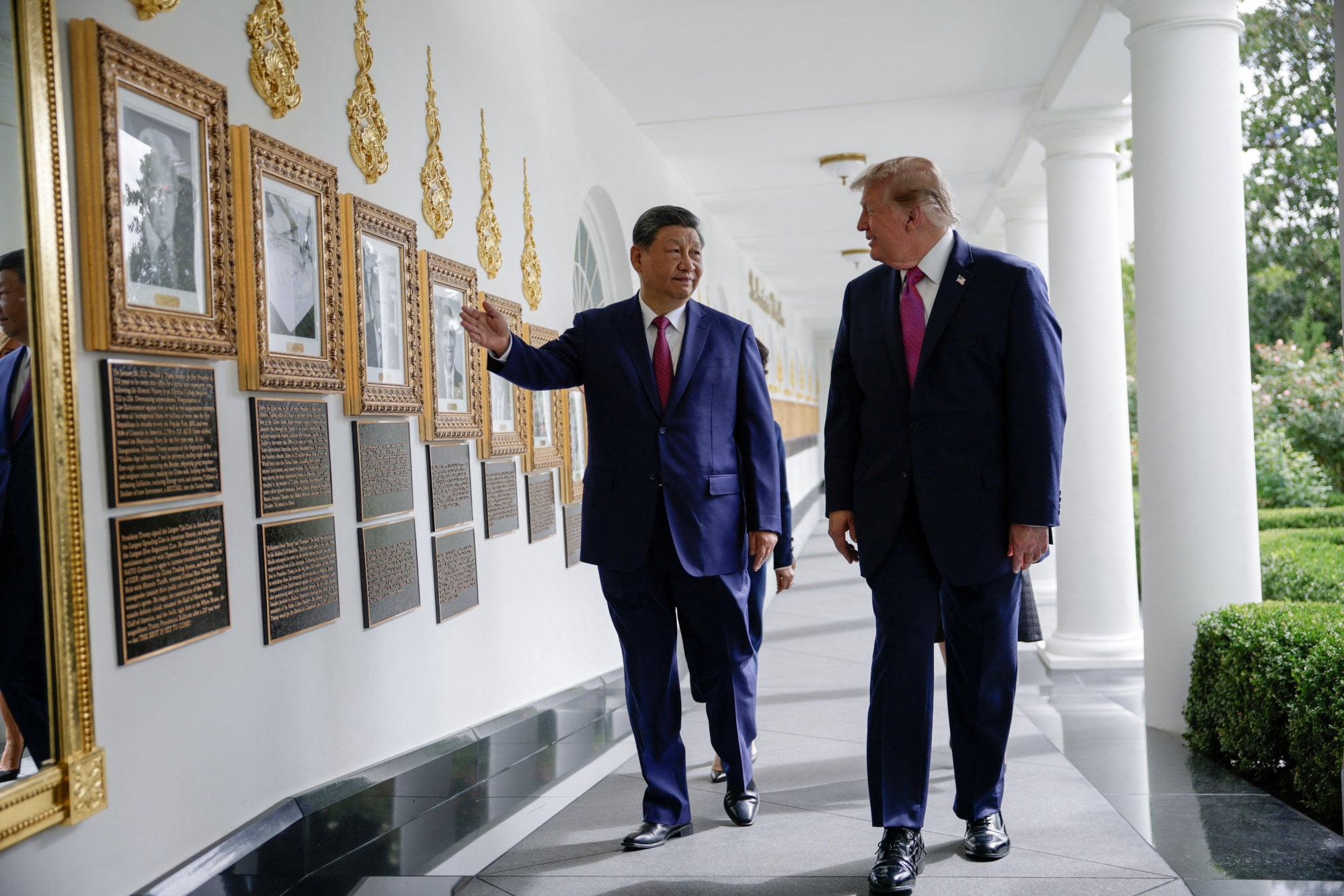
Another closely watched moment saw Trump walk Xi along the White House colonnade and stop at the Presidential Walk of Fame, where they looked at the framed pictures.
Trump pointed to his own portrait, then to former President Joe Biden’s place. There was a photo of an autopen signing his name, rather than of Biden himself. Trump has repeatedly claimed that an autopen, rather than Biden, was effectively running the presidency. Xi was seen laughing during this interaction.
Outside the presidents’ interactions, the two first ladies’ exchanges were also observed.
When they left their husbands to tour the Smithsonian Institution’s National Museum of Asian Art, Wood said they relaxed away from the formalities of their husbands’ meeting.
“They’re away from their husbands. They’re having a good time moment,” she said, noting that the pair had a “mutual gaze” and “a true smile, a true little moment”. -- SOUTH CHINA MORNING POST