MANILA/SINGAPORE (The Straits Times/ANN): Asean and China have reached provisional agreement on about 80% of a long-awaited Code of Conduct (COC) in the South China Sea, falling short of an earlier commitment to conclude negotiations in 2026, Philippine Foreign Secretary Ma. Theresa Lazaro said on Nov 15.
She told a press briefing that negotiations were entering their final phase, but stopped short of committing to a deadline for completing the agreement, which Manila had hoped to conclude by the end of 2026.
Instead, she said the parties had agreed to continue working towards an “effective and substantive” code at the earliest possible time.
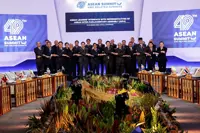
The announcement came as Asean leaders gathered in Manila for the 49th Asean Summit, amid continuing tensions over competing claims in the South China Sea.
“We are pleased to report the substantial completion of the negotiations on the Asean-China Code of Conduct,” Lazaro told reporters.
She said the parties had reached provisional agreement on about 80% of the paragraphs in the draft COC, up from the 77% she reported on Nov 14.
But some of the most contentious issues remain unresolved, including whether the code will be legally binding and its geographical scope.
Lazaro said negotiators had reached agreement on one of four major outstanding issues: the relationship between the COC and the Declaration on the Conduct of Parties in the South China Sea (DOC), adopted by Asean and China in 2002.
Under the provisional agreement, the DOC would provide the foundation for the COC, which would build on its principles and introduce more effective provisions to guide the conduct of parties in the disputed waters.
The parties also agreed that the eventual code would serve as a platform for practical maritime cooperation, with activities undertaken voluntarily and in accordance with the United Nations Convention on the Law of the Sea (UNCLOS).
Lazaro stressed that the COC was intended to help manage differences at sea, rather than settle territorial and maritime disputes.
The parties also reaffirmed their commitment to peaceful dispute settlement under international law, including UNCLOS, and to maintaining freedom of navigation and overflight.
Singapore to inherit unfinished negotiations
Asked by reporters, Lazaro acknowledged that the Philippines would be unable to conclude the negotiations during its chairmanship, despite an intensified schedule of nine rounds of talks and two senior officials’ meetings this year.
“Definitely, there is no conclusion yet (to the COC negotiations),” she said.
Lazaro estimated that another five to six months might be needed to complete the agreement, citing differences among Asean members and China over sensitive provisions.
“I think there was not enough time,” she said.
Lazaro confirmed that the legally binding nature of the COC remained unresolved, noting that such an agreement could require ratification by certain Asean member states.
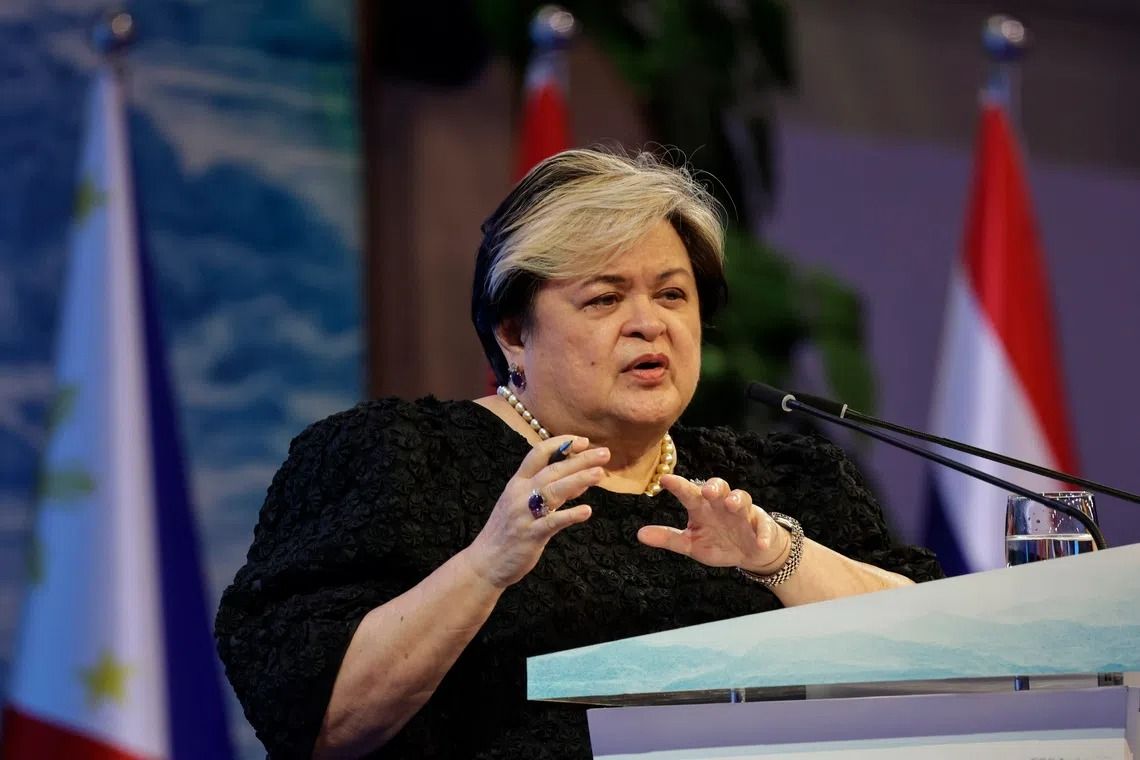
However, she expressed confidence that Singapore could complete the remaining negotiations when it assumes the ASEAN chairmanship in 2027.
“I trust that Singapore will be able to finish the discussions,” she said.
The Philippine foreign secretary likewise defended her country’s handling of the negotiations, saying the provisional agreement “is really something that we can be proud of”.
Analysts caution against weak agreement
Analysts said the failure to conclude negotiations during the Philippine chairmanship should not necessarily be seen as a setback, warning that rushing the COC could result in an agreement that fails to protect the maritime rights of Asean members.
Aries Arugay, a visiting senior fellow at the ISEAS-Yusof Ishak Institute in Singapore, said the Philippines risked securing a diplomatic achievement that could ultimately work against its interests.
“Finishing the Code of Conduct itself, it might be an achievement, but it can also backfire because what if it’s a weak document?” Arugay told The Straits Times.
He warned that a weak COC could constrain the Philippines and other claimant states without meaningfully restricting China’s aggressive behaviour in the disputed waters.
Arugay also cautioned against using the Asean chairmanship to advance national objectives.
“The informal norm is that you don’t carry your own issues and use the chairmanship as a vessel for those,” he said.
Dindo Manhit, president of the Manila-based Stratbase Institute, similarly argued that protecting the Philippines’ maritime rights was more important than securing an agreement merely to meet a deadline.
“I would rather not have a code of conduct if it will sacrifice our own maritime rights and territorial integrity based on our arbitral awards,” he told ST.
He was referring to a 2016 international arbitral ruling that invalidated China’s expansive maritime claims in the South China Sea, which Beijing has rejected.
Manhit said Asean should not compromise its commitment to international law, including UNCLOS, simply to conclude negotiations with China.
“Maybe China wants something that Asean cannot give,” he said.
Talks on Myanmar, transboundary haze
Beyond the South China Sea, Lazaro said Asean leaders on Nov 15 also agreed to pursue a “gradual, progress-based approach” towards the possibility of restoring Myanmar’s political representation at high-level meetings, maintaining restrictions imposed on its military leadership following the 2021 coup.
Lazaro said Myanmar would have to demonstrate progress in implementing ASEAN’s Five-Point Consensus, beginning with an end to all forms of violence.
“Right now, there’s still bombings and displacement of the Myanmar people,” she said, adding that ASEAN would monitor developments before considering the restoration of Myanmar’s participation.
Asean leaders also called for faster ratification of an agreement to establish a regional centre in Indonesia to tackle transboundary haze pollution, following discussions on Indonesia’s efforts to address forest fires.
Lazaro said Indonesia had briefed fellow leaders on its efforts to combat the fires, including stronger law enforcement against companies and individuals responsible. -- The Straits Times/ANN