
China on Thursday pushed back against a new US sanctions bill targeting Russia that could also have a major impact on Beijing, a major Russian energy importer.
The US Congress on Wednesday passed the bill to strengthen sanctions on Moscow by targeting Russia’s leading energy buyers – China and India – just days before Chinese President Xi Jinping is expected to arrive in Washington for a summit with President Donald Trump.
“China carries out economic and trade cooperation with countries on the basis of equality and mutual benefit,” Chinese foreign ministry spokesman Guo Jiakun said.
The cooperation did not target any third party and should not be disrupted or be under the coercion of any third party, Guo added.
“China opposes long-arm jurisdiction that has no basis in international law or the authorisation of the UN Security Council.”
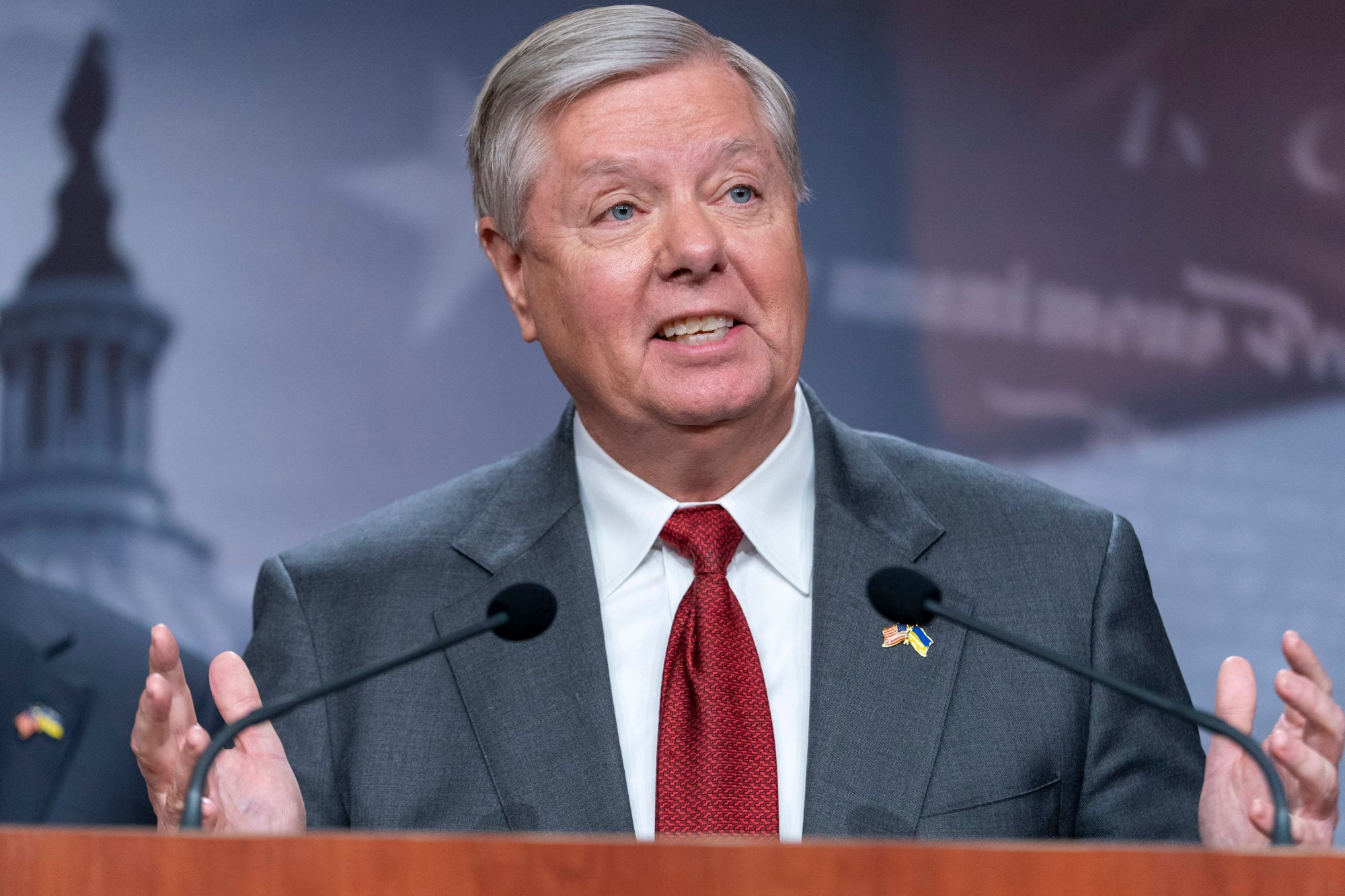
The US House of Representatives cleared the “Lindsey Graham Sanctioning Russia and Iran Act of 2026” by a 262-159 vote, making its way to the White House for Trump’s signature. The Senate passed the bill last month by an overwhelming 86-11 vote.
The legislation, championed by late Republican Senator Lindsey Graham, who died in July, authorises Trump to impose up to 100 per cent tariffs on the five largest importers of Russian oil and natural gas, expanding his favourite tactic of slapping tariffs to maximise leverage and retribution.
While buyers of Russian energy are not explicitly named in the bill, it is set to target major buyers such as China and India, while potentially exempting countries including Japan, France, Hungary and Belgium, which source smaller shares from Russia and are taking steps to reduce their reliance.
The bill would also impose additional measures on Russia’s energy and defence sectors and its fleet of tankers used to circumvent existing sanctions, while slapping more sanctions on Iran.
Congress’s move comes as US Treasury Secretary Scott Bessent and Chinese Vice-Premier He Lifeng are set to hold their final preparatory talks this weekend ahead of the Chinese leader’s visit to Washington next week.
Both sides are expected to finalise the summit’s likely economic outcomes, including tariff reductions on agricultural trade, while extending the fragile trade truce reached in October last year, the South China Morning Post earlier reported.
The bill targeting Russian oil exports to Beijing and other major buyers adds another layer of economic pressure as Washington presses China to sever commercial ties with Iran under its “Operation Economic Outcast” sanctions campaign.
“With China, we have had some very good private discussions, and I look forward to those continuing this weekend when I meet my Chinese counterpart, [Vice-Premier] He Lifeng,” Bessent said during a House Financial Services Committee hearing on Tuesday.
Bessent was responding to a question about the alleged role of Chinese banks in facilitating commercial transactions with Iran and whether Washington planned to take action against them.
During his second term, Trump has tested the limits of his executive authority and used tariffs extensively to pursue both political and economic objectives, including pressuring trading partners to change policies and advancing economic interests.
He has recently imposed new tariffs on Canadian goods and Brazilian imports, adding to his broader use of tariffs as a negotiating tool.
Many Democrats in the House opposed the Russia sanctions bill, saying it handed Trump “sweeping new tariff authorities that he can abuse to raise costs on the American people”.
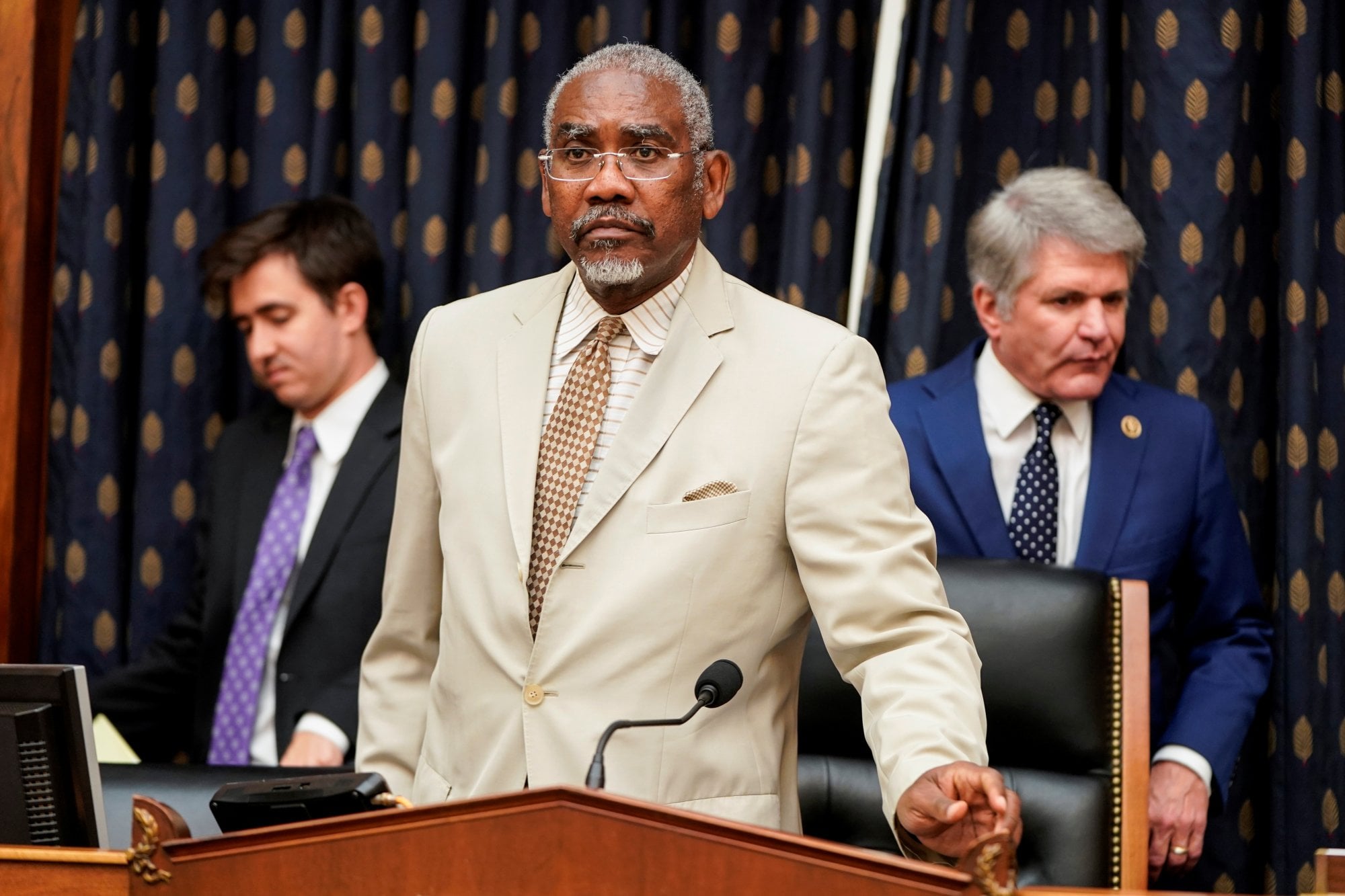
“With this language, he would be able to place tariffs on nearly any country he wants, using sanctions evasion as a pretext,” said Gregory Meeks, a Democratic representative from New York and ranking member of the House Foreign Affairs Committee.
“Does anyone seriously believe President Trump will not use this broad language to target whichever government he is personally angry at?”
Since the Supreme Court ruled in February that Trump’s expansive tariffs imposed under the International Emergency Economic Powers Act were unconstitutional, the administration has sought to replace them with a range of other measures under the 1974 Trade Act and other lesser-known laws and regulations.
In July, it imposed tariffs ranging from 10 to 12.5 per cent on 60 economies, including China, Japan, South Korea, India and European Union member states, under Section 301 of the Trade Act over allegations of forced labour.
The administration is also expected to slap additional duties on 16 economies, including China, India, Japan and South Korea, following another Section 301 investigation into industrial capacity.
Trump also invoked Section 338 of the Tariff Act of 1930 to impose 50 per cent tariffs on a range of Canadian goods last month after trade talks with Ottawa collapsed at the last minute.
The obscure 1930 trade enforcement provision, passed at the height of Depression-era protectionism, had never been used before and, in theory, gives Trump broader, faster and less-restricted authority to levy tariffs than almost any other trade statute on the books.
Washington’s growing reliance on tariffs and sanctions is also prompting targeted countries to seek workarounds and reduce their dependence on the US-led global financial architecture.
Last week, leaders of Brics countries agreed to expand trade and payments in local currencies, making another step towards de-dollarisation as the bloc seeks to counter an assertive United States.
Brics is an 11-nation grouping that includes China, India, Russia and Iran, spans four continents and represents nearly half of the world’s population.
The pledge was part of the “New Delhi Declaration 2026”, adopted unanimously at the Brics summit.
The 45-page declaration said the group’s Payment Task Force had studied “cross-border interoperability of payment and messaging channels” and held talks on using local currencies for “trade settlements and investments”. -- SOUTH CHINA MORNING POST