
BANGKOK: Thitipas Chotedechachainan, secretary to the energy minister, provided an update on the investigation into an oil leak on Thanon Chuea Phloeng beneath the Rama III Elevated Road, as officials continued efforts to trace the source of oil contaminating the drainage system and surrounding area.
Officials had previously excavated the area and found an underground void, as well as oil-contaminated water in an old drainage system.
They subsequently widened the inspection area to locate the source of the leak.
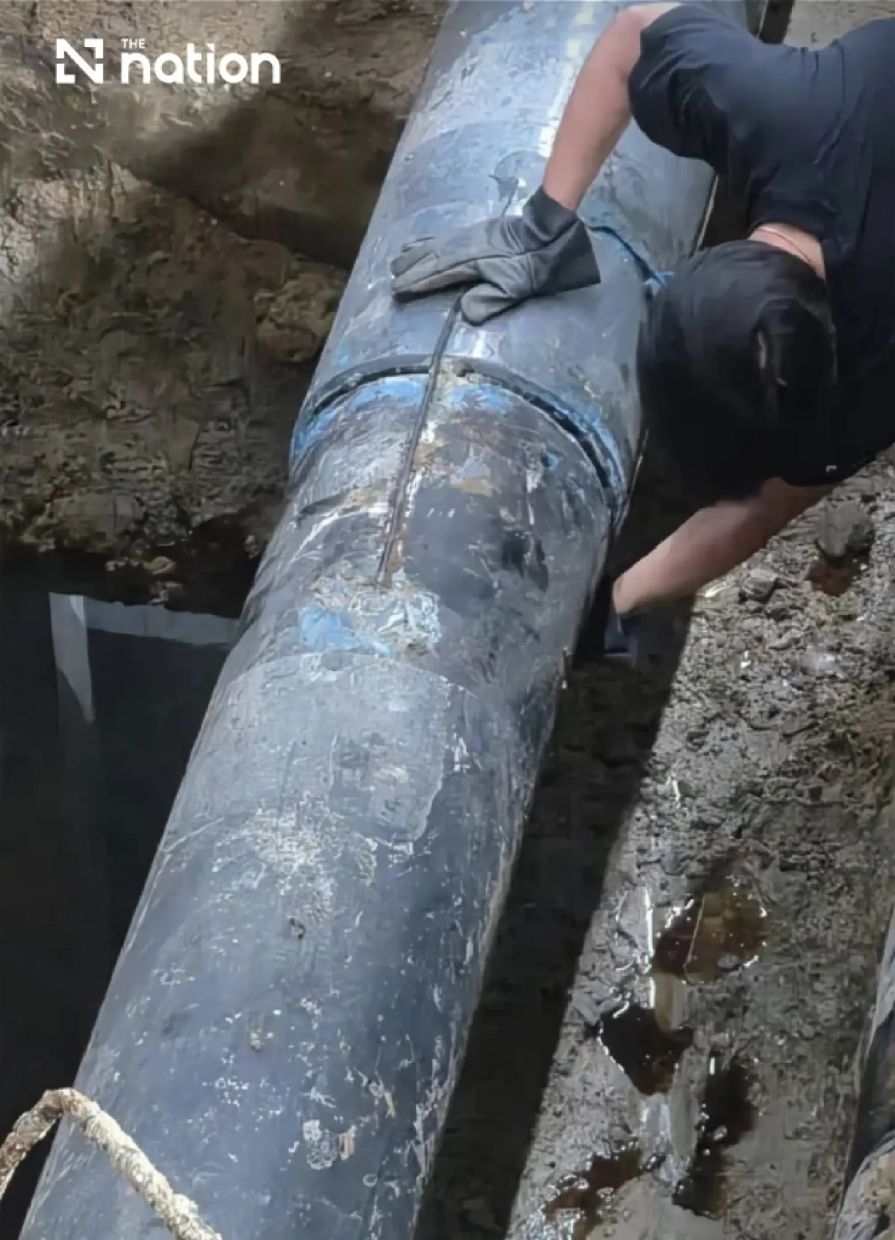
The latest inspection identified a point where oil was seeping from a fuel pipeline in the Rama III area.
BAFS Pipeline Transportation Limited (BPT) holds the licence for the pipeline system, while Bangkok Fuel Pipeline and Logistics Company Limited (BFPL), part of Bangchak Group, operates it.
Thitipas said both companies must take responsibility for the damage caused and comply with directives from the Department of Energy Business to ensure that the remedial work proceeds systematically, including measures to prevent a recurrence.
Repairs ordered, and records sought to establish cause
The Department of Energy Business has set out a three-part course of action.
The first requires the operator to urgently locate and repair any damaged or defective points along the pipeline.
The pipeline owner must also submit all maintenance and repair records for the system to the department for examination to help establish the cause and assess the risks.
Once the repairs are complete, a pigging test must be conducted along the pipeline’s entire length of about 32 kilometres to examine its internal condition and identify points that may be at risk of leakage or other abnormalities.
If a leak or abnormality is detected during testing, the process must stop immediately so that the problem can be examined and rectified before testing resumes.
Pipe replacement required and rerouting considered at risk points
For any section where damage or a defect is found, the Department of Energy Business requires a pipe replacement plan and consideration of rerouting the pipeline to improve safety, particularly where it runs beneath piers or other structures presenting a risk.
The measures are intended to address the current leak, verify the integrity of the entire pipeline and reduce the risk of another oil leak in the future. - The Nation/ANN