




US Treasury Secretary Scott Bessent on Tuesday confirmed that he will meet Chinese Vice Premier He Lifeng this weekend for the final preparatory talks between the two sides, less than a week before Chinese President Xi Jinping travels to Washington for a bilateral summit with US President Donald Trump.
“With China, we have had some very good private discussions, and I look forward to those continuing this weekend when I meet my Chinese counterpart Vice [Premier] He Lifeng,” Bessent said during a House Financial Services Committee hearing.
Bessent was responding to a question about the alleged role of Chinese banks in facilitating commercial transactions with Iran and whether Washington planned to take action against them.
Bessent is expected to discuss the likely economic outcomes of the Trump-Xi summit and begin preparatory dialogue on artificial intelligence safety and governance.
Last week, the South China Morning Post reported that Washington and Beijing are set to fold the long-awaited AI dialogue into a broader economic meeting.
The two leaders agreed in Beijing in May to establish an intergovernmental dialogue on AI, which ran separately from the economic talks led by Bessent and He for months. The AI channel has struggled to make progress, with basic details of the planned talks still unresolved as Xi’s visit approaches.
Bessent set to address AI and economic issues in meeting with He
Sources said Bessent is now expected to address both AI and economic issues in a single meeting with He, rather than hold separate high-level talks. Bessent leads the US side in both channels, while the tight schedule ahead of the summit has made arranging a second meeting increasingly difficult.
The latest arrangements mirror those in May, when Bessent and He held talks in Seoul just days before Trump met Xi in Beijing.
Another source familiar with the discussions said the upcoming AI talks are expected to be “fairly preliminary” and more about “agenda setting” than grappling with complex issues.
On Tuesday, Bessent also weighed in on the AI safety debate, highlighting the tension between addressing concerns about the risks posed by increasingly powerful AI systems and maintaining US competitiveness with China in the race for AI leadership.
“It does matter whether the good guys or the bad guys have this,” Bessent said in response to Massachusetts Democrat Stephen Lynch, who argued it probably wouldn’t matter whether the good or bad guys developed superintelligence if it couldn’t be controlled.
“As a person who manages the relationship with China on AI, it matters a great deal,” Bessent added.
Trump on Monday dismissed growing concerns about AI, claiming America already has guardrails to regulate the industry and warning that casting doubt on development only benefits China.
“The only control or ‘guardrails’ that AI needs is a STRONG AND SMART (High IQ!) PRESIDENT, and the U.S.A. has that, in spades!” Trump wrote on social media.
“We already have tremendous CRIMINAL and REGULATORY power over these companies! There is a SICK conspiracy going on against AI and Data Centers, and the only one that is happy about it is China.”
Bessent echoed Trump’s stance on Tuesday, arguing that “AI is the most important technology of this century, and that we must maintain US leadership”.
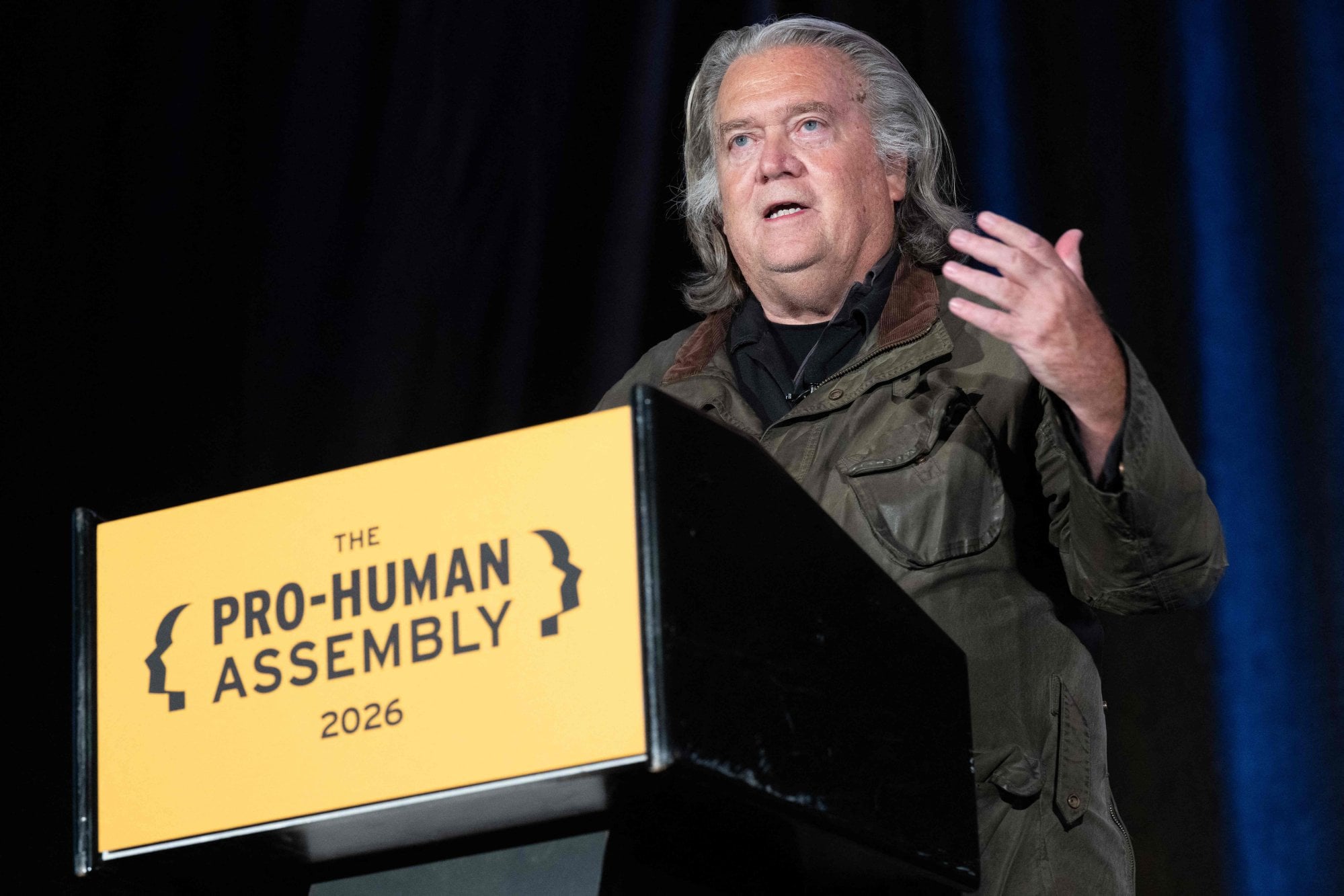
Bessent’s testimony came on the same day that Senator Bernie Sanders and former Trump White House aide Steve Bannon joined forces at a Washington conference, dubbed the Pro-Human Assembly, to call for new policies to curb the rapidly accelerating development of AI.
The AI safety issue gained prominence last week when a former Anthropic employee warned that the technology may lead to human extinction in the next decade.
On Saturday, Anthropic CEO Dario Amodei proposed a three-step framework to slow the pace of AI development and give policymakers and companies more time to address the risks posed by rapidly advancing technology.
The proposal quickly won support from other prominent industry leaders, including xAI chief Elon Musk and OpenAI CEO Sam Altman.
However, the Trump administration is prioritising AI competition with China as a key driver of AI development and is unwilling to slow down.
Concerns rise over Chinese AI models using ‘distillation’ from US rivals
The Treasury Secretary once again raised concerns about Chinese AI models using “distillation” from US models, which he described as one area where the US could challenge Beijing.
“One of the ways we can push back against China, because the Chinese models distil from the US models, which is a polite scientific word for steal,” he said.
Model distillation is a widely used AI training technique in which a smaller model learns from the output of larger ones.
Last week, three US agencies – the National Security Agency, the Cybersecurity and Infrastructure Security Agency and the FBI – accused leading Chinese AI companies of engaging in “aggressive, malicious and targeted distillation activities at an industrial scale”. They alleged that the practice was carried out “likely with Chinese government awareness”.
During an afternoon press conference at the White House on Tuesday, US Attorney General Todd Blanche was asked whether the US Justice Department would “go after” China over the alleged distillation or whether Trump would bring it up when he meets with Xi next week.
“When you say China, you’re talking about an entire country, and so those two presidents have a great relationship, and they get along, they make deals together,” said Blanche.
“Are there separate issues with actors in China and companies in China and bad actors? That has existed long before this administration and will exist for the next several years.”
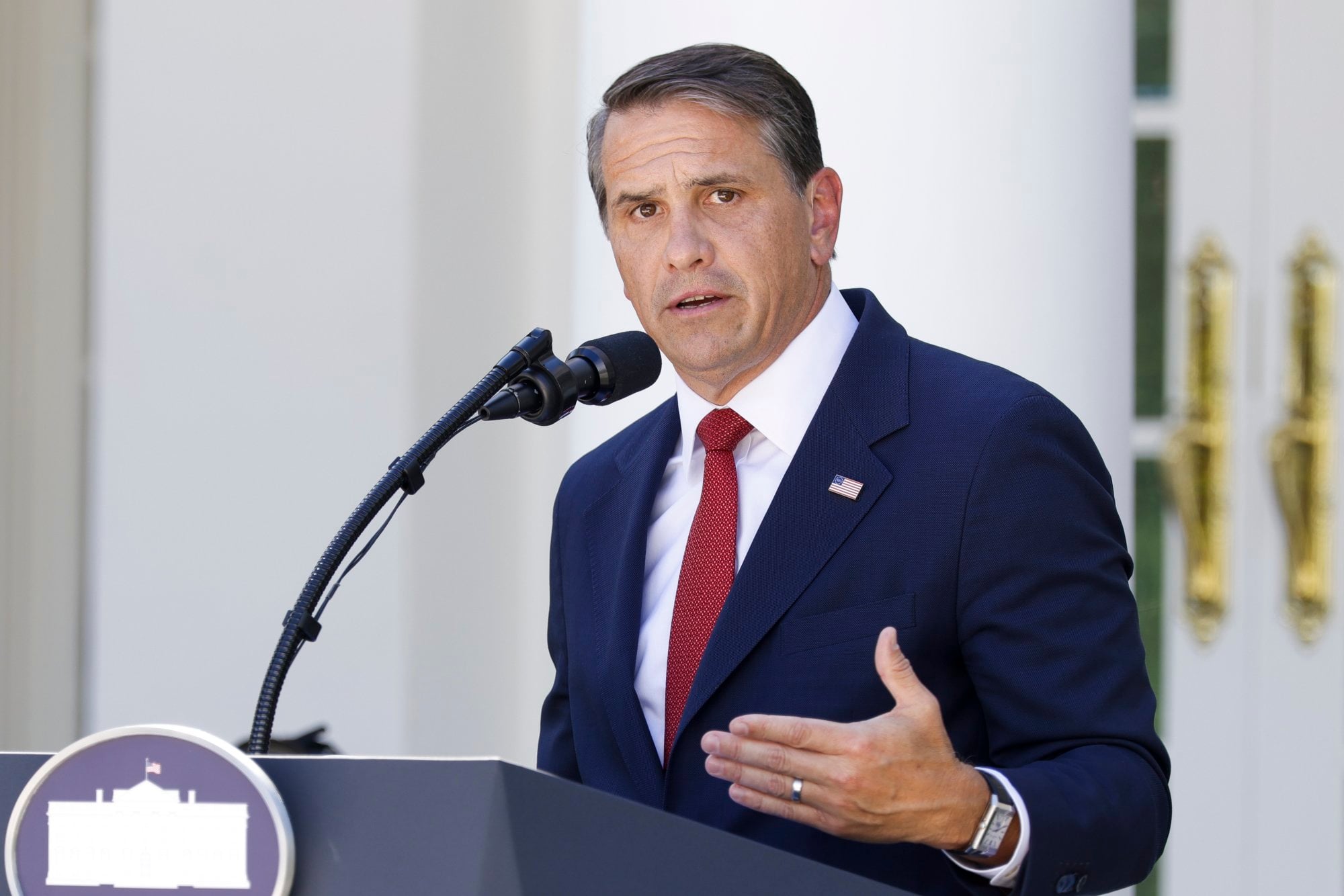
Blanche said the US Justice Department and other executive branch agencies would continue to combat theft “in the right way”.
“I don’t think it’s fair to just label China as a country,” he added. “There’s bad actors in China that are doing it, which we’re definitely going to go after.”
The Chinese embassy in Washington rejected US allegations, terming distillation “a common technical practice used by AI developers worldwide, including US companies”.
“The US allegations are unfounded and politicise a normal technological and commercial practice,” embassy spokesman Liu Chang told the SCMP.
As Chinese companies have narrowed the capability gap in frontier AI models, US firms and Trump administration officials have increasingly accused Beijing of stealing and copying American technology to speed up the development of its own systems. -- SOUTH CHINA MORNING POST



