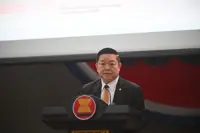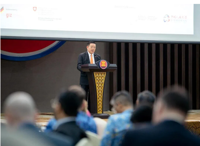
JAKARTA (Bernama): Asean must move from frameworks to outcomes and deliver tangible results for its people, its Secretary-General Dr Kao Kim Hourn said on Monday, stressing the need for more strategic and effective use of existing regional mechanisms ahead of the bloc's 60th anniversary in 2027.
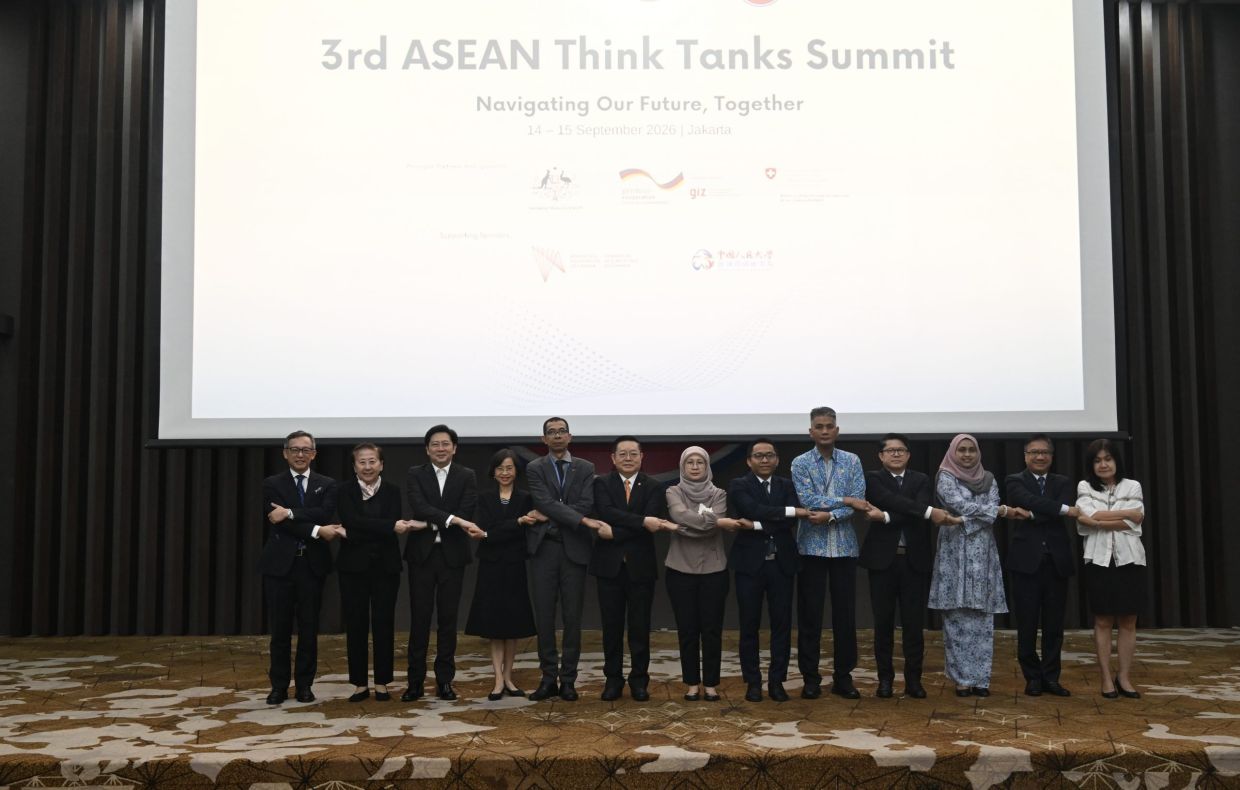
Delivering a keynote address at the Third Asean Think Tanks Summit here, Kao said think tanks could help lay the foundations for better policymaking by formulating actionable policy ideas in key areas such as economic resilience, peace and dialogue, inclusion in the digital age and transnational security.
He said Asean already had much of the architecture needed to strengthen regional resilience, citing the Asean Power Grid, Trans-Asean Gas Pipeline, Asean Petroleum Security Agreement, Asean Coordinating Centre for Humanitarian Assistance on Disaster Management and Asean Plus Three Emergency Rice Reserve.
"The urgency now lies in moving from frameworks to outcomes: more reliable energy, more resilient supply chains, greater preparedness to external shocks, and stronger economic opportunities for Asean's peoples and businesses,” he said.
He said this required looking across sectoral boundaries and asking where regional cooperation could reduce vulnerabilities and challenges that no member state could address alone.
On peace and dialogue, Kao said the 11-member bloc must continue to invest in dialogue and diplomacy as instruments of first resort as geopolitical competition and strategic rivalry intensify.
To navigate these challenges, he said Asean already had strong foundations through the Treaty of Amity and the Asean Outlook on the Indo-Pacific, alongside mechanisms including the Asean Regional Forum, East Asia Summit and Asean Defence Ministers’ Meeting, which provide established channels for dialogue, confidence-building and practical cooperation.
"The issue, therefore, is not whether dialogue remains relevant, but how Asean can make more strategic and effective use of the instruments and mechanisms already at its disposal.
"As Asean approaches its 60th anniversary in 2027, the test of its centrality will lie in what its institutions can achieve,” he said.
Turning to digital inclusion, Kao said artificial intelligence and emerging technologies would shape the region’s next phase of economic transformation, but their value would ultimately depend on how widely the benefits were shared, particularly among micro, small and medium enterprises.
He also stressed the need to address transnational security challenges as cyber threats, transnational crime, climate-related risks and online scams increasingly intersect, requiring Asean to strengthen its capacity to respond across sectors, work across institutional boundaries and share information.
For think tanks, he said the task was to question established assumptions, confront difficult trade-offs and test new ideas before they entered the formal policy process as Asean works towards its Community Vision 2045.
"Ultimately, the vision will be judged by the choices Asean makes collectively and the results those choices deliver,” he said.
Established in 2024, the two-day summit is an initiative of the Asean Institutes of Strategic and International Studies network, coordinated by the Singapore Institute of International Affairs (SIIA) and supported by the Asean Secretariat.
This year’s discussions take inspiration from the Philippines’ Asean Chairmanship theme, ‘Navigating Our Future, Together’, with the summit seeking to formulate actionable policy recommendations for Asean leaders and the Asean Secretariat. -- BERNAMA