




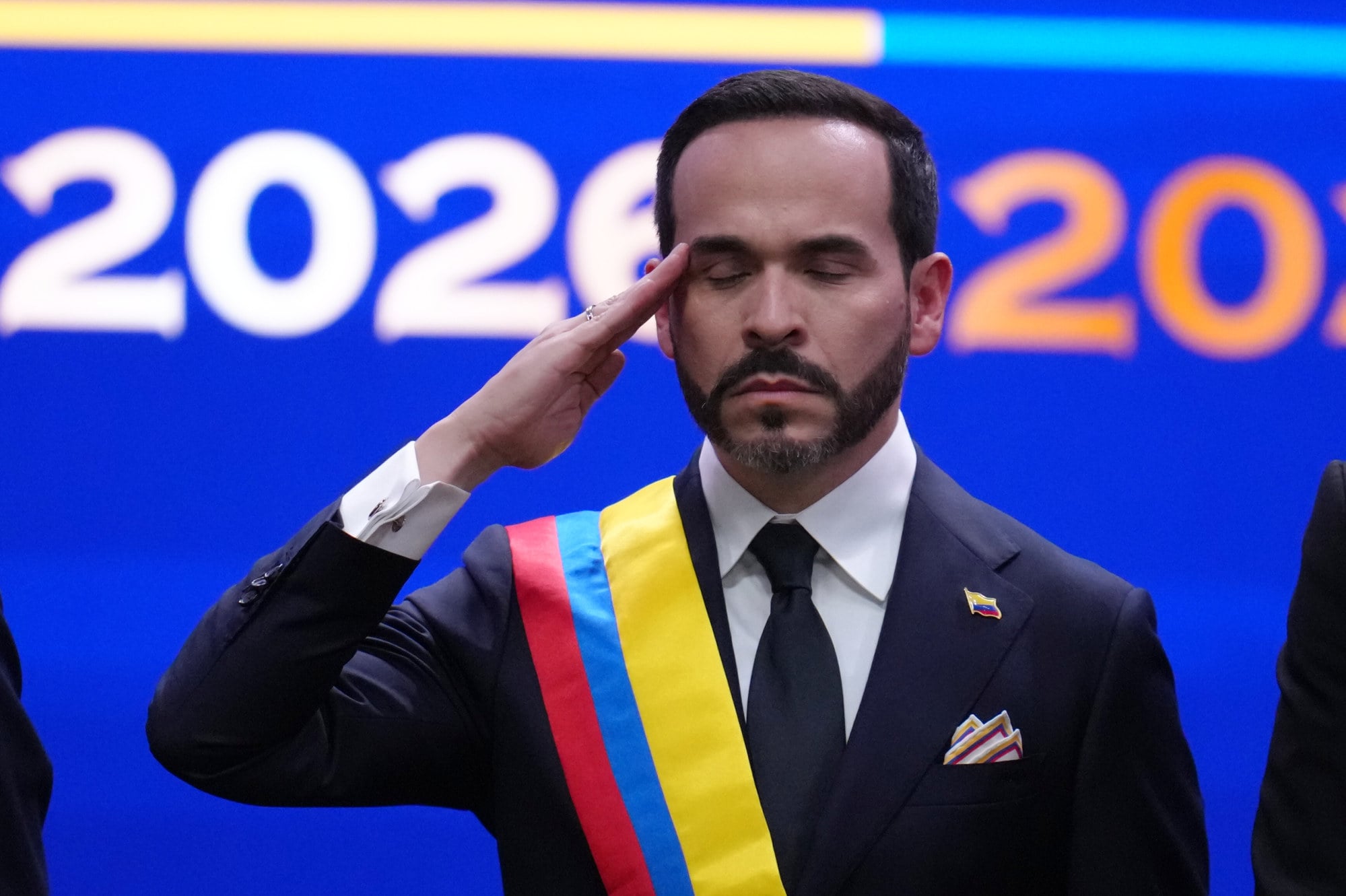
United States Secretary of State Marco Rubio arrived in Colombia on Tuesday to meet President Abelardo de la Espriella, sign agreements on critical minerals and civil nuclear cooperation and take up the country’s ties to China, in the first visit by a cabinet-level US official since the Colombian leader took office a month ago.
Colombia’s participation in the Belt and Road Initiative (BRI) and Chinese investment in critical infrastructure were on the agenda for the meeting, a Colombian official who was not authorised to speak publicly told the South China Morning Post.
“We have a lot of common interest with them, both taking on regional transnational criminal terrorism and also economic engagements,” Rubio told reporters before the trip.
“It’s part of a trend that you’re seeing in the Western Hemisphere of alignment with US and US interests.”
The New York Times first reported that trade relations with China would be on the agenda, citing two people familiar with the trip. The Chinese embassy in Bogota and the US State Department did not immediately respond to requests for comment.
Colombia holds coal, nickel and copper deposits and has been mapping reserves of the metals used in batteries and electronics, a supply chain China dominates worldwide. Neither government said in advance which minerals the agreement covers.
The two leaders were scheduled to meet alongside Foreign Minister Omar Bula Escobar at an army base in Barranquilla. In this Caribbean port city, De la Espriella has set up a second presidential office away from the capital, Bogota.
Bula Escobar said in a video released on Tuesday that the visit opened “the beginning of the reconstruction of a strategic alliance” with the United States, which he called Colombia’s main partner in the region.
Colombia is the first stop on a three-nation trip that will also take him to Ecuador and Peru.
From Barranquilla, the tour runs on to Quito, where Chinese money built a major hydroelectric dam, and then to Lima, where the megaport at Chancay has given Peru a Pacific gateway to Asia. Rubio was to meet Ecuadorian President Daniel Noboa and Keiko Fujimori, sworn in as Peru’s president in July.
US State Department spokesman Thomas Pigott said in announcing the trip that Rubio would discuss cooperation against narcoterrorism; American help after the earthquake that killed 331 people in western and central Colombia in August; and “the benefits of deeper commercial relationships between our countries”. The statement did not mention China.
Rubio also planned to deliver a message from US President Donald Trump to “eradicate cocaine and dismantle trafficking groups”, pressing the Colombian leader to destroy hundreds of square miles of coca crops and to target the finances of armed groups, according to The New York Times, which said the two would also discuss military capabilities, migration and deportations.
De la Espriella was expected to ask Washington to suspend the 12.5 per cent tariff on Colombian goods including cut flowers, one of the country’s biggest exports to the US, to soften the economic damage from the quake.
From Petro’s BRI accession to alignment with Washington
Under former president Gustavo Petro, Colombia spent years deepening relations with Beijing.
In 2025, the South American country signed a BRI cooperation plan, the first time Bogota committed to the Chinese infrastructure and trade programme, two years after the relationship was raised to a strategic partnership.
Petro’s foreign ministry called the accession “a historic step” but stressed that the plan was not a treaty and created no binding obligations.
But his successor campaigned on a security alliance with the United States, won an endorsement from Trump, and has not said publicly whether he intends to keep Colombia in the programme or withdraw.
Beijing congratulated De la Espriella after he won the second round of the election in June by a narrow margin, when foreign ministry spokesman Guo Jiakun said China was ready to work with the incoming government and viewed the relationship “from a strategic height and long-term perspective”.
Chinese ambassador to Colombia Zhu Jingyang made obvious the chillier turn in relations within days of the earthquake, writing on X that Beijing hoped the government would “immediately” name the official and the channel to coordinate international assistance for the victims.
Colombia turned down or left pending offers of rescue teams from China, Mexico, El Salvador and the United Nations, and took US aid instead. De la Espriella called the accounts of a rejection false.
China involved in largest infrastructure project in Colombia
Chinese state builders are already running the largest infrastructure project in Colombia, the first line of the Bogota metro, and reconstruction after the quake will put more public works out to tender.
Zhu told a congress of Colombian exporters last week that Chinese appliance makers and other companies had come to the embassy looking to invest or build plants there.
“Everything depends on Colombian policy towards China, on how we manage to maintain this pragmatic spirit of continuing to work together, and on the way Colombia handles its relationship with the United States and China in a balanced manner,” the ambassador said.
The ambassador cited De la Espriella’s commitment to keep the metro line going, a US$4.3 billion contract held by a consortium led by China Harbour Engineering Company and Xian Rail Transit Group.
Chinese direct investment in Colombia has been marginal according to its central bank’s records, which registered a net outflow of US$99.8 million last year and 0.14 per cent of all foreign investment in the first quarter of this year.
The United States supplied 29.7 per cent of the total last year. The figures track equity stakes rather than the engineering contracts through which Chinese firms have entered the market, the metro among them. -- SOUTH CHINA MORNING POST


