




Chinese scientists have developed a way to generate a fourfold increase in power output of hydrogen fuel cells, an advance that could broaden their use from road vehicles to space missions.
Hydrogen is widely viewed as a promising clean energy source for a low-carbon future. Fuel cells convert the chemical energy in hydrogen directly into electricity, producing water as their only exhaust.
In a study published in the peer-reviewed journal Science on Thursday, researchers at the Beijing Institute of Technology reported a major advance in proton-exchange membrane fuel cells (PEMFCs), the type already used in many hydrogen-powered vehicles.
Li Jie, assistant professor with BIT and one of the paper’s authors, said on Thursday that, with the new tech, the “power stack of a fuel cell vehicle can be made smaller and lighter, and the vehicle can get stronger continuous output and a longer driving range”.
PEMFCs operate at relatively low temperatures, generally between 60 and 80 degrees Celsius (140 to 176 degrees Fahrenheit). They can convert about 50 to 60 per cent of the energy in their hydrogen fuel into electricity.
The process is straightforward: at the anode, hydrogen molecules give up electrons and become protons. While the protons pass through an electrolyte membrane to the cathode, the electrons flow through an external circuit, generating electricity. At the cathode, the protons, electrons and oxygen combine to form water.
The bottleneck lies in the speed at which protons can move through the catalyst layer, the part of the fuel cell where chemical reactions take place. For years, industry-standard materials such as Nafion – a synthetic polymer commonly used as a proton-conductor – have tended to form tightly packed structures at the nanoscale when mixed with catalysts. This can slow proton transport and limit the cell’s efficiency.
The Chinese team took a different approach, designing a new interface that works like a relay race.
Instead of travelling directly to the catalyst surface, protons hop between intermediate “islands”. This arrangement – known as a Brønsted acid-Lewis base interface – greatly speeds the movement of protons.
Laboratory tests found that the new material increased proton diffusion tenfold, improved proton conductivity by a factor of 6.5, and more than halved activation energy – the energy barrier protons must overcome before a chemical reaction can occur.
Under standard operating conditions, the new fuel-cell design produced four times as much power as conventional designs. It achieved 0.75 watts per sq cm at 0.7 volts while using only a small amount of platinum, the expensive precious-metal catalyst commonly needed in hydrogen fuel cells.
Measured by platinum use, the device delivered 6.9 kilowatts of power per gram of the metal, outperforming present state-of-the-art fuel-cell technology. After 30,000 cycles of accelerated stress testing – a repeated charge-and-discharge routine that speeds up ageing – it retained 63 per cent of its initial peak power, compared with just 30 per cent for conventional systems under identical operation conditions.
This composite material is well suited for mass production. “In the lab right now, they can make about 100 grams in three days. That’s enough for 10 100-kilowatt-class stacks,” Li Jie said.
The researchers said the improvements could be especially valuable in demanding applications such as space missions using liquid oxygen, where fuel-cell efficiency depends heavily on how effectively protons move through the device.
“Our technology addresses how to generate power with higher efficiency and higher power density inside a smaller stack volume. This matches what aerospace energy systems need,” Li Jie said.
The breakthrough comes as China’s hydrogen sector expands. By the end of 2025, the country’s hydrogen production capacity exceeded 51 million tonnes a year, while China accounted for 53 per cent of renewable-energy-powered hydrogen projects based on electrolysis.
According to China Electric Power News in August, more than 130 fuel-cell power plants were operating in the country by 2025, with combined installed capacity exceeding 30 megawatts. More than 20 long-distance hydrogen pipelines are also planned nationwide.
China’s 2026 government work report named hydrogen a “new growth point” for the first time. Passenger fuel-cell vehicles remain far less common than battery-electric cars, but official backing remains strong.
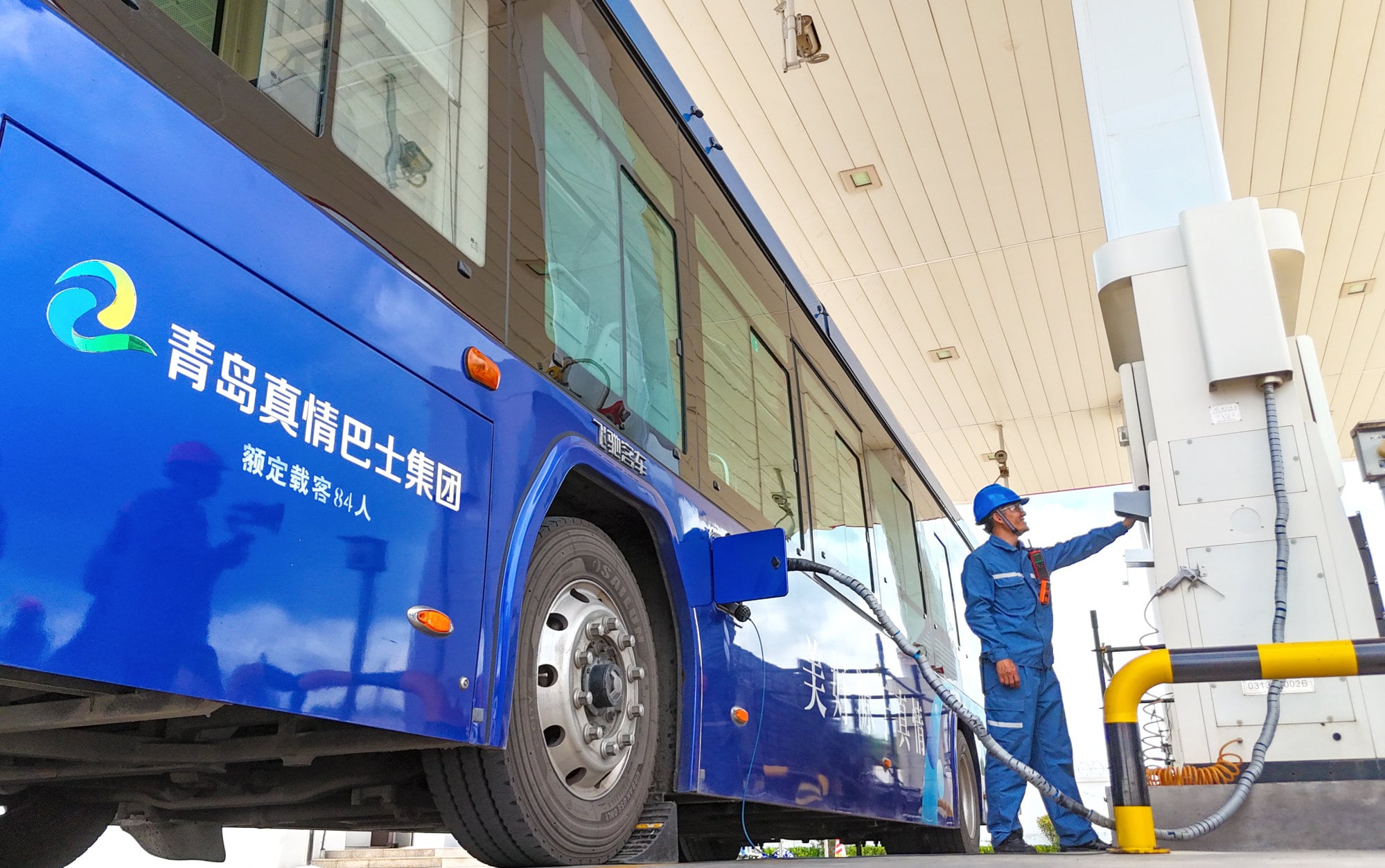
The country had about 32,000 fuel-cell vehicles on the roads at the end of 2025. In March 2026, three central government ministries set a target of 100,000 such vehicles by 2030. They also called for cutting the retail price of hydrogen from more than 30 yuan (US$4) per kilogram to below 25 yuan.
That is considered the point at which hydrogen-powered heavy trucks would become cheaper to operate than diesel models over their full life cycle, including purchase, fuel and maintenance costs.
However, substantial hurdles remain. Researchers will need to show that, outside the laboratory, the technology can be manufactured at industrial scale, kept affordable, and validated for long-term safety and reliability.
“Fuel cell vehicles don’t need to copy battery EVs. Battery EVs fit short trips. Fuel cells fit heavy trucks, long hauls, and cases that need quick refuelling and long range,” Li Jie said.
“Next, the team will build and test high-performance fuel cell stacks for different scenarios. We’ll also scale up the related materials and technology – and turn them into real-world products,” she added. -- SOUTH CHINA MORNING POST



