Mugger crocodiles bask along the edge of the shrinking reservoir, waiting like everything else in Sri Lanka’s drought-hit Yala National Park for the green tankers that come every day to pump in water.
From next week, park managers will be taking their emergency measures even further by banning tourists from the watering hole and other busy areas, to give the animals a breather after months without rain.
“We have to put the animals first,” said 58-year-old wildlife ranger Sujeewa Nishantha.
“The closure is necessary as animals suffering from heat stress need easy access to water and visitors would be in the way,” he said.
His tasks include tracking the water trucks trundling down dirt tracks, topping up ponds across the sanctuary, where spotted deer, wild water buffalo, Tufted Gray Langurs and the park’s famed leopards all come to drink.
The rare month-long closure of the most visited areas is a potentially painful step in the build-up to the peak of tourism season – an important earner of foreign currency for the country.
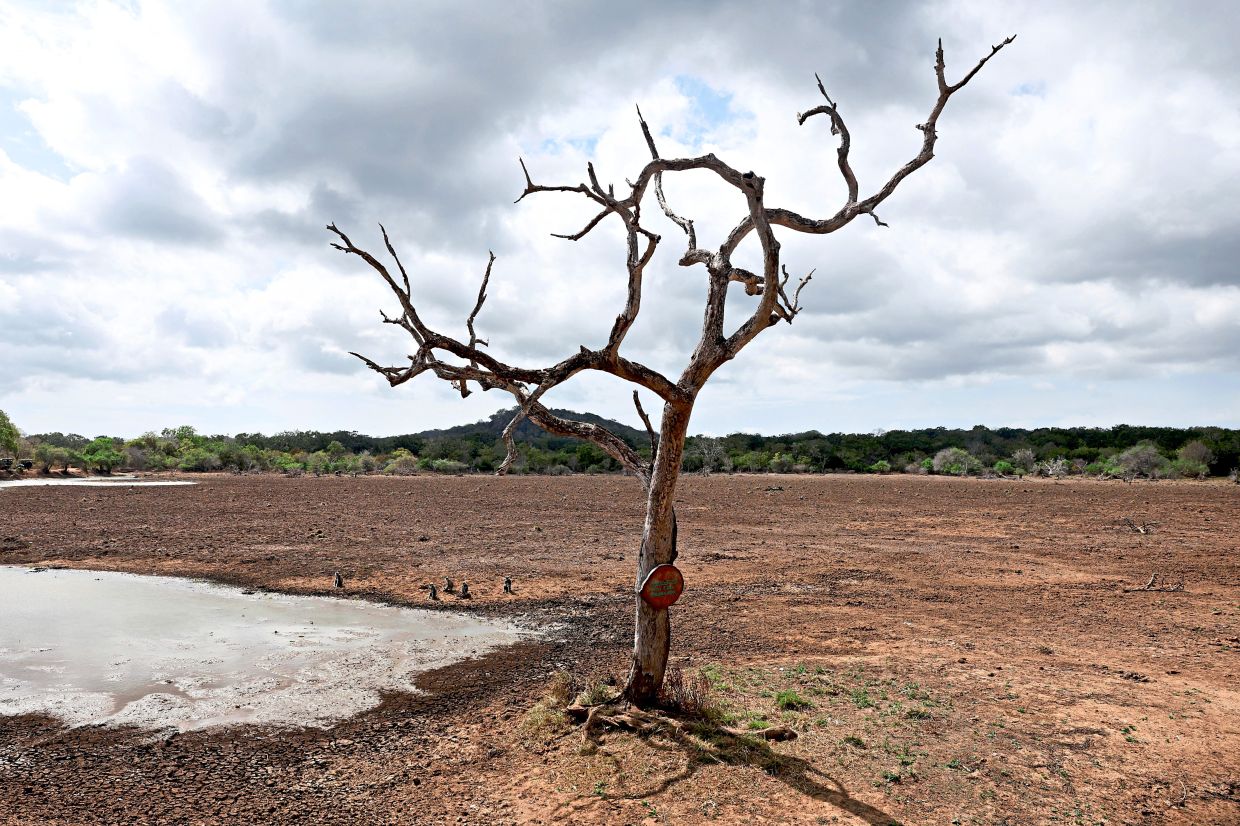
But authorities have ordered water-management measures across large parts of the island as they face their worst dry spell in nearly a decade and brace for even more difficult conditions.
Sri Lanka’s meteorological department has said the island is at the start of a nine-month cycle driven by the El Nino weather pattern that will build up to heavier rains in November to December and a second major drought from February onwards.
The World Meteorological Organization warned last week the planet as a whole could be about to face the strongest ever roll-out of the El Nino phenomenon – a periodic warming of sea surface temperatures in the eastern Pacific that raises the risks of extreme weather.
Sri Lanka, an island nation surrounded by the Indian Ocean, is likely to feel the effects earlier and more intensely, according to the government, a situation made worse by global warming.
Tens of thousands of Sri Lankans are already relying on emergency drinking water supplies, and some smaller family farms are struggling to grow vegetables and raise cattle.
In Yala, managers said on their website that nothing would make them happier than being able to fully reopen the park to the jeep-loads of tourists who usually flock in.
“When that happens, however, rests largely with the weather,” they added. “And for now, Yala must be given the time nature asks of us.” — Reuters