




The front page of the Danville Register & Bee, a local newspaper in southern Virginia with a circulation of fewer than 4,000, carried an unusual headline.
“LEADER: CHINA BEHIND THE MISCONCEPTIONS”, it read, above a photograph of two homes dwarfed by a data centre behind.
The leader in question was Vic Ingram, chair of the Danville-Pittsylvania Regional Industrial Facility Authority (RIFA), a local body jointly established by the city of Danville and neighbouring Pittsylvania County to promote economic development in one of the poorest parts of the state.
Ingram had just helped secure what officials described as the biggest economic development project in southern Virginia’s history: a proposed data-centre campus at Berry Hill, a 3,500-acre (1,400-hectare) industrial site about 16 kilometres (10 miles) outside Danville.
But some residents were questioning the project at public meetings and on social media over its environmental impact, power requirements, and the secrecy surrounding its approval.
As the chorus of discontent grew louder, Ingram told the local newspaper in June that much of the “propaganda” online against the area’s first-ever data centres was driven by the “Communist Chinese”.
Other supporters of the project have also invoked China in response to local resistance, portraying the data centres as essential to America’s ability to compete with Beijing in artificial intelligence – an increasingly common refrain of US President Donald Trump as data centres become increasingly unpopular nationwide.
Three-quarters of Americans now oppose having a data centre built near them, up from 42 per cent just a year ago, according to Heatmap.
Danville residents, however, say they do not need China to tell them what to think. Their concerns are rooted in distrust of local officials, a history of broken investment promises and an opaque decision-making process, they say.
The dispute is the latest chapter in Danville’s complicated relationship with China. After the collapse of its textile industry, the city turned to Chinese manufacturers to help revitalise its economy, but that turned into disappointment when those investments failed to materialise.
Now China is being used to justify Danville’s latest economic gamble and discredit those who question it.
A failed China strategy
To understand why the Berry Hill project has generated such intense debate, residents say it is necessary to understand what Danville has lost and its relationship with northern Virginia.
The city used to boast one of the biggest textile plants in the southeastern US, Dan River Mills, which employed over 18,000 people at its peak.
In the 2000s, manufacturing in the industrial town all but disappeared as textile jobs went overseas, mainly to China. When the mill closed in 2006, thousands lost their jobs, throwing the city into a tailspin that has lasted almost two decades.
“We’ve gone through some hard times socially, but when that mill closed, that was the hardest time economically,” said Frank Leist, a local entrepreneur.
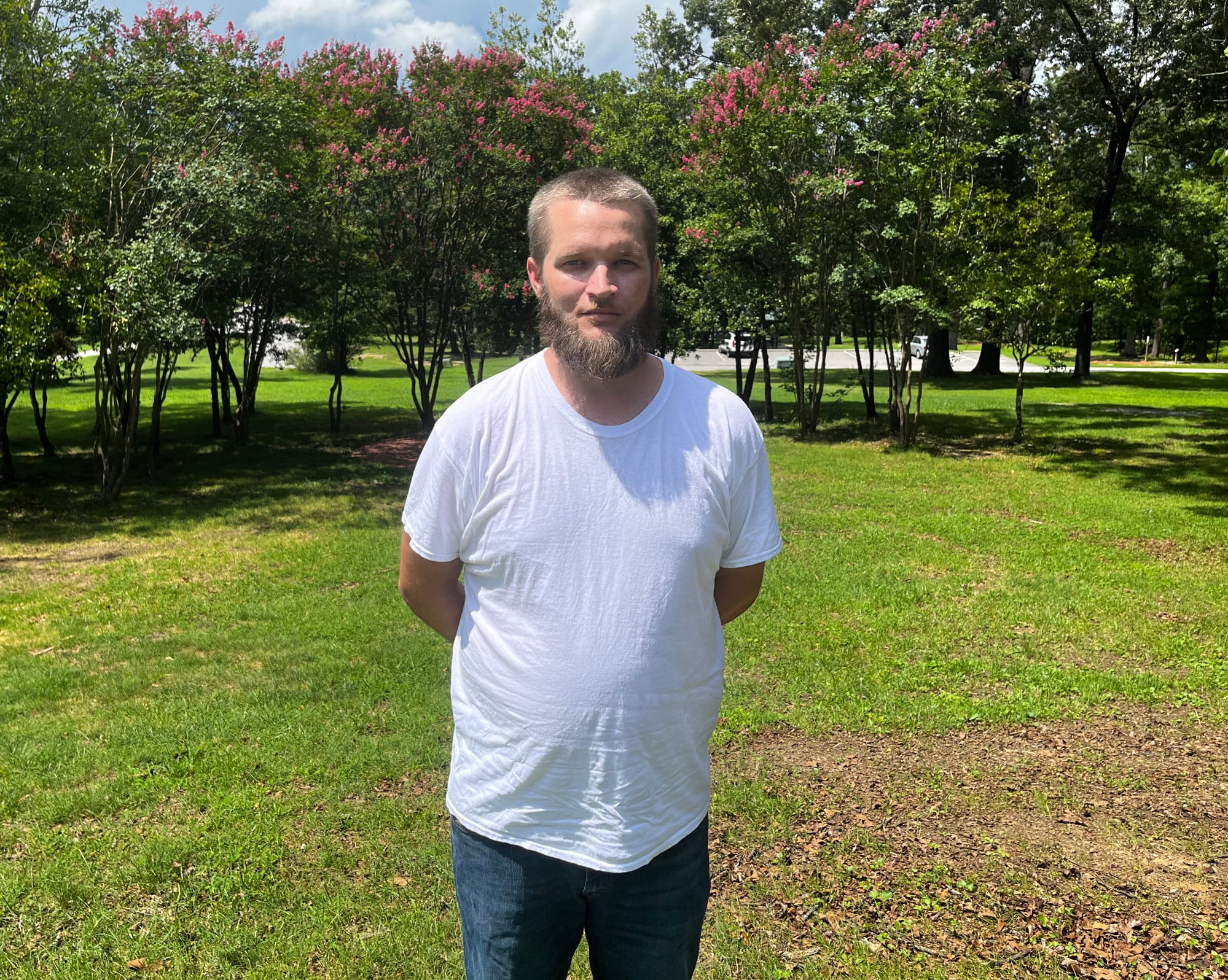
Desperate to secure Danville’s next big economic driver, local officials turned to the big economic opportunity at the time: China.
In 2013, officials devised “The China Strategy” – an initiative to recruit Chinese companies to set up manufacturing plants in the area. They paid a Pittsburgh consulting firm US$150,000 as part of the strategy, according to official records.
The initiative seemed to bear fruit at first. City council announcements at the time hailed the arrival of Chinese companies like furniture company GOK International, which pledged to invest US$12.5 million and employ 300 locals.
None of those deals materialised, says Jonathan Travis Hackworth, a local historian. GOK failed to honour a US$1 million grant from a state economic development body. Danville was left to foot the bill.
Further disappointment followed in 2023 when officials sought to make Berry Hill the home of Ford Motor’s new US$3.5 billion battery plant, which licensed its technology from Chinese battery giant Contemporary Amperex Technology (CATL).
The plant eventually went to Michigan after then-Virginia governor Glenn Youngkin removed Berry Hill from consideration, citing concerns about CATL’s involvement.
RIFA’s Ingram shared a post on Facebook after Youngkin’s intervention questioning whether the United States should “refuse to do business with any company simply because they have ties to China”.
Three years later, Berry Hill is again at the centre of a politically charged debate in Danville involving China – this time as a reason to support the proposed investment rather than reject it.
Another enormous promise
Shannon Kelly, a local reporter at the Chatham Star Tribune, said the area’s recent history of failed economic development looms large over the data centre debate.
“I don’t think anyone is against data centres on principle,” she said. “Rather, many people have concerns or some trust issues with local officials.”
A major point of contention has been the use of non-disclosure agreements among officials and Colorado-based Stack Infrastructure, the company behind the project, during the early stages of the approval process.
When it was first disclosed in March that SAC III, a company that shares the same address as Stack, would be acquiring land at Berry Hill, officials would not say what the land would be used for, citing non-disclosure agreements.
Only a month later did they confirm that Stack would build a “hyperscale” data centre – a new generation of data centres marked by their enormous scale – promising US$100 billion in investment and 2,500 jobs over 30 years.
At almost 3,000 acres, the project surpasses the 1,100 acres bought by Elon Musk’s SpaceXAI for its Colossus supercomputer in Tennessee as well as Facebook owner Meta Platforms’ initial 2,250-acre acquisition for its Hyperion campus in Louisiana.
“It all feels very sneaky, like we don’t have all the information,” said Kelly. “Residents feel like there’s a lack of transparency in these talks.”
Supporters say non-disclosure agreements are standard for economic-development negotiations because they protect commercially sensitive information and prevent land speculation.
But the Coalition for the Protection of Pittsylvania County, one of the principal groups questioning the project, has accused data-centre companies of using such agreements “to keep the public in the dark” until projects are too advanced to stop.
The South China Morning Post contacted the coalition and other opposition groups, but none agreed to speak on the record. One resident cited the fact that the SCMP is a Chinese outlet as the reason for declining to speak.
China’s return to the debate
As local opposition has grown, including an online petition with around 900 signatures calling for greater community input, some supporters began tying residents’ concerns to China.
In his newspaper interview, Ingram accused residents of buying into Chinese propaganda because “it looks very believable”, citing a report into Chinese influence operations released in June by US AI giant OpenAI.
However, the OpenAI report claimed only that online accounts “likely originating from China” were trying to influence US public opinion, with “no evidence” that they had succeeded.
Ingram did not respond to multiple calls and emails requesting evidence that Chinese propaganda had swayed residents, whom he has also labelled the “anti-growth crowd” and “low-information voters” on social media.
According to Bethany Allen, head of China Investigations and Analysis at the Australian Strategic Policy Institute, it is an “age-old ploy” for officials anywhere to dismiss opposing voices by tying them to foreign actors.
She notes that such accusations of foreign influence in the US mirror how Beijing levels the same charge against anti-government voices in China.
Ken Larkin, Danville’s city manager who supports the data centres, says he is not aware of China influencing the local opposition.
He notes that securing a buyer for Berry Hill has become a top priority for local officials following several missed opportunities in recent years, with more than US$217 million spent on preparing the site since it was acquired in 2008.
‘Playing it by ear’
For Leist, the entrepreneur, the worry is that politics elsewhere once again dashes Danville’s economic hopes.
Though Virginia is known as having the most data centres in the world, with more than 600, most are concentrated in northern Virginia, where some of the richest counties in the US are.
Over the past year, northern Virginia residents’ growing complaints about living next to data centres have led to calls to rebalance the state’s policy towards the industry.
While Virginia’s latest budget, approved in June, retained a controversial sales tax exemption that has made the state a prime destination for the industry, it nonetheless introduced a new electricity consumption tax for data centres.
Stack has said it will proceed as long as the sales tax exemption remains. Still, Leist says that economic inequality has been a neglected issue in Virginia’s data centre debate, with most people arguing over environmental and geopolitical issues.
“My entire life, northern Virginia has always stopped southern Virginia from being great,” he said.
“Now northern Virginia is against data centres, and it’s like, we haven’t had our chance to benefit from it yet, so why are you trying to block it now?”
Tensions remain high because the Berry Hill project could still fall apart. Officials have touted a headline figure of around US$737.8 million for Stack to purchase the land at Berry Hill – almost triple the annual budget of the entire county – but the money is split over multiple instalments and the company retains the right to pull out, according to the land sale agreement.
Leist describes feeling “backstabbed” by local officials when news first broke in March about the data centres, after years of being told that Berry Hill would be home to a manufacturing plant.
He has since come around to it, as much in hope that Stack keeps all its promises as in fear that Danville – where empty tobacco warehouses and boarded-up shopfronts sit as quiet reminders of the last two decades – misses out again on the next big industry.
“For me, I support the data centres because I know that that’s the next step in our technology phase,” he said. “But I’m more of a ‘let’s play it by ear’ at this moment in time.” -- SOUTH CHINA MORNING POST


