




Southeast Asian leaders have long insisted they will not be forced to pick sides in the great-power rivalry between the US and China. But their posture is about to be further tested.
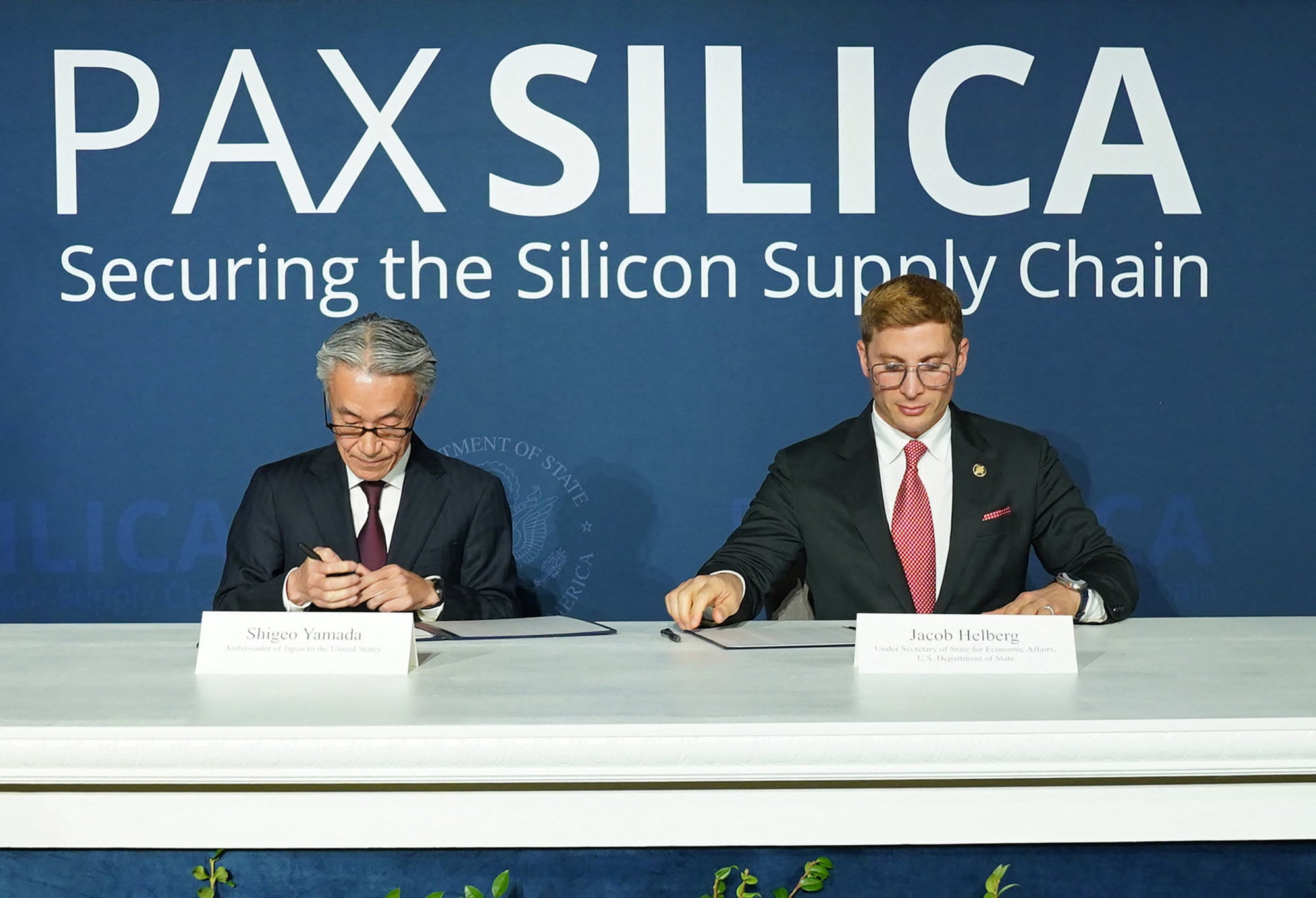
This time, the battleground is AI. While Washington wants the region locked into Pax Silica – its bid to build a China-free artificial intelligence supply chain – Beijing wants its neighbours to join China’s own World Artificial Intelligence Cooperation Organisation (Waico).
Sources told the South China Morning Post that both powers had in recent months piled pressure on Southeast Asian economies, each trying to draw them into its own AI framework.
One source said Chinese officials had heavily lobbied Association of Southeast Asian Nations (Asean) countries to back Waico before it was established last month, telling their counterparts they stood to gain from signing on as founding members, including an offer of “exclusive privileges”.
Another source said the lobbying had reached senior levels of government, with Beijing pitching its AI organisation as an inclusive body that championed developing economies, in contrast to what it described as an exclusionary American initiative.
Waico, which brands itself as advancing “AI for good and for all”, was established in Shanghai at the World Artificial Intelligence Conference in July with an initial 29 members, mainly from the Global South, in a launch elevated by the presence of Chinese President Xi Jinping.
Five Southeast Asian countries were among the signatories, namely Cambodia, Indonesia, Laos, Malaysia and Myanmar.
Pax Silica, meanwhile, has 24 members and seeks to strengthen supply chain security, widely perceived as an effort to isolate China from key technology networks. Singapore and the Philippines are the only two Southeast Asian countries in Pax Silica.
According to the sources who spoke on condition of anonymity because they were not authorised to publicly comment on the issue, US officials have similarly sought to court Southeast Asian countries for the American-led AI initiative.
One source said US officials had pressed Southeast Asian counterparts about their plans to join Waico, while quietly signalling disapproval of both their membership in the Chinese-led organisation and their attendance at the Shanghai conference last month.
Reuters reported last week that Washington was preparing to tell a dozen countries that they essentially had to pick sides, warning that they would be excluded from Pax Silica if they signed up for the Chinese framework.
“Southeast Asia will be one of the primary battlegrounds for US-China competition over AI,” said Jeremy Chan, a senior analyst at the political risk consultancy Eurasia Group.
“While Southeast Asian countries will seek to keep their options open – probably hedging between Chinese and US AI systems – they may not have this luxury.”
The AI race between Washington and Beijing has intensified sharply and reached a turning point, with open-source Chinese AI models increasingly rivalling closed systems built by US firms such as OpenAI and Anthropic.
The Trump administration has introduced a series of measures, including export controls, to restrict China’s access to advanced technology.
Launching Waico in July, Xi called it a “major move by China to answer the call of the Global South and unite the international community together to promote vigorously AI development and governance”.
“It will be an important milestone in the history of AI development,” he said.
Chan said that having Asean countries join Waico highlighted the attraction of China’s open-source approach to AI technology, and suggested that cheaper and more accessible AI would continue to appeal to countries in Southeast Asia and other developing regions, despite US pressure.
“The US will probably not push too hard for Asean countries to choose sides for the time being, but Washington will seek to prevent these countries from aligning too closely with Chinese AI technology and standards,” he said.
On Wednesday, when asked about the Reuters report, Chinese foreign ministry spokesman Lin Jian said Beijing firmly opposed forcing countries to take sides or creating bloc confrontation on AI.
“All countries have the right to decide for themselves who they wish to partner with according to their own national conditions and development needs,” he said.
Dylan Loh, associate professor of foreign policy at Singapore’s Nanyang Technological University, said pressure from Washington and Beijing on Southeast Asia was not new but major powers were now “much more prepared to do so publicly”.
Framing their memberships in binary terms could complicate the calculus for Southeast Asian countries, forcing them into decisions that risked displeasing one power or the other, he said.
“The preference for most, if not all, of Southeast Asia is multi alignment and hedging because this has served it well but that looks increasingly difficult to do,” Loh said.
“I think it can further strain Asean centrality and, at its most extreme, create dual-track tech architecture in Southeast Asia.”



