PHNOM PENH: Social commentators have applauded action taken against officials involved in online scam offenses, but expressed concerns that the officials in question may receive lenient punishment, such as “duty reassignment”. They urged that appointed officials who damage the Kingdom’s reputation face severe consequences.
In one high-profile case, the Anti-Corruption Unit (ACU) is investigating Tho Samnang, a former foreign affairs ministry who allegedly stole more than 10,000 visa blanks and extension permits.
The Type C, or courtesy visas are typically issued free of charge to NGO volunteers and visiting dignitaries. Instead, Samnang admitted to issuing more than 6,000 to foreigners who were involved with online scam operations.
Samnang served as director-general of the General Department of Legal, Consular and Border Affairs of the foreign ministry, until his position was terminated at the end of April.
He also claimed to have “destroyed” 4,000 blanks. The investigation is ongoing.
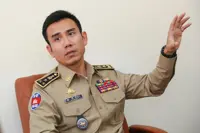
Kin Phea, president of the International Relations Institute of the Royal Academy of Cambodia, noted that Samnang was a high-ranking official of an important ministry, but used his position to commit acts that damaged the Kingdom’s reputation and eroded trust in national institutions.
“How many more such officials are there? If guilt is determined, there should be no duty reassignment,” he said.
“Such a large fraud could not be carried out by one person alone; there must have been systemic collusion.
"Any other individuals involved must be found and brought to justice. If found guilty, they must be punished and their assets confiscated,” he added.
Online scams in Cambodia, mostly perpetrated by foreigners, have had a severe impact on Cambodia’s reputation on the global stage, with the Kingdom’s negative image reflected in a major downturn in tourist arrivals.
In addition, Thailand has repeatedly cited scam operations as justification for last year’s seizure of multiple parts of Cambodian territory.
“Our nation and our people should not continue to suffer from crimes they did not commit,” Phea stated.
Social analyst Meas Nee questioned what flaws in the visa issuance system made the crime possible.
“From whom were these visas stolen? From which office? How could there be so many? Were they stolen on multiple occasions?” he asked.
“How were they stolen so easily? Was it just one person or a whole table working together? We hope for a transparent investigation,” he added.
Yang Peou, secretary-general of the Royal Academy of Cambodia, stressed that regardless of whether the crime was related to online scams or any other issue, the involvement of officials is a serious matter and must result in punishment.
He reiterated that one of the primary responsibilities of appointed officials is to protect the nation’s reputation, adding that if they fail to do so, the Kingdom deserves justice.
In such cases, he believed, an official’s past service or perceived level of power or influence should not shield them from the consequences of their actions.
“To provide integrity to Cambodia, instil confidence in foreign investors and tourists, and strengthen Cambodia’s governance, there is only one way forward: broad, clear enforcement of the law,” he stated. - The Phnom Penh Post/ANN