




A new film telling the story of the Iraq war through Chinese eyes marks the latest in a series of soft power initiatives designed to get Beijing’s message across to the wider world.
Although Once Upon a Time in the Middle East does not explicitly state the name of the country in question, it is set in the 2000s and features an invasion by American troops.
The film’s central character, a Chinese chef named Xu Fu who is working off his debts at the time the war starts, turns his modest restaurant into both a shelter for local orphans and a bar for American soldiers.
But despite suffering a series of traumas, which include the destruction of his business and imprisonment by both Americans and local militant groups, he continues trying to shield the children from the conflict.
State media has also said that the film draws on the real-life experiences of several Chinese restaurateurs who lived through the war in Iraq.
The film, which was largely shot in China, debuted on August 11 and had passed the 1 billion yuan (US$148 million) mark at the box office by Monday. It is also being released overseas.
Yuyuan Tantian, a social media channel affiliated with state broadcaster CCTV, said the film signalled a shift in which China was “beginning to frame the narrative itself”.
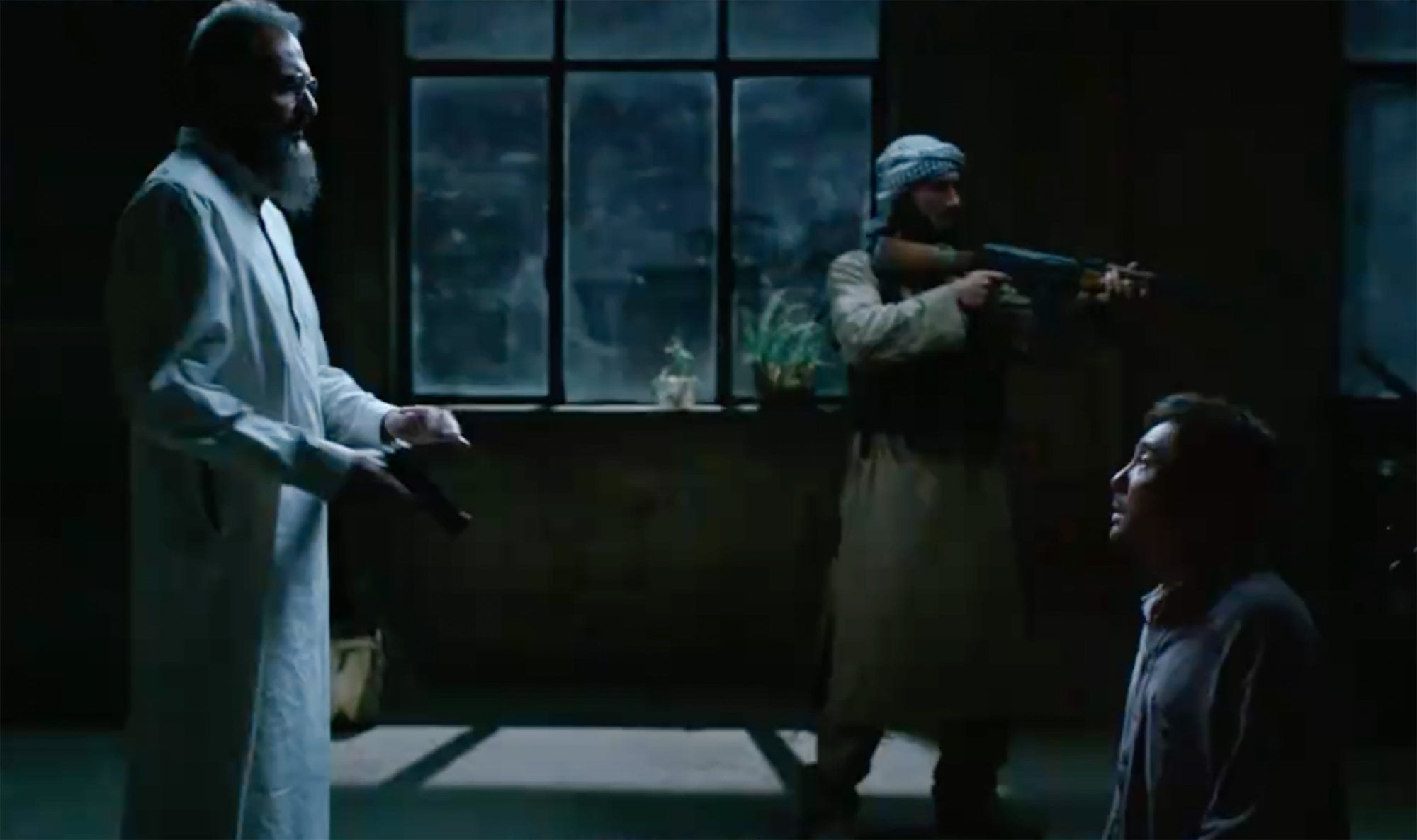
“Narrative is power,” it said on Saturday. “For decades, the West has monopolised the power to define ‘terrorism’, ‘freedom’ and ‘human rights’, leaving the voices of the Global South long absent from this framework. Now, China is changing that dynamic.”
It also said American films had been a key engine of US hegemony for decades but Chinese cinema was now “shattering Hollywood war narratives”.
It added: “Unlike the old American playbook of ‘military force paired with cultural whitewashing’, China is addressing the inevitable governance challenges of a rising power on its own terms.”
Jodie Wen, a fellow at Tsinghua University’s Centre for International Security and Strategy who specialises in the Middle East, said the film offered global audiences a clearer window into Beijing’s long-held anti-war stance.
She added that it also reflected China’s evolving role in the region, where it now had real interests rather than simply being a bystander.
Although she did not see the movie as an explicit promotion of China’s Middle East policy, Wen argued it reflected Beijing’s core belief that “the ultimate focus always comes back to human security and resolving humanitarian crises”.
She also said the film did not try to portray all the American soldiers in a bad light, but was clear that the “ultimate cause of all these hardships and disasters” was “overly heavy-handed intervention by the US”.
Instead of depicting the Middle East as helpless and needing a Chinese hero, the movie consciously stepped away from “Hollywood-style saviour narratives”, she added.
“Especially given the conflicts in the Middle East this year ... People keep asking me, ‘Why isn’t China deploying troops to support Iran?’
“But China won’t send troops. Deploying forces only fuels endless conflict; war just leads to a cycle that never ends,” Wen said.
Beijing has maintained a non-interventionist stance on the Iran war and has repeatedly called for a ceasefire.
It has also condemned sovereignty violations and sent its special envoy on Middle East affairs, Zhai Jun, to the region to push for de-escalation.
In recent years, as its competition with the US has intensified, China has stepped up its efforts to “tell its story well” and promote its culture internationally.
Earlier this year, the indie film Dear You, which told the story of the Chinese diaspora in Southeast Asia and their efforts to preserve their heritage, became a surprise box office hit.
Featuring a largely rookie cast and shot on a modest budget, the film only had a limited release before word of mouth turned it into a national phenomenon with screenings in countries such as Malaysia, France, Canada and Japan.
Its success led China’s foreign ministry, which described it as a window into the kindness of ordinary people, to invite 150 foreign diplomats and their families to a special screening last month.
However, the film also prompted claims in Southeast Asia that it was being used to advance Beijing’s political and cultural influence over the diaspora – accusations that Chinese media strongly rebuffed.
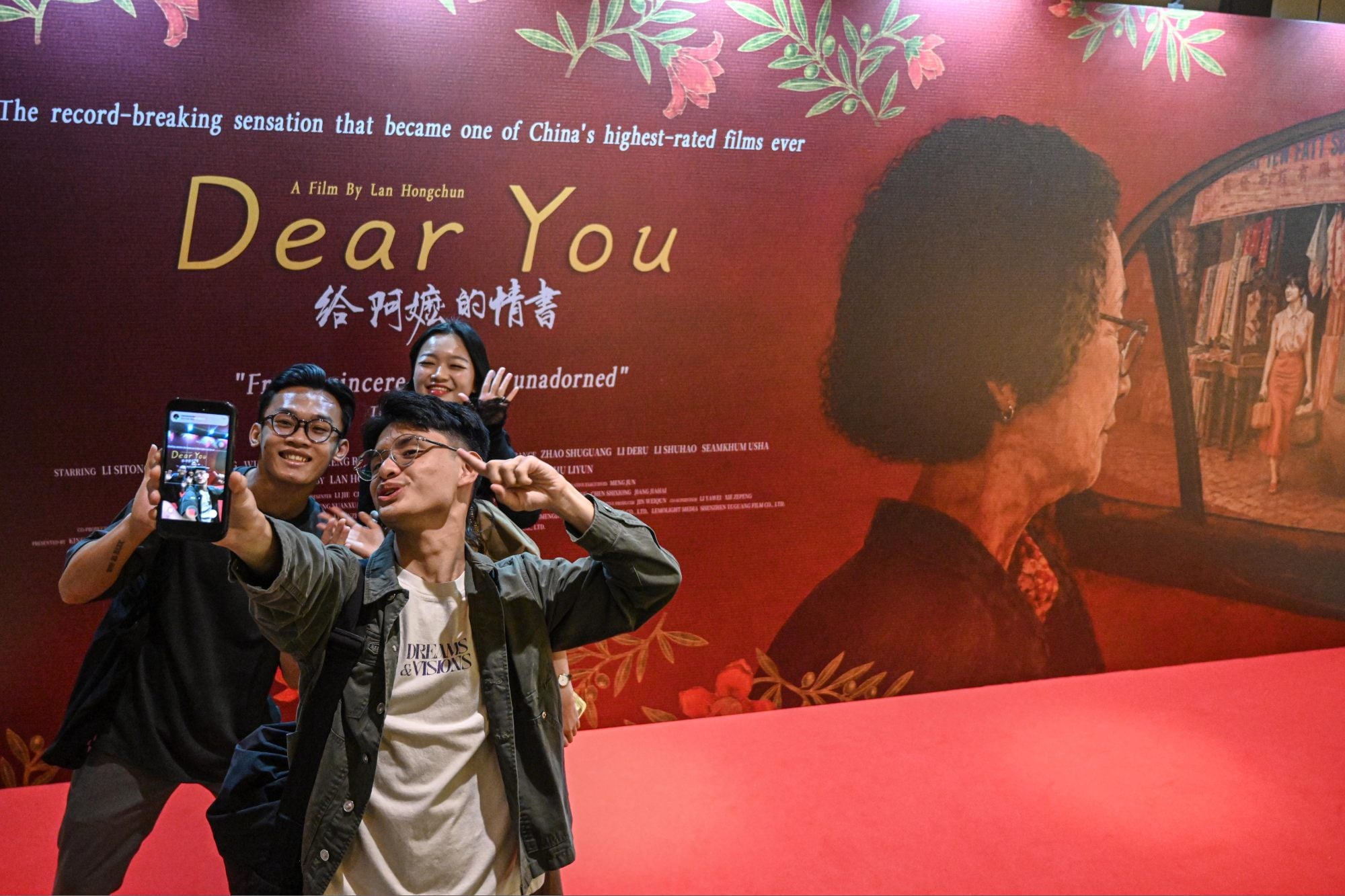
China has increasingly turned to cinema as part of its official efforts to promote soft power in recent years, but at the same time there has been a noticeable shift in tone.
Recent releases such as Dear You have placed a greater emphasis on the benevolence, warmth and virtuous character of the Chinese people in contrast to action movies like the Wolf Warrior franchise that feature a series of action sequences in foreign settings.
Once Upon a Time in the Middle East has also been promoted by Chaoyang Shaoxia, a social media channel widely believed to be affiliated with the foreign ministry.
In a post on Monday, it said the film showed that the kindness of the Chinese people “transcends political stances and speaks purely to humanity”. -- SOUTH CHINA MORNING POST



