



KUALA LUMPUR: The growth of a business is not solely dependent on increasing sales, but also requires careful planning across areas such as legal affairs, finance, taxation, human resources and corporate governance.
As a business grows, the challenges surrounding it also become increasingly complex.
What begins as an employee issue may eventually become a corporate governance concern. Rapid sales growth may place pressure on cash flow, while weak credit control could lead to mounting receivables. A disagreement over figures may eventually develop into a dispute between management, directors or shareholders.
Recognising these interconnected challenges, HYCO has developed an integrated professional advisory ecosystem that brings together a range of expertise to help businesses and organisations navigate different stages of growth.
The ecosystem connects capabilities in corporate advisory, company secretarial services, accounting, taxation, human resources, legal and dispute resolution, financial advisory and other related professional services under the leadership of HYCO founder Hisyam Yunus.
According to Hisyam, the need for professional advisory services becomes increasingly complex as a business grows from a small enterprise into a larger organisation.
He said the growth process typically begins with company incorporation before progressing to areas such as accounting, taxation, licensing, employment, corporate governance, shareholding, finance and expansion planning.
“Business owners do not necessarily need many advisers. More importantly, they need advisers who can communicate with one another.
“Lawyers may look at legal issues, accountants look at numbers, HR professionals look at people and company secretaries look at governance. But the business owner sees only one business.
“Our role is to connect those different perspectives,” he said in an interview at his office in Kuala Lumpur recently.
Hisyam said this philosophy has shaped HYCO's transition from being called upon primarily when problems arise towards becoming more closely involved while businesses are developing.
“We do not want to be a company that is only there for business owners when they encounter problems.
“We want to understand their businesses while they are growing, because many of the decisions that determine their future are actually made during that period,” he said.
Problems do not come according to departments
Hisyam said HYCO's integrated model developed from observing that many business problems cannot be effectively addressed from a single professional perspective.
An issue that initially appears legal may have originated from weaknesses in finance, operations, human resources or corporate governance.
This experience has progressively shaped an ecosystem spanning commercial litigation and dispute resolution, corporate and shareholder matters, company secretarial and regulatory compliance, corporate governance, M&A and restructuring, accounting, taxation, financial analysis, valuation and human capital advisory.
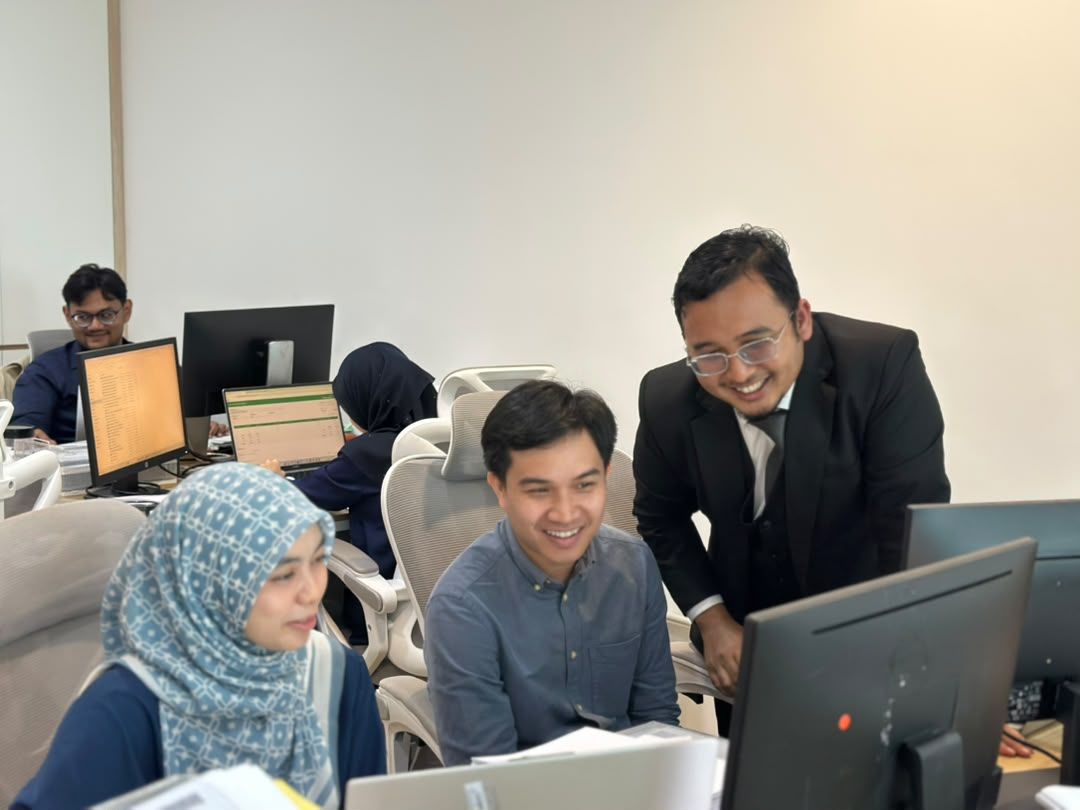
“HYCO grew from the problems we were asked to solve.
“Over time, we realised that the question should not always be simply, ‘Who is right and who is wrong?’
“Sometimes the more important questions are: What actually happened to the business? What is causing the problem? And what is the most commercially sensible way to resolve it?”
That philosophy reflects HYCO's professional journey, where experience in employment and human resources matters expanded into corporate governance, company secretarial work, business disputes, finance, accounting, taxation, mediation, and ultimately broader business advisory work.
When a business problem requires more than one solution
Hisyam said some of the clearest examples of this approach have emerged from seemingly ordinary operational problems.
In a previous engagement with a major jewellery retail group, the issue concerned the restructuring of bonus payments that needed to be brought forward and split into four components.
While it appeared on the surface to be a payment matter, the situation required consideration of employee expectations, cash flow, management decisions and corporate governance.
In another engagement involving a sugar-industry operation, the challenge involved managing supplier payments while simultaneously accelerating the collection of outstanding receivables.
“The answer was not simply to issue a letter of demand.
“We needed to understand the cash conversion cycle — how money was coming into the business, who needed to be paid, what collections could be accelerated and how liquidity could be protected without unnecessarily damaging commercial relationships,” he said.
Those experiences reinforced HYCO's view that a business dispute is rarely just a legal problem.
In another operational matter, the disappearance of two silo units required an examination of company assets, records, operations and accountability — demonstrating how an asset issue could also expose weaknesses in internal controls and management oversight.
Hisyam said this is why the organisation increasingly examines business issues through several professional perspectives.
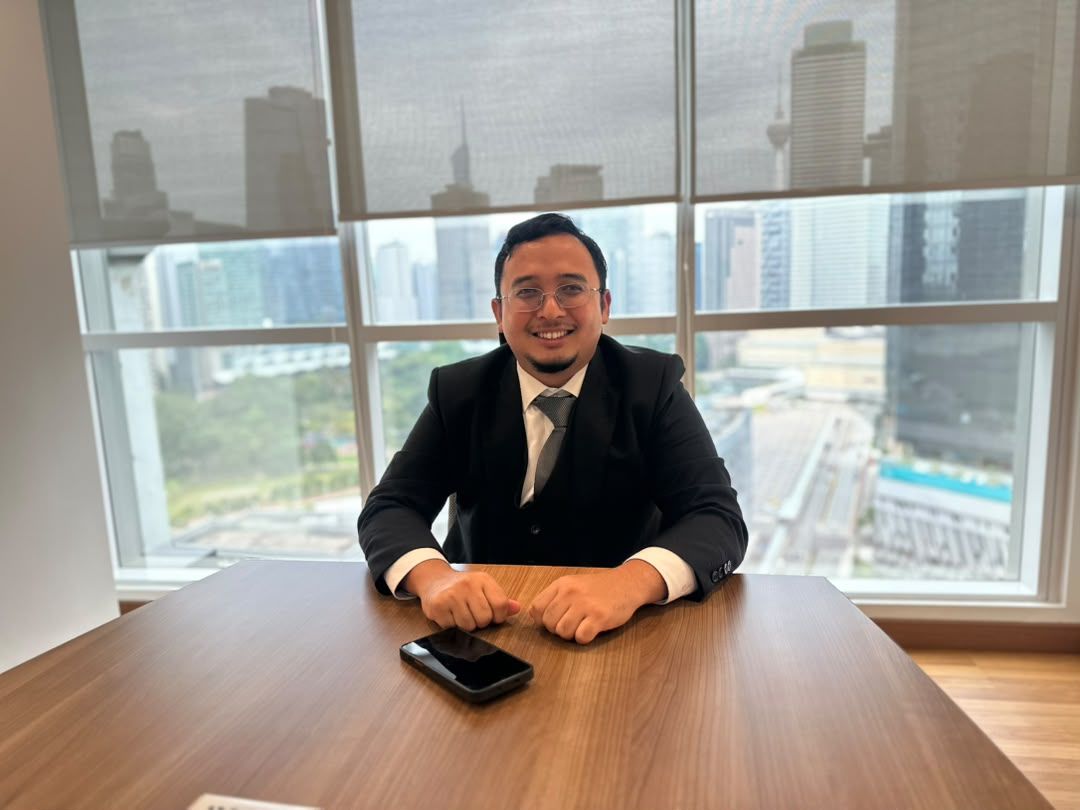
“A payment problem may actually be a cash-flow problem. Slow collection may indicate weaknesses in credit control. A disagreement over bonuses may involve governance and expectation management, while the loss of company assets may expose weaknesses in internal controls.
“If we only solve what appears on the surface, the underlying problem may remain.”
Helping companies reach the next level
Hisyam said one of the key challenges faced by growing companies is determining their next direction.
For some businesses, the appropriate strategy may be to continue expanding organically.
Others may consider bringing in strategic investors, establishing joint ventures, pursuing mergers and acquisitions (M&A), restructuring the group or eventually exploring a listing on Bursa Malaysia.
He said HYCO helps business owners understand the advantages and disadvantages of each option before determining the strategy that best suits their circumstances and long-term objectives.
“Among the benefits of M&A is that a company could potentially be acquired by a larger corporation, which could increase its value and open up opportunities for further expansion.
“But M&A or listing should not automatically be the destination for every successful business.
“For some companies, organic expansion may continue to create better value. For others, an investor, joint venture or acquisition may provide the next platform for growth.
“The important thing is for the founder to understand the implications of each route before making the decision,” he said.
HYCO's professional capabilities in this area include corporate restructuring, M&A, joint ventures, business and enterprise valuation, financial modelling, corporate finance and transaction advisory.
From RM1 million to RM10 million and beyond
HYCO also focuses on helping companies scale progressively.
Hisyam said companies recording sales revenue of around RM1 million could be guided towards achieving RM10 million and subsequently RM100 million, depending on their business potential, market conditions and organisational capabilities.
However, he stressed that the journey should not be viewed purely in terms of sales.
A company generating RM1 million in annual revenue may still be highly dependent on its founder, with decisions, expenditure and employees managed personally.
As revenue approaches RM10 million, the same business may require a stronger management layer, clearer organisational responsibilities, improved management accounting, HR systems, taxation planning, standard operating procedures and more structured corporate governance.
At RM50 million or RM100 million, the requirements may become significantly more sophisticated, involving board governance, shareholder arrangements, stronger financial controls, financing strategy, risk management, regulatory compliance and corporate restructuring.
“A structure that works for a RM1 million business may not necessarily work when the company becomes a RM10 million or RM100 million business.
“Revenue can sometimes grow much faster than governance.
“That is where businesses can become vulnerable.
“We will guide and monitor the development of these companies so that their internal capabilities can also grow as they progress from one phase to the next,” he said.
HYCO's previous advisory exposure has included businesses ranging from SMEs with revenue in the millions to organisations operating at the scale of tens and hundreds of millions of ringgit annually.
For Hisyam, the principle is straightforward: growth without governance creates risk.
SMEs also given attention
The same approach is extended to small and medium-sized enterprises (SMEs), including helping companies increase their business value so that they are better positioned to explore expansion opportunities, attract investors or undertake M&A.
Hisyam said the initial step involves conducting due diligence to analyse a company's track record, experience, financial position and overall business condition.
The assessment goes beyond sales figures.
Attention may also be given to expenditure patterns, cash flow, financial controls, management structure and whether the founder is prepared to accept professional guidance.
“Our first commitment is to understand the company properly.
“We examine spending patterns, how the business operates and whether the founder is willing to accept professional assistance and guidance to develop what they have built.
“Some founders are reluctant to disclose the company's history, while others may focus heavily on promotional and marketing plans without sufficiently examining the fundamentals of the business,” he said.
Hisyam said two companies generating the same revenue may, in reality, have very different financial and operational positions.
One may have healthy margins, good cash flow and strong collections, while another may record impressive sales but struggle with excessive expenditure, slow receivables or inadequate internal controls.
“The question should not only be how much the company is selling.
“We also need to understand how much it retains, how efficiently it operates and whether the organisation is capable of supporting its next stage of growth.”
Organisational structure key to sustainable growth
Hisyam said attention is also given to a company's organisational structure to ensure that each position and responsibility has a clearly defined function.
For example, a restaurant business requires a clear management structure comprising managers, supervisors and assistant supervisors so that operations can continue effectively in the event of an emergency, staff absence or changes within the organisation.
A founder-driven structure may work when there is only one outlet, he said, but becomes increasingly difficult to maintain as the business expands to several locations.
“The business cannot reach a stage where everything stops simply because the founder is not there.
“The organisation must eventually be able to operate through systems, people and clearly defined responsibilities.”
He also highlighted the tendency among some entrepreneurs to expand too quickly before establishing a strong business foundation.
For example, some entrepreneurs entering the food and beverage sector may move quickly towards developing a central kitchen even before sufficient outlet volume and market demand have been established.
Hisyam said infrastructure should ideally follow business demand rather than precede it.
“We need to build demand first.
“If the strategy is to open more branches, increase volume and strengthen the product's position in the market, then the infrastructure should be developed progressively to support that demand.
“Sometimes entrepreneurs build capacity first and hope demand will follow. We prefer to understand the demand, establish the operating model and then determine what infrastructure is genuinely required.”
Compliance should grow with the business
Hisyam said another area frequently overlooked during expansion is regulatory compliance.
A company may grow rapidly in terms of revenue, employees and operations while its corporate records, accounting systems, taxation matters or HR documentation remain largely unchanged.
HYCO's previous experience includes businesses with healthy sales but outstanding accounts, organisations that expanded their workforce significantly while retaining HR documentation designed for a much smaller company, and businesses whose shareholder structures were never properly updated as the organisation grew.
Some directors, he said, only become aware of compliance weaknesses when correspondence from a regulator arrives.
“Compliance should not begin when the notice arrives.
“If we know where the business intends to go, then its legal, accounting, tax, HR and governance systems should also be prepared for that growth.”
Preserving business value when disputes arise
While HYCO's growth-partner approach places greater emphasis on preventing problems, Hisyam said disputes remain an unavoidable part of business.
The question, however, is whether every dispute should automatically end in prolonged litigation.
Litigation remains necessary where legal rights need to be determined or enforced, but Hisyam said a court victory does not always mean the business itself has won.
Legal costs may increase, management time may be consumed, valuable commercial relationships may be destroyed, and shareholder disputes may diminish the value of an otherwise viable company.
This has led to a broader emphasis on mediation and alternative dispute resolution alongside conventional litigation.
Depending on the circumstances, a commercially appropriate solution may involve settlement, restructuring of obligations, repayment arrangements, accelerated collection, mediation or litigation.
“The objective is not to avoid litigation.
“It is about using the right dispute-resolution tool for the right problem.
“If business value can still be preserved while protecting the client's interests, that option should at least be considered.”
More than 100 companies guided
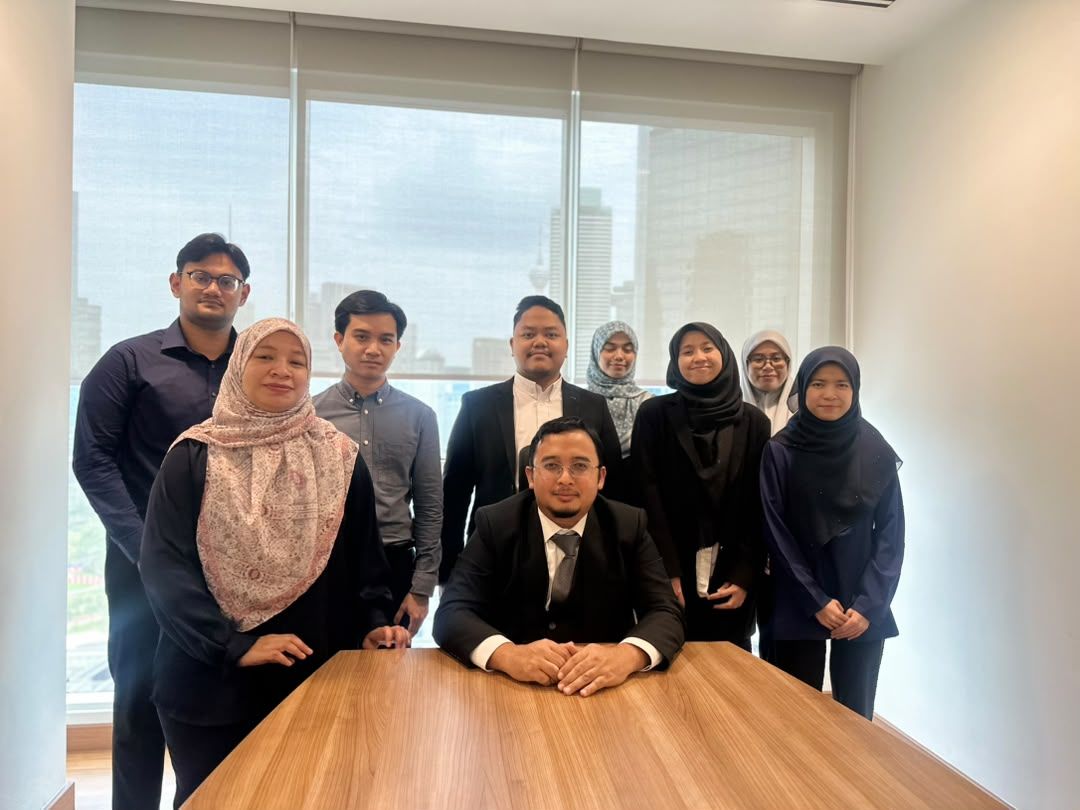
To date, more than 100 companies have gone through various growth phases with HYCO, with around 40 companies identified as having been successfully developed to the point of recovering their invested capital and recording profits.
Hisyam said some companies previously recorded sales of around RM1 million but subsequently increased their performance by as much as 1,000 per cent after participating in programmes and business development initiatives undertaken with HYCO over a period of about 10 years.
He said the experience demonstrates the importance of structured and continuous guidance in helping companies not only address immediate challenges, but also establish the foundations required for sustainable long-term growth.
However, Hisyam said revenue alone should not be treated as the ultimate measure of a successful company.
A business may achieve significantly higher sales but remain vulnerable if it has weak cash flow, inadequate financial controls, poor governance, unresolved shareholder issues or excessive dependence on its founder.
“The objective is not simply to make the business bigger.
“We want to help make it stronger as it becomes bigger.”
Different professionals, one business perspective
Hisyam believes the increasingly complex environment faced by Malaysian businesses will require professional advisers to work more collaboratively across disciplines.
HYCO's broader professional capabilities now cover four interconnected areas — commercial litigation, dispute resolution and regulatory matters; corporate, governance and transactions; audit, tax, accounting and financial advisory; and people, workforce and human capital advisory.
But Hisyam stressed that the model should not be interpreted as an attempt to make one individual an expert in every field.
Instead, the aim is to bring professionals with different competencies to the same table and allow them to understand the same business from their respective perspectives.
“I do not believe one professional can be an expert in everything.
“But I believe an organisation can bring the right professionals together, build the right system and put them at the same table.
“HYCO is not being built around one person's ability to do everything. It is being built around a team's ability to solve problems together.”
That philosophy has shaped HYCO's evolution from a professional service provider called upon when difficulties arise into an ecosystem seeking to accompany business owners through the different stages of their companies' development.
“We do not want to be called only when there is a problem.
“We want to understand the business before the problem begins and be there when the company is making the decisions that determine its next stage of growth.
“Ultimately, business owners do not necessarily need more advisers. They need the right professionals who can communicate with one another and understand where the business is trying to go.”
It is an approach encapsulated in HYCO's philosophy: Different Professionals. One Business Perspective.
And ultimately, Hisyam said, the objective is to help Malaysian businesses govern better, resolve better and grow better.
