




The Trump administration announced on Wednesday the establishment of a task force to end birth tourism in the latest push to curtail the practice after the Supreme Court recently rejected US President Donald Trump’s attempt to restrict constitutional birthright citizenship.
Working alongside the Department of Homeland Security (DHS), the US State Department wrote in a fact sheet that it is “using all available tools to defend the integrity of US citizenship, ensure non-immigrant visas are used only for their lawful and intended purposes, and prevent their exploitation through birth tourism”.
It revealed that the Birth Tourism Prevention Task Force has revoked more than 600 visas from foreign nationals worldwide.
The State Department announced earlier this week that it had revoked more than 175,000 visas since Trump returned to office.
It also disclosed several birth-tourism-related revocations, stating that more than 100 visas were revoked by a US embassy in the North Africa region over the practice.
In his second term, Trump has targeted both legal and illegal immigration to the United States, with its broad sweep affecting nearly every single part of the system.
On his first day back in office, he signed an executive order that directed federal agencies not to recognise citizenship of children born in the US when their parents were undocumented or present under temporary visas, including those under skilled worker and student categories.
“President Trump has made clear [that] citizenship is not a commodity to be acquired through the calculated exploitation of US immigration laws,” the State Department said in its fact sheet.
It also cited specific examples of enforcement, including a couple who used a conference and a shopping holiday as cover stories to give birth to two children in the US.
While giving birth when visiting the US is not, in itself, a criminal offence, prosecutions of birth tourism schemes have included charges of visa fraud, conspiracy, money laundering, or other offences that involve travellers who allegedly concealed the purpose of their visits to America and businesses that assisted them.
New task force latest step in Trump’s birth tourism battle
The new task force is one of a series of measures by the second Trump administration to crack down on birth tourism after the Supreme Court ruled 6-3 on June 30, blocking the executive order to restrict birthright citizenship.
The Supreme Court ruling held that children born in the United States to parents who are unlawfully or temporarily present are citizens at birth under the 14th Amendment.
While the administration had initially emphasised children born to undocumented migrants, it began to focus on birth tourism, with particular attention to cases involving Chinese nationals, in the period surrounding the ruling.
“I would like to congratulate President Xi, and the Great Country of China, on their massive Birthright Citizenship WIN! President DONALD J. TRUMP,” Trump wrote on social media after the verdict.
Marking a fresh attempt to restrict automatic citizenship, Trump also signed two executive orders last week seeking to curb the practice and respond to the Supreme Court ruling.
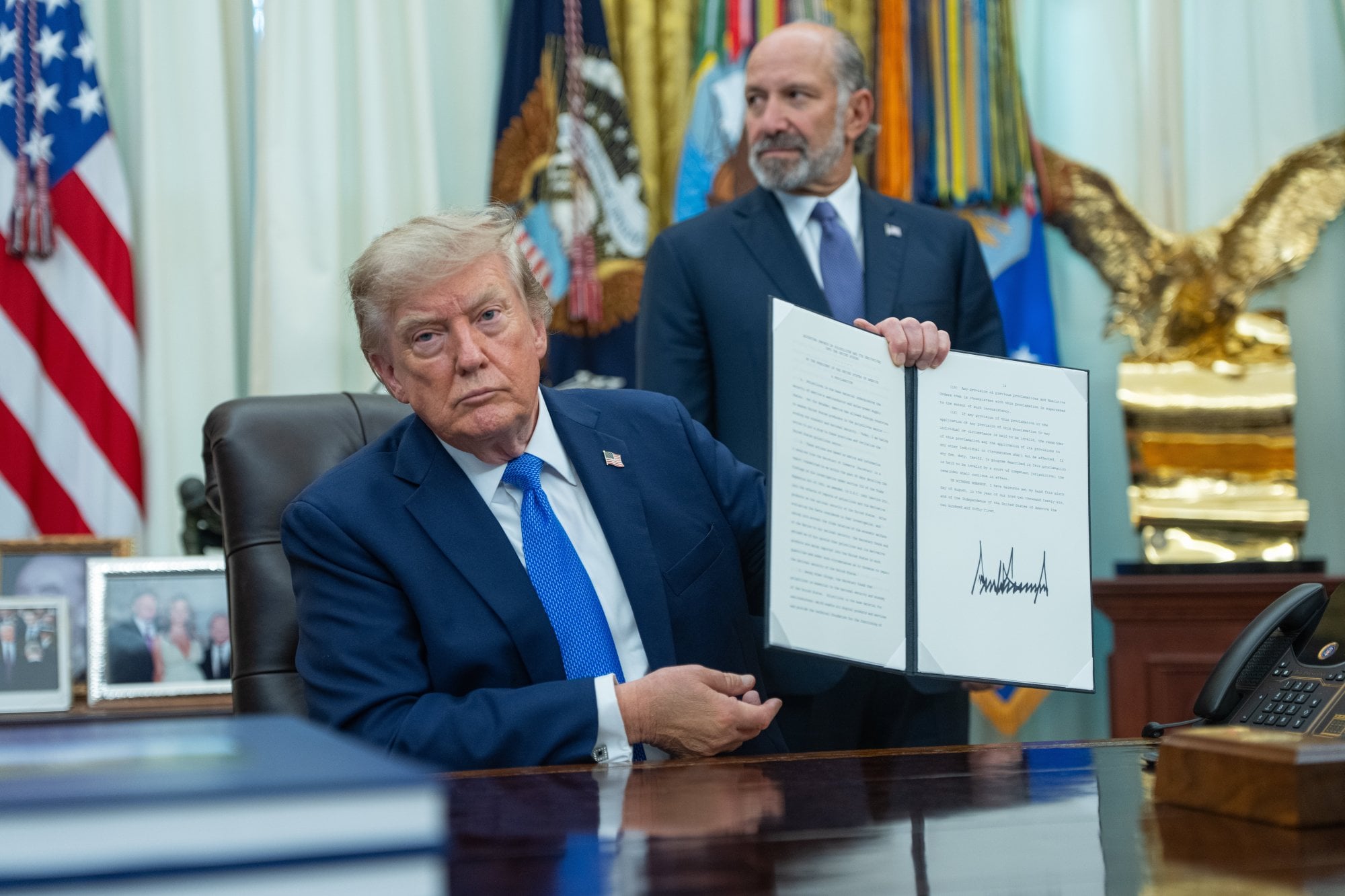
Among the new orders, one directed officials to strengthen visa screening, investigate suspected birth-tourism operations, and consider legal action against businesses facilitating such practices.
The other sought to expand the categories of children who the White House says are not entitled to birthright citizenship, directing federal agencies to examine remaining legal restrictions.
There is no federal data set that measures birth tourism, but available figures indicate the practice only accounts for a small share of US births.
Penn State researchers estimated that birth tourism accounted for fewer than 0.3 per cent of all US births in any year from 2014 to 2024.
“Annual birth tourism, measured as a foreign-born mother giving birth in the US to a child that does not remain a US resident, even at its height in 2015, represented fewer than 0.3 per cent of all US births,” the research brief stated. -- SOUTH CHINA MORNING POST


