
The United States has announced new tariffs and price floors on polysilicon and related products, targeting China’s dominance in key materials used in solar panels and semiconductor manufacturing.
In a proclamation signed on Thursday, US President Donald Trump imposed a 15 per cent tariff, which will take effect after 120 days, and established a series of price floors to protect domestic manufacturers and curb imports of China-sourced materials.
“We’re setting prices so that the Chinese can’t dump any more, and we’re setting tariffs to say build it here,” Commerce Secretary Howard Lutnick said.
“We need the foundational products made here. We’re making the products here, but we need the supply chain here.”
According to the proclamation, a minimum import price (MIP) programme would help create a “protected domestic market” that allows US producers to “compete free from global distortions”.
“Without a secure and reliable domestic supply of polysilicon, the United States cannot sufficiently produce semiconductors,” it added.
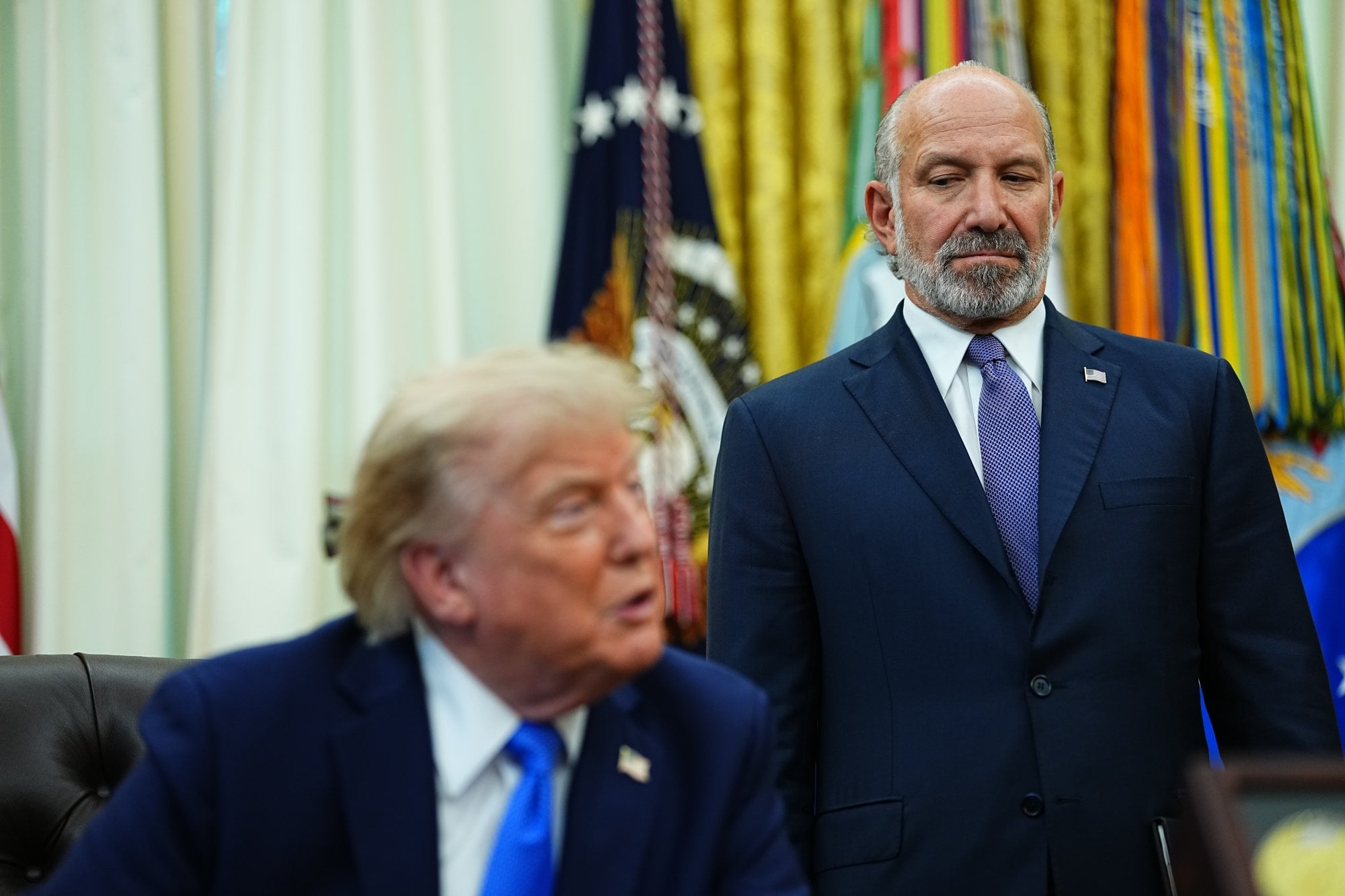
“We’re bringing the chip business back into the United States in a very big way,” Trump said in the Oval Office at the White House.
The action follows a Commerce Department national security investigation into imports of polysilicon and its derivative products. The investigation was launched in July 2025 under Section 232 of the Trade Expansion Act of 1962.
Polysilicon, a hyper-pure form of silicon derived from quartz, serves as the essential foundational material for both semiconductor and solar panel sectors.
China holds a near monopoly on polysilicon production, accounting for more than 90 per cent of global output as of 2024.
By contrast, the US share of global polysilicon production capacity has fallen from 50 per cent in 2005 to less than 2 per cent over the same period.
The Chinese embassy in Washington pushed back against the new tariffs, accusing the Trump administration of “overstretching the concept of national security” and “abusing state power to go after Chinese businesses”.
“Protectionism will not make the US more competitive,” embassy spokesman Liu Chang told the South China Morning Post.
“The US move seriously disrupts normal trade and economic exchanges between Chinese and US businesses,” he added.
Washington’s latest move comes a day after China announced a series of retaliatory measures – including tighter export controls on drones and related technologies, sanctions against seven US companies, and the launch of its first foreign trade-related national security investigation.
The Chinese Commerce Ministry said the steps were in response to recent US actions, including sanctions on 43 Chinese companies under a forced labour law and the Federal Communications Commission’s (FCC) bans on imports of new Chinese drones, robots and power inverters.
A senior US government official on Wednesday criticised China’s sanctions, saying Beijing’s actions could undermine efforts to stabilise economic ties between the world’s two largest economies.
“We are deeply disappointed that China has chosen to announce another round of escalatory measures,” the official said in a statement to SCMP.
The latest development marks another escalation in the ongoing tit-for-tat actions between Washington and Beijing, with the US imposing tariffs while both sides expand export controls and restrictions targeting companies.
Despite a blame game, they have so far kept the disputes from affecting preparations for Chinese President Xi Jinping’s expected visit to the US in September. -- SOUTH CHINA MORNING POST