




Chinese President Xi Jinping and Brazilian President Luiz Inacio Lula da Silva agreed on Sunday night to accelerate negotiations for a trade agreement between China and Mercosur, a striking reversal for Brasilia, which for years led resistance to such a deal in the South American bloc.
The two leaders spoke by telephone for more than an hour, according to a statement from the Brazilian presidency, and “coincided on the importance of speeding up the talks for a Mercosur-China agreement that contemplates the necessary flexibilities”.
The readout said the presidents discussed aligning the two countries’ national development projects and reaffirmed plans to expand cooperation in strategic and high-technology sectors, including artificial intelligence, satellites, critical-minerals processing, and fertiliser trade.
A short-stay visa waiver agreement, designed to boost tourism and business travel, was also announced.
The call came days after a 25 per cent tariff imposed by US President Donald Trump on part of Brazil’s exports took effect.
Last week Washington announced a further 12.5 per cent levy on 60 trading partners, Brazil among them, on the grounds that they had failed to adequately combat forced labour.
The Brazilian statement did not mention the American tariffs, but Lula told Xi his government “remains committed to diversifying markets and trade partners”.
Hours before the call, Lula had published an opinion piece in The Washington Post describing the new US duties as “a strategic mistake” and pledging to seek alternative partnerships.
The president had already made Beijing the centrepiece of his answer to Washington in June, when China cleared Brazilian beef of foot-and-mouth disease and widened access to the world’s largest market for the product, hours after the US announced its tariffs.
“I’m not going to cry. If you do not want to buy from me, you can keep your things, and I will sell to someone else,” Lula said at the time, thanking China for a decision announced during a visit to Beijing by Vieira.
Beijing framed the conversation in more overtly political terms.
According to state news agency Xinhua, Xi said China rejected “external interference” in Brazil’s electoral process and valued the country’s “international status and important influence”, adding that Beijing supported Brasilia in “safeguarding its sovereignty and independence”.
The Chinese leader said that, facing new circumstances and challenges, the two countries should stand “firmly on the right side of history” and play a bigger role in reforming global governance.
The sovereignty language echoed a meeting last Wednesday in Manila between Chinese Foreign Minister Wang Yi and his Brazilian counterpart Mauro Vieira, held on the sidelines of the Asean foreign ministers’ gathering hours after the 25 per cent tariff came into force.
Wang said then that China would continue to “support Brazil in safeguarding its sovereignty, security and development interests”, while voicing trust that Brasilia would “continue to respect and support China in defending its core interests”, the formula Beijing uses for Taiwan, Tibet, Xinjiang and Hong Kong.
Deal Brasilia once tried to stop now back on table
The endorsement of a bloc-wide agreement with China marks a sharp departure from Brazil’s long-standing position.
For most of the past decade, Brasilia and Buenos Aires treated the idea of a Mercosur free trade deal with Beijing as a threat to their industrial bases and worked to keep it off the bloc’s agenda.
Uruguay was the first member to break ranks when then president Luis Lacalle Pou began exploring a bilateral free trade agreement with China as early as 2021, commissioning a joint feasibility study with Beijing and repeatedly complaining that Mercosur’s protectionism was suffocating his country’s ability to open up to the world.
The Uruguayan initiative alarmed the bloc’s larger economies because Mercosur’s founding charter, the 1991 Treaty of Asuncion, commits members to a common external tariff and joint trade negotiations with third countries, and Brasilia and Buenos Aires warned that a bilateral deal could trigger legal and trade retaliation.
Officials in Brazil also feared Chinese goods could be processed in Uruguay and circulate across the bloc with the preferences reserved for members, hollowing out the customs union from within.
Lula made stopping the Uruguayan initiative one of the first missions of his third term. On his inaugural foreign tour in January 2023, he travelled to Montevideo to persuade Lacalle Pou to abandon the bilateral track, with aides describing the Uruguayan plan as capable of “destroying Mercosur”.
Brasilia offered inducements including the resumption of cross-border infrastructure works, renewed contributions to the bloc’s development fund and a promise to halt unilateral cuts to the common external tariff.
Lacalle Pou relented, agreeing to channel Uruguay’s ambitions with China through joint bloc negotiations.
Meanwhile, Brazilian manufacturers have been equally hostile to the idea of opening the bloc’s market to Beijing.
In 2024, leaders of the Industrial Coalition group which brings together the country’s main manufacturing associations, warned that a free-trade agreement with China would be a “disaster”, arguing the sector was already facing what they called a “Chinese invasion” that put investment plans worth 825.8 billion reais (more than US$150 billion) at risk.
Marco Polo de Mello Lopes, the group’s coordinator and head of the Brazil Steel Institute, described Chinese exports in some markets at that time as predatory, driven by a state policy of offloading idle capacity at negative margins.
“Without a deal we are already living through this tsunami. With a deal, you can imagine what could happen,” he said, projecting that 500 billion reais (around US$97.6 billion) in planned investment would be frozen.
The carmakers’ association Anfavea also argued the industry’s costly transition to electrification made it the wrong moment to open the market further.
Any bloc-wide negotiation would also face a structural obstacle in Paraguay, a full Mercosur member that maintains diplomatic relations with Taiwan rather than Beijing.
Momentum shifts as Trump’s trade offensive gathers pace
The calculus began to change as Trump’s trade offensive gathered pace. In February, Uruguayan President Yamandu Orsi travelled to Beijing at the head of a 150-strong delegation, the first visit by a South American leader to the Chinese capital after US special forces entered Venezuela to capture Nicolas Maduro.
China and Uruguay signed a joint declaration calling for negotiations on a China-Mercosur free trade agreement to begin as soon as possible, along with a dozen cooperation documents spanning trade, technology and the environment.
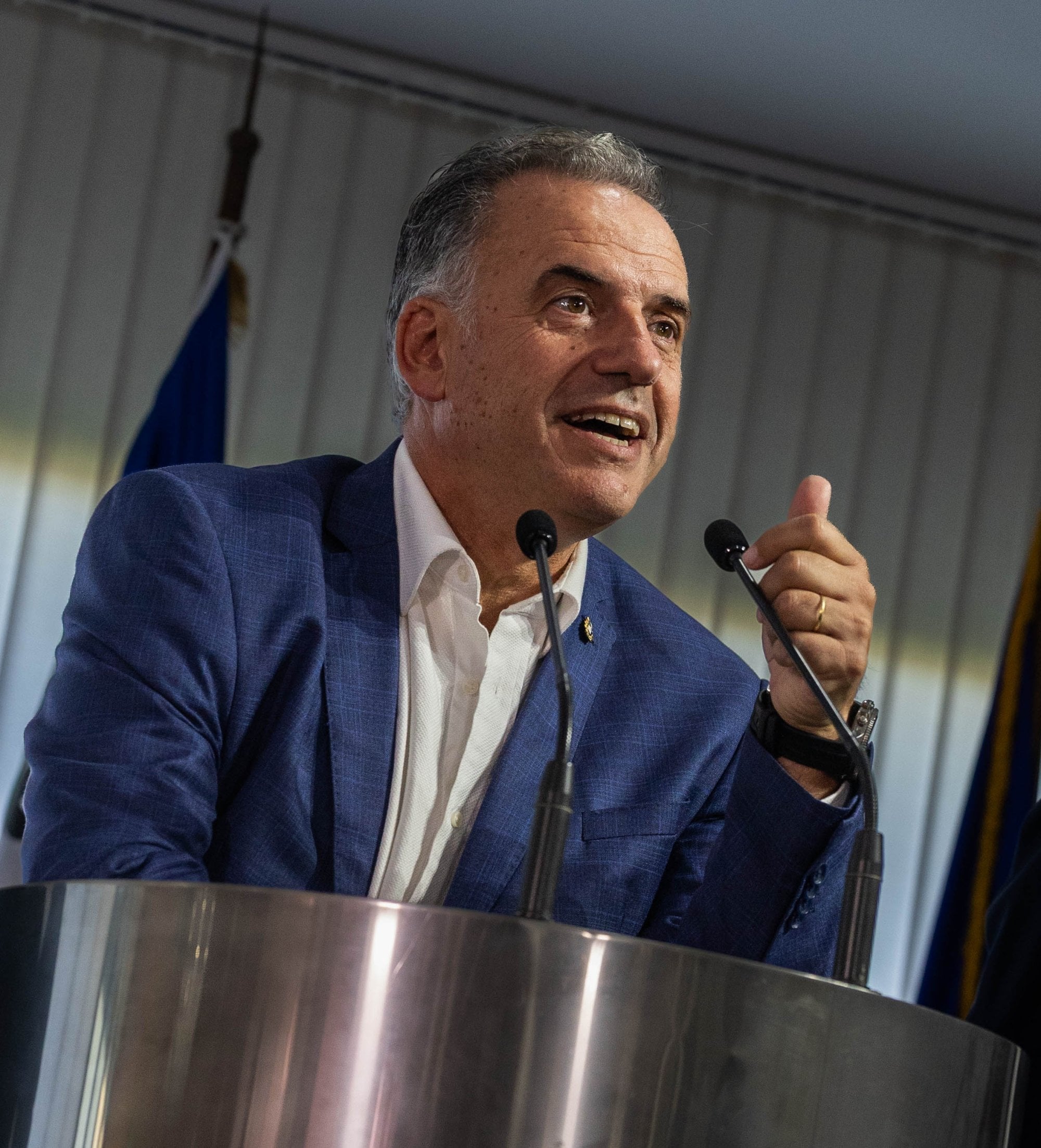
Sunday’s call suggests Brasilia has now swung behind that push, though the insistence on “necessary flexibilities” points to the safeguards Brazilian negotiators are likely to demand for sensitive industrial sectors.
Beyond trade, the two presidents surveyed a troubled international landscape.
They voiced concern over the impact of “multiplying conflicts on global food and energy security”, said “restrictions on free navigation through the Strait of Hormuz and Bab el-Mandeb were damaging the world economy”, and lamented the continuing humanitarian crisis in Gaza.
Lula and Xi also returned to the Group of Friends of Peace, an initiative the two countries launched at the United Nations in September 2024, to rally Global South support for a political settlement in Ukraine, saying it could play a relevant role in restarting negotiations to end the war.
They criticised the UN Security Council’s inability to respond adequately to international crises, noted the particularly challenging environment awaiting the organisation’s next secretary general, and pledged to keep coordinating closely at the UN and within Brics. -- SOUTH CHINA MORNING POST



