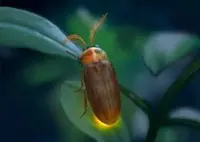
SOUTH-EAST ASIA / BEIJING (Xinhua): A 100-million-year-old beetle preserved in amber is offering scientists a rare peek into the early evolution of fireflies' signature light shows and their remarkable antennae.
The fossil, unearthed from Kachin amber in Myanmar, belongs to a newly identified genus named Icaroramus.
An international team led by the Nanjing Institute of Geology and Palaeontology of the Chinese Academy of Sciences (NIGPAS), reported the discovery recently in the journal Proceedings of the Royal Society B.
Fireflies belong to the order Coleoptera, which includes all beetles. So, this ancient beetle is actually a distant relative of the fireflies that light up the summer nights today.
What makes the specimen exceptional is the preservation of two key features in a single individual: highly complex antennae and intact light-emitting organs on the abdomen. Soft tissues like these are rarely fossilized, making this discovery a valuable window into the distant past.
The antennae, consisting of twelve segments, bear two distinct pairs of side branches on segments four through eleven -- one pair long with swollen tips, the other shorter and more slender. This double-branching structure is unlike anything seen in any other beetle, living or extinct, the study said.
The researchers suggest that the elaborate antennae likely helped the beetle detect airborne chemical signals, similar to how many modern insects use pheromones to find mates.
The light organs, however, present a puzzle. In most modern fireflies, glowing is primarily a mating signal, and those species tend to have simpler antennae. However, Icaroramus combines bright light organs with highly branched antennae -- a combination rarely seen today.
The researchers believe its bioluminescence was most likely used as a warning to scare off predators, though they cannot entirely rule out a role in attracting mates.
The findings indicate that by the mid-Cretaceous period, roughly 100 million years ago, early firefly relatives had already evolved sophisticated sensory structures and functional bioluminescence, said Cai Chenyang, a professor from the NIGPAS.
"The fossil provides rare evidence that multiple communication strategies had already emerged early in the evolutionary history of these insects, long before the fireflies we know today lit up the night skies," Cai added. -- Xinhua