SINGAPORE: On July 2, Jing Lee the moon bear took its first steps in the sunshine after a life confined in a cramped cage.
The bear is one of 27 removed from a bile farm in Laos by conservation charity Free the Bears. The effort was helmed by Singaporean Karthiriish Chandra.
Jing Lee, named after a law enforcement officer in Laos who helped make the operation a reality, was freed by the charity and the Laotian authorities in May from a foreign-owned, illegal bear bile farm, where the animals had spent years in metal cages.
Speaking to The Straits Times after the bears got their first taste of freedom at Luang Prabang Wildlife Sanctuary, Karthiriish said: “Things that might seem simple or basic to us are completely new to them.
“They hadn’t stood on solid, natural ground, climbed a tree, swum in a pool or even eaten hard vegetables since they were stolen from the wild as cubs.”
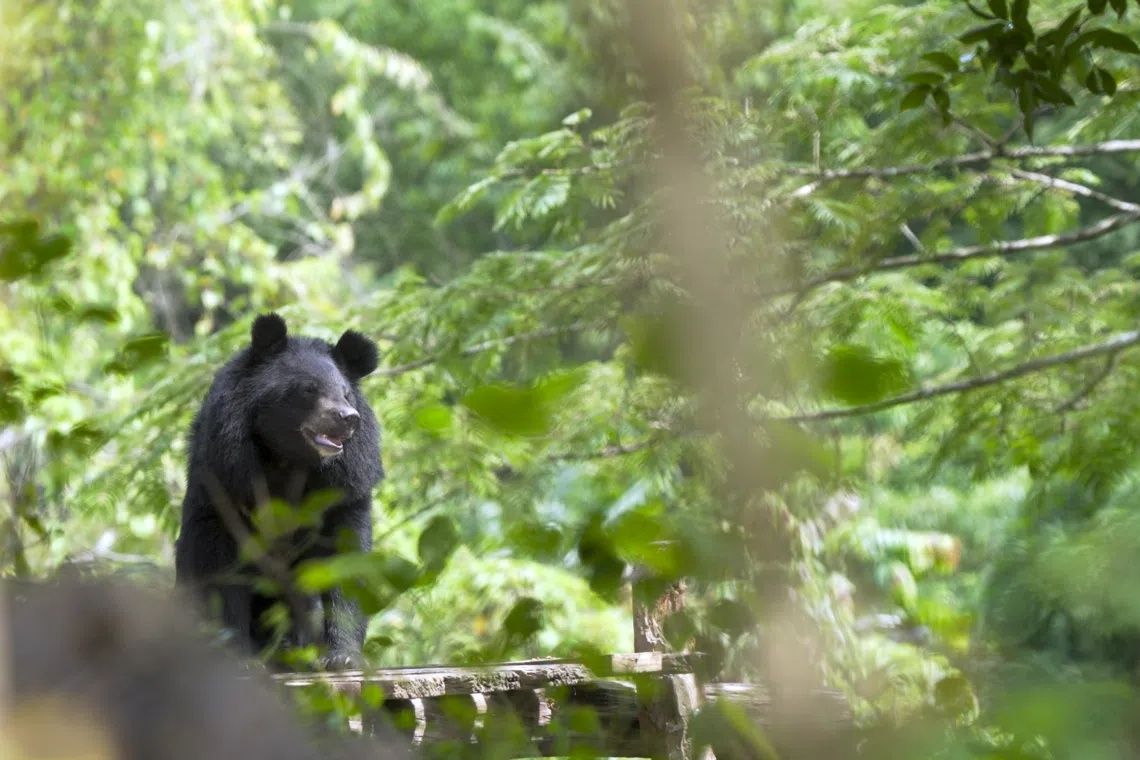
At their new home, they can roam in a large forested enclosure with pools of water.
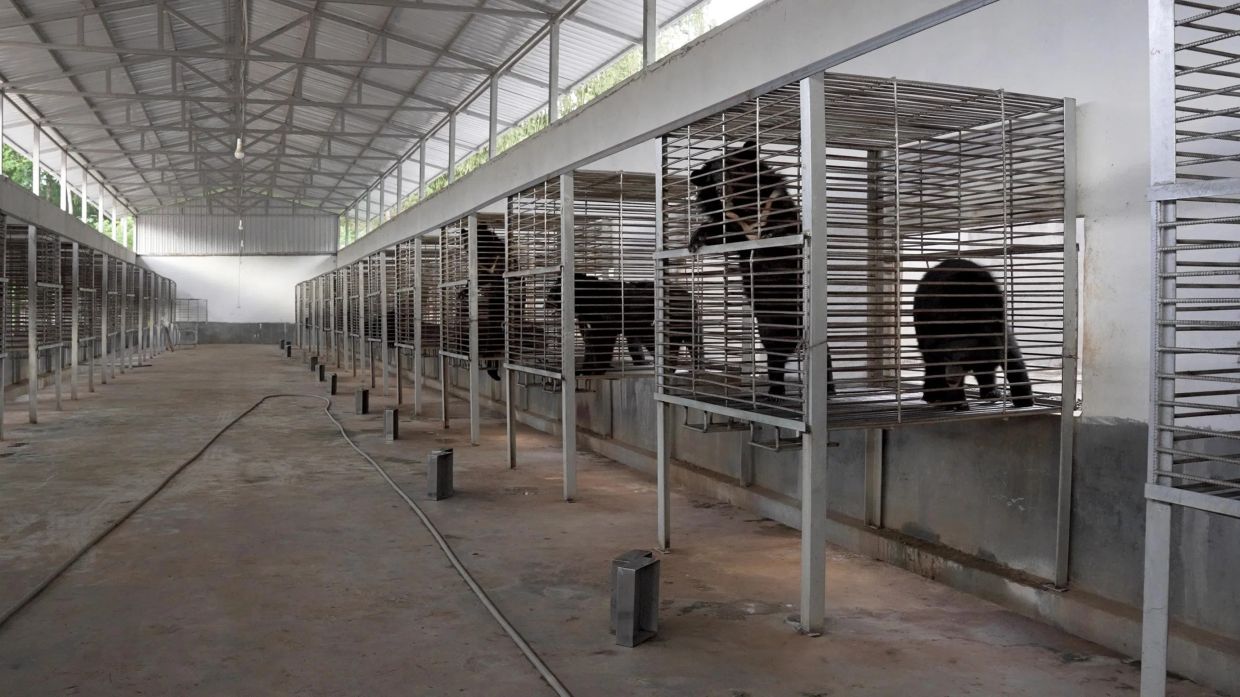
The bears, estimated to be between one and three years old, are learning how to use their teeth for the first time after being fed only cornmeal at the facility, he added.
They immediately began scanning and sniffing their new surroundings, he recalled. One adventurous bear quickly explored the climbing platform, while others scrutinised the plants as well as the keepers.
Since arriving at the sanctuary, the bears have received medical assessments, hydration and stable nutrition to reverse the deprivation they endured, said Karthiriish.
“Being trapped in tiny cages for so long causes their muscles to atrophy, so they need time and good nutrition to gently regrow those muscles,” he explained.
Despite one animal suffering a previous snare injury and missing a paw, the bears appear to be in good health, he said.
For the time being, 10 bears have been chosen to enter a forested enclosure because they did not exhibit any signs of aggression towards one another. The remaining 17 will stay in the quarantine den until new enclosures are completed.
“We are working as fast as we can to expand, and our teams are working seven days a week to get new houses opened for them,” Karthiriish said.
The bears will grow much larger as they age, requiring more space to roam and to live in smaller social groups.
To date, more than US$200,000 (S$258,000) has been raised to fund the logistics behind the rescue effort and start work on their forest homes. This has also contributed to the more than 1,000kg of food that they eat weekly, among other things.
Providing proper care, including nutritious food, daily enrichment and expert veterinary treatment, can cost over US$150,000 per bear across their lifetime, according to Free the Bears.
Notwithstanding space and funding constraints, the charity’s efforts continue. The team has already rescued another adult moon bear, four moon bear cubs and a sun bear cub in separate operations.
Said Karthiriish: “Due to the trauma (the 27 bears) have experienced and being taken from the wild in their formative years, these bears would not survive in the wild on their own. They will need sanctuary care for life.
“So we have a long road ahead of us.”
Those interested in contributing can do so at this website, while those interested in sponsoring or adopting a bear can do so at this website. - The Straits Times/ANN