PHNOM PENH: Could China emerge as a mediator between Cambodia and Thailand as tensions persist along their disputed border?
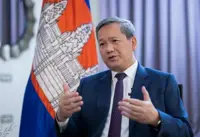
The question has gained fresh attention after Prime Minister Hun Manet briefed Chinese Premier Li Qiang on the latest developments along the frontier during bilateral talks in Beijing, while Thai Prime Minister Anutin Charnvirakul separately said Bangkok was “not closing the door” to a Chinese role in easing tensions.
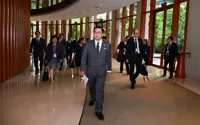
Hun Manet met Li on July 16, during his current visit to China for participation in the 2026 World Artificial Intelligence Conference (WAIC). The two leaders reaffirmed their commitment to strengthening the Cambodia-China comprehensive strategic partnership.
During the meeting, Manet reiterated Phnom Penh’s position that the dispute should be settled peacefully.
According to a Cambodian government statement, Manet stressed that “Cambodia remains committed to resolving the border issue peacefully, based on international law and in accordance with the conventions, treaties and existing agreements between Cambodia and Thailand.”
The border discussion marked one of the highest-level discussions in which Cambodia has formally raised the issue with China since tensions erupted along the frontier last year.
Li, for his part, reaffirmed Beijing’s longstanding support for Cambodia and described the two countries as “ironclad friends”.
Although neither Cambodia nor China mentioned mediation in their official statements, the timing of the meeting has fuelled speculation that Beijing could eventually play a greater diplomatic role in helping ease tensions between the two South-East Asian neighbours.
The speculation intensified after Thai Prime Minister Anutin Charnvirakul, who is also visiting China this week to attend the WAIC, indicated that Bangkok would welcome any constructive role Beijing might choose to play.
Speaking to Thai media, Anutin said Thailand was “not closing the door” to China acting as a mediator if Beijing wished to help reduce tensions with Cambodia.
“We have not asked China to mediate, but we are not closing the door if China wishes to help reduce tensions,” Anutin was quoted as saying, while emphasising that Thailand still preferred to resolve differences through direct bilateral dialogue.
The possibility of a Chinese role is not entirely new.
Last year, Chinese Foreign Minister Wang Yi publicly stated that Beijing was “willing to uphold an objective and fair position and play a constructive role for the harmonious coexistence between Thailand and Cambodia” during separate meetings with the Cambodian and Thai foreign ministers on the sidelines of the Asean Foreign Ministers’ Meeting.
Wang urged both countries to resolve their differences peacefully through dialogue, while reiterating China’s support for regional stability. Since then, Beijing has continued supporting implementation of the Cambodia-Thailand ceasefire and has hosted trilateral discussions involving senior officials from Cambodia, Thailand and China aimed at maintaining peace and confidence-building.
The remarks suggest that while China has stopped short of formally offering to mediate, it has consistently left the door open to facilitating dialogue if both sides consider such a role helpful.
The latest diplomatic exchanges come as both Hun Manet and Anutin are in China simultaneously, although neither government has announced plans for a bilateral meeting between the two leaders during the visit.
Manet’s decision to personally brief Li on the border situation underscores Phnom Penh’s efforts to keep one of its closest strategic partners informed.
Cambodia has sought broader international engagement over the border issue, including welcoming Asean observer missions and pursuing legal mechanisms under international law, while repeatedly affirming its commitment to resolving the dispute without the use of force.
Whether Beijing will ultimately assume a formal mediation role remains uncertain.
For now, China has not announced any mediation initiative, and neither Cambodia nor Thailand has formally requested one. - The Phnom Penh Post/ANN