
China is an existential threat to the United States, and Washington needs to slow Chinese momentum and accelerate US technological advances, or fall well behind the Asian giant, witnesses told lawmakers at a Congressional round table on Tuesday.
Among the possible strategies needed to counter Beijing’s growing prowess, analysts said, included expanding the Silicon Shield – an attempt to remove China from semiconductor supply chains – to drone and other vital technologies; drastically reducing US bureaucracy; focusing more on emerging technologies like quantum; and countering China’s aggressive bid to create global standards.
“China is a systemic rival. It seeks to challenge and displace the United States as the guarantor for the American-led post-war order, and it does it on multiple fronts,” Piero Tozzi, senior China director with the American First Policy Institute, told lawmakers.
“We see them trying to set standards in the realm of technology. That’s true in telecommunications, which is why it’s important to win that race. We even see them trying to reset standards with regard to human rights.”
Beijing has repeatedly argued at the United Nations and elsewhere that raising people out of poverty is a human right on a par with more conventional interpretations.
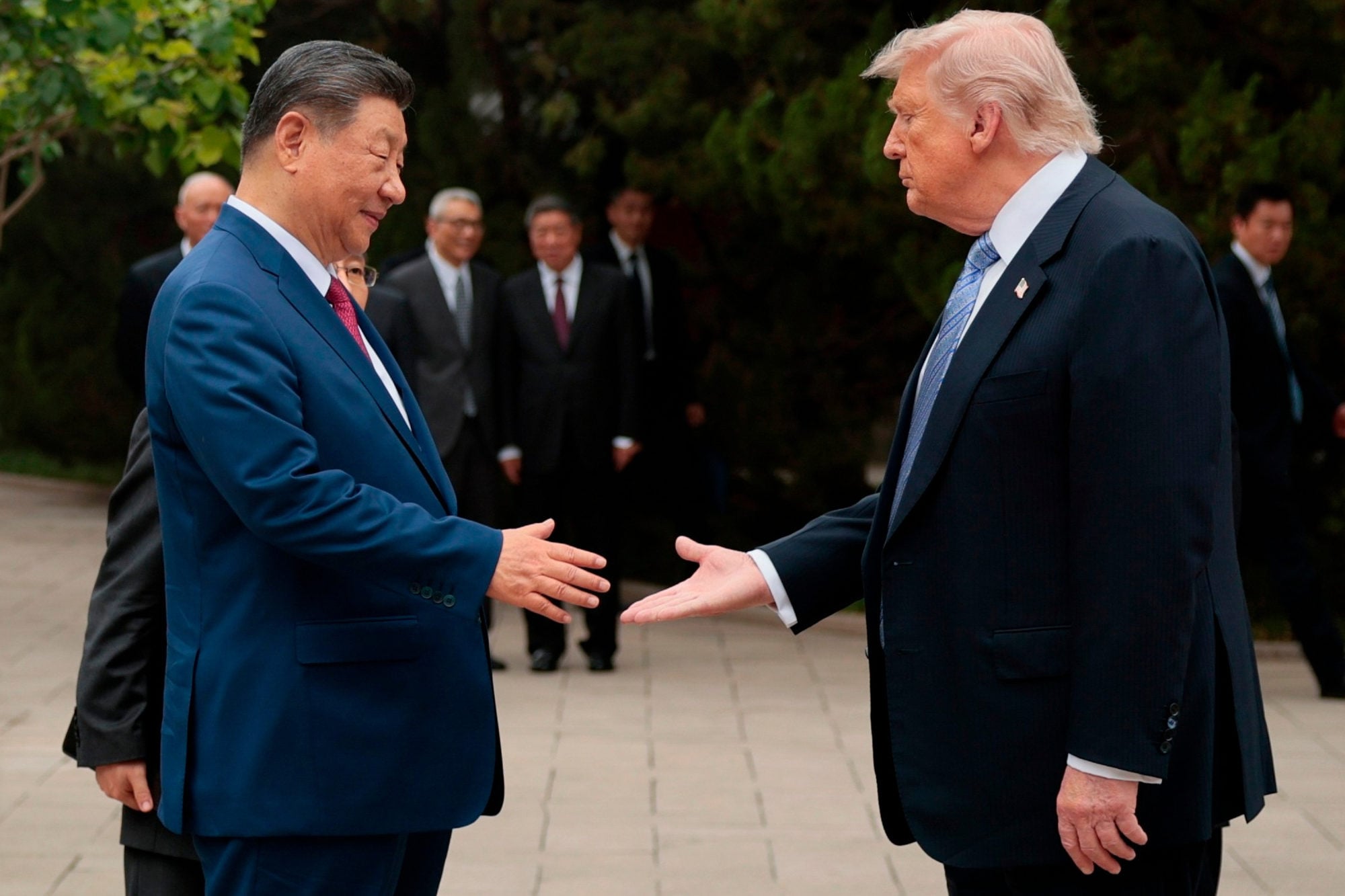
The panel on artificial intelligence and US-China competition, convened by a subcommittee of the highly influential House Oversight and Government Reform Committee, was held as competition between the US and China intensifies, despite US President Donald Trump and Chinese President Xi Jinping’s bid to stabilise relations at their Beijing summit in May.
Trump has said that Xi will come to Washington for a return summit in September, although this has not been confirmed by Beijing.
Tuesday’s round table featured a mix of arguments. That China is more disciplined and strategic than the US. That its technology leadership is largely due to intellectual property theft. That the US is innovative but has made too many unforced errors over the years to China’s benefit.
“We owe Xi Jinping a debt of gratitude because he took the mask off. You know, their intentions are much clearer,” said Tozzi. “It’s going to be very difficult to put the genie back into the bottle.”
Glenn Tiffert, a research fellow at the Hoover Institution, told lawmakers that Beijing did not “stumble into” technological parity with the US in critical areas, but rather employed, over decades, industrial policy, entrepreneurial energy, technology transfers, and generous investment in infrastructure and people.
Speaking on the panel entitled Winning the Economic Competition with China: Working Families, the AI Race and Energy, Tiffert added that the US also allowed itself to be deceived.
“In a great many instances, China did not have to steal because it could acquire what it wanted openly from foreign universities and in the marketplace,” he added.
Alex Epstein, founder and president of the conservative Centre for Industrial Progress think tank, told lawmakers that a major advantage China has over the US is a permitting system that is consistent, however tightly controlled.
Too often, he said, one US administration will reverse the regulations imposed by the prior administration, creating havoc for industry. Thus, former president Joe Biden worked to eliminate oil and gas projects and foster green energy only to see Trump decimate wind energy.
“Once you get a permit, it should be a real permit. It should be final,” Epstein said. “The idea that quickly you can go from idea to execution in the United States, our entire permitting system makes that basically impossible.”
But China is hardly without its own problems, panellists said.
Its state-directed system has led to duplication, corruption and inefficiency, analysts said.
Behind the Communist Party’s push for technological supremacy is a bid to bolster its power, boost China’s “sputtering economy”, offset the demographic crisis and establish ascendancy over the US in the Western Pacific and beyond, they added.
“Xi Jinping’s penchant for tight control risks suffocating this golden goose,” Tiffert said. “But it also generates brutal selection pressures to adapt and innovate in a tournament where only the fittest will survive.”
BYD, the global electric vehicle giant, exemplifies this process, analysts said. While it has benefited enormously from state support, it has also been tempered by intense domestic competition, allowing it to produce world-class goods.
“Walling ourselves off from such products cannot be the extent of our strategy,” Tiffert said. “At best, this buys time. We either find a way to compete with China as it is, or cede one industry after another to it and lose our self-determination.” -- SOUTH CHINA MORNING POST