LONDON/ISTANBUL (Bernama-Anadolu): Commercial shipping through the Strait of Hormuz fell sharply after Iran announced that the strategic waterway had been closed again amid renewed tensions with the United States (US), Anadolu Ajansi (AA) reported.
Iran’s Islamic Revolutionary Guard Corps (IRGC) said on Sunday that the strait would remain closed until further notice because of what it described as an unstable security environment caused by foreign intervention.
The IRGC said the waterway would only reopen if the US military ended its interventions in the strait and respected the sovereignty of coastal states over their territorial waters. It also said Iranian forces had intercepted two vessels attempting to pass without authorisation.
The US Central Command, or CENTCOM, launched its third round of strikes against Iran this week after Iranian forces opened fire on a commercial vessel transiting the strait.
Before the US-Israel war with Iran started on Feb 28, an average of about 130 vessels crossed the Strait of Hormuz each day. Traffic dropped by more than 90 per cent during the conflict before recovering to an average of more than 70 daily crossings following the June 14 agreement between Washington and Tehran.
Renewed hostilities and fresh attacks on commercial vessels have now sharply reversed that recovery.
Data obtained by Anadolu from analytics firm Kpler showed that only 14 commercial vessels crossed the strait on Sunday.
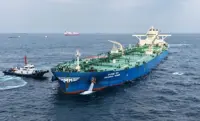
They included the Humanity, carrying around 2 million barrels of Iranian crude oil, the Burg Star, loaded with 500,000 barrels of dirty petroleum products, and the Capetan Andreas, carrying another 500,000 barrels of dirty petroleum products loaded in Kuwait.
The Minoan Courage, travelling from Saudi Arabia to India with what is believed to be a fertiliser cargo, was also among the vessels that crossed the waterway. Most of the other ships were estimated to be sailing without cargo.
Traffic had already declined before Iran’s closure announcement, with 24 commercial vessels crossing on July 11 and 20 vessels on July 10.
The highest daily traffic level recorded after the US-Iran agreement was 76 vessels on June 24.
Oil shipments through the strategic waterway had accelerated following the agreement. However, after the renewed closure, crude oil trade through the strait was limited to Iranian exports.
-- BERNAMA-ANADOLU